I thought I’d share an excerpt from my dissertation proposal, which I’m working on right now:
According to several of the scholars I am planning to cite in my dissertation, including Henry Jenkins, Lisa Lewis, and Jennifer Hayward, it has become acceptable for fans to write academically about the texts they love and the experience of being fans. I am relieved to hear it, because I am a fan of both of the authors this dissertation is about. But there was a time when I hesitated to produce scholarly work on the texts I read for enjoyment. When I was working on my master’s thesis, on eating and bodies in George Eliot’s novels, I said things like “Eliot is for work; Dickens is for fun.” I was afraid, I think, that in order to write academically about Dickens’s novels, I would have to adopt a drearily critical stance toward David Copperfield (my absolute favorite) and all the rest. I was afraid, in other words, that I would have to stop loving Dickens.
Something happened in 2009 that changed my perspective: I discovered Harry Potter. Not that I’d never heard of him before; I’d just considered him annoying and beneath my notice. The story of how I changed my mind is probably delightful only to me, so I won’t narrate it here. Suffice it to say that I arrived at the party very late; all of the books had been released by the time I started reading them, but at least I made it in time to see the last three movies come to theaters. I had finished reading the series by September 2009 and was already getting together with friends to make butterbeer (our version consisted of cream soda, butterscotch, and, yes, sticks of butter) that fall. Sometime around the end of the year, I received a call for papers for a casebook on Harry Potter. And the funny thing is that I never hesitated over whether writing an academic essay for the casebook would destroy my newfound love. Of course I wanted to write an essay about Harry Potter; I wanted to do everything about Harry Potter.
My academic interest and my fan interest in the series grew simultaneously. In summer 2010, I learned that my proposal for the casebook had been accepted, and I got Virginia license plates that said HAFBLOD (i.e., Half-Blood, as in the Half-Blood Prince). In the three years since then, the casebook has been published, and I have presented papers on Harry Potter at two academic conferences; in the same period of time, I have visited the theme park The Wizarding World of Harry Potter and accumulated a respectable collection of memorabilia (including three wands). As I write this proposal I am preparing for a trip to Portland with my mom, who introduced me to Harry, to attend LeakyCon, the largest and most respected Harry Potter fan convention. Certainly I hope to gather information relevant to my dissertation during this trip, but I’m also going for fun.
By early summer 2012, when I started thinking about my dissertation, I had let go of the division I had formerly set up between books read for work and books read for fun, but I was at a bit of a crossroads in my scholarly identity. I called myself a Victorianist, but I was at least as much a Harry Potter-ist. I don’t know what sparked the idea that I could be both, at least in my dissertation; it may have been a conversation with my dad, who was reading through Dickens’s novels for the first time, or it may have been the early buzz about Pottermore. Whatever the cause, I recognized a potentially fascinating link between author-reader interactions in the nineteenth century and those occurring today. And, just as important, I saw a way to revel in fandom for a couple of years while telling people I was doing it for a project.
Category Archives: academic writing
Boycott Saturday
My recent post titles seem quite revolutionary: first we resisted the Oscars; now we’re–what? Boycotting everyone’s favorite day of the week? Not exactly. I don’t have a problem with the day itself, but with its name. Here’s why: Saturday is the only weekday named after a Roman deity (Saturn). English is a Germanic language, doggone it. We don’t need any of that Latin crap.
As a review, our other days are named after, respectively, the sun, the moon (note that these are good Anglo-Saxon words–we don’t say Solisday or Lunaday), Tyr (Norse god of war), Woden (the German version of the more familiar Norse god Odin All-Father), Thor (sexy god of thunder), and Freya (goddess of love and beauty and also dead people slain in battle). In other words, the English names of the first six days of the week make you want to go read the Elder Edda while listening to Led Zeppelin.
And then we get to Saturday, which is named after…the depressing Roman god of winter and old age and irony? (To prove my point, if you don’t know what the word saturnine means, look it up; it’ll make you want to lie in bed all next Saturday, even if you don’t normally do that.) That’s lame. I think we need to have a good Northern name for the final day of our week. I’m sitting here with a copy of Edith Hamilton’s Mythology. She clearly favors the Greeks and Romans (Norse mythology gets 15 measly pages), but at least her cursory summary will help refresh my memory. Here are some replacement names I would like to propose.
Baldersday. I’m actually surprised there isn’t a day named after Balder. He’s the Christ figure in Norse mythology. Balder was killed with mistletoe, but according to Wikipedia the all-wise, “after Ragnarök [the Norse Armageddon; cf. Led Zeppelin]. . . he and his brother Höðr would be reconciled and rule the new earth together with Thor’s sons” (http://en.wikipedia.org/wiki/Baldr). Baldersday would be a fitting name to mark the dying of the old week and the imminent rise of the new one, like the phoenix from the ashes. But the phoenix is Greek, so never mind.
Valkyriesday. Cue the Wagner music. You know the Valkyries–they’re the “maidens” (Hamilton’s quaint word) who show up after battles and get to pick which warriors they want to take to Valhalla. On second thought, this might not be a good choice. The day formerly know as Saturday could become very dangerous.
Lokisday. Speaking of dangerous. You saw what Loki tried to do to our planet in The Avengers. He’s also the one who killed Balder with mistletoe.* Loki is a shape-shifter and the closest thing Asgard has to a trickster deity (the Norse were a little too serious for an all-out joker), so at least we could say that the last day of the week would be…er…exciting, and a little more unpredictable than Valkyriesday. On Valkyriesday, you would definitely die and might or might not get to go to Valhalla. On Lokisday, you might die. But you might not.
Heimdallsday. Heimdall is the guy Thor yelled at to “open the Bifrost,” remember? (All I could think of during that scene was “Beam me up, Scottie.”) But his name is way too unwieldy (that’s a good Anglo-Saxon word) for a day of the week, so forget it.
I haven’t suggested Freyrsday or Friggasday because those would be too similar to Friday. (Actually, according to Hamilton, some people think Friday was named after Frigga, Odin’s wife, rather than Freya; either way, it’s named after a goddess. Go women!) I hope it’s apparent that this is all tongue-in-cheek; I’m really not one of those would-be purifiers of the English language. I just watched Thor over the weekend and am getting ready to teach a lesson on words derived from mythology in my Advanced Reading and Vocabulary Development class. But seriously, think about it this coming Saturday.
*Actually, Loki didn’t do the dirty work himself; he got this blind guy named Hoder to throw the mistletoe at Balder. Typical.
Kung Fu Panda eats, shoots, and leaves: A stream of consciousness
Hi everyone, I’m back. I’ve done many things during my regrettably long blogging hiatus, including looking at some pandas. Last week I was in San Diego for the International Writing Centers Association conference with two of my colleagues, and we went to the famed San Diego Zoo, which has a new baby panda who’s still too young to be on exhibit. So we watched the baby on the zoo’s webcam (you can too: http://www.sandiegozoo.org/pandacam/), and we saw his grown-up friend (not his mother; she’s with the baby) live and in person. The employee working at the panda exhibit told us an interesting fact: Pandas can be very aggressive if provoked. (I know; they’re bears, duh. But they look so genial.)
This fact made me think of Kung Fu Panda, a great movie and the source of my favorite example of the importance of articles (I mean a, an, and the). During the climactic battle scene, the evil snow leopard says, “You’re just a big fat panda.” In response to which, Po, the title character, says, “No. I’m the big fat panda.” Really, that’s a brilliant piece of dialogue. A lot of breath and trees have been wasted in discussing the best way to teach the rules of articles to English language learners whose native languages don’t have articles. And actually, I learned at the conference last week a theory that incorrect article usage may be one of several “untreatable errors” that simply can’t be addressed with rules. But I have the solution for everyone: Just watch Kung Fu Panda.
From my favorite example of article importance, I move to my favorite use of a punctuation metaphor in a song lyric. Earlier tonight I was trying to read Hans Robert Jauss’s Toward an Aesthetic of Reception while listening to my iPod on shuffle. Up came the Coldplay song “Every Teardrop Is a Waterfall.” Which do you think I was paying attention to, the song or the book? I’ll be honest; I was dancing in my bed. The punctuation metaphor occurs in (I think) the second verse of the song: “I’d rather be a comma than a full stop.” Besides the fact that the British term full stop, like ginger and roundabout and a lot of other words, is inherently fabulous, the metaphor is quite apt and well-put.
At this point I was going to embark on a rant about how people should give another listen to the much-maligned Coldplay album Mylo Xyloto. No, it doesn’t follow a neat story arc about the French Revolution like Viva La Vida does, but it still has some great songs. Further ranting will have to wait for another time, however, because I need to go to bed. I’ll leave you with the assurance that my next post will be more coherent, if not profound, and with this holiday wish, which I’m borrowing from a cute tin sign I bought at an antique store recently: “A merry Hallowe’en. Scare up some fun, and have a spooktacular night.”
Haunted by dead European males
I’m working on my Moneyball paper, and I’m afraid I’m about to argue myself out of the point I’m trying to make. I want to argue that Moneyball isn’t really about money; it’s about worth, something for which money is merely a symbol. But the evil little Marxist inside my head keeps saying that everything is about money, and that by silencing the issue, the film is complicit in the economic disparity it initially gestures toward critiquing. I think the evil little Marxist’s argument is reductive, but I don’t know how to refute it. I just can’t buy that everything is about money. Similarly, as intrigued as I am by Freud’s ideas, I just can’t buy that EVERYTHING is a phallic symbol. Someone did a presentation on Star Wars yesterday in which it seemed that pretty much every scene was a castration, and I was really frustrated. I think I just need to get OUT OF HERE and back to people who talk about normal stuff.
Penelope hasn’t died.
Weep not for me, my friends. I’m still alive. (Someone please tell Hermione Granger to stop using my name as a convenient alias.) I’m just finishing up my PhD coursework. (So, not quite alive, actually.) I fully intend to make a big comeback in August with some really awesome posts, some of which will, I’m sure, draw on some of the themes I’ve been thinking and writing about this summer. Think that sounds like a snooze? Think again!!
Preview: I’m working on a paper right now about Moneyball, so get ready, Brad Pitt fans (also Jonah Hill fans). I might even post a picture of your guy–accompanied, of course, by some amazing insights about the movie.
Meanwhile
While I’m trying to think of a way to revive my readers’ (and my own) interest in my blog, here’s some good writing by someone else: William Wordsworth. I pulled my Romanticism anthology off the shelf in order to start working on the extensive revisions necessary for my essay “Shelley’s Queen Mab: The Medium versus the Message,” which currently makes me want to shoot myself in the eye. Instead of shooting myself in the eye, I’ve decided to share with you my favorite Wordsworth poem.
The world is too much with us; late and soon,
Getting and spending, we lay waste our powers:
Little we see in nature that is ours;
We have given our hearts away, a sordid boon!
This sea that bares her bosom to the moon;
The winds that will be howling at all hours
And are up-gathered now like sleeping flowers;
For this, for every thing, we are out of tune;
It moves us not. Great God! I’d rather be
A Pagan suckled in a creed outworn;
So might I, standing on this pleasant lea,
Have glimpses that would make me less forlorn;
Have sight of Proteus coming from the sea;
Or hear old Triton blow his wreathed horn.
Best conference swag ever.

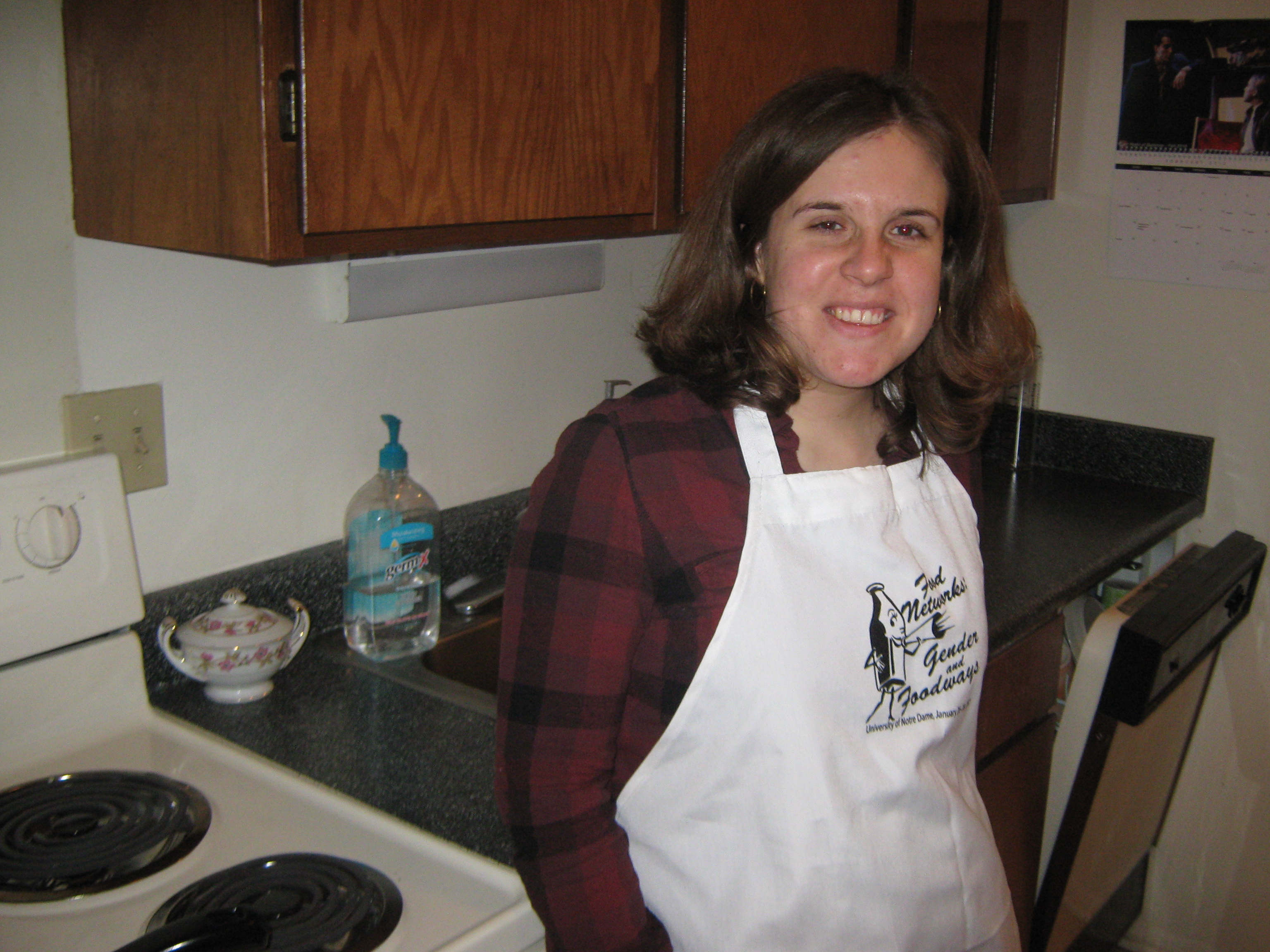
Dear readers, Penelope Clearwater has not abandoned you. For the past two weeks (approximately), she has been roving the world–or at least the Southeastern and Midwestern portions of the United States–to find things worth sharing with you. Here is one. More to come.
 the Dr. Tess blog