book recommendation: Mariner

I’ve just finished what will probably turn out to be my favorite book read in 2024. (I think it’s safe to make that prediction in mid-November.) I chose Malcolm Guite’s Mariner: A Voyage with Samuel Taylor Coleridge as a possible book club option for the arts-focused life group we’re starting at church. I was excited about both the author and the subject matter. Malcolm Guite is a poet, scholar, rock band member, and Anglican priest. I’ve heard him read his own poetry in person and speak on some podcasts, and I like what he has to say (and his gravelly British voice) a lot. And of course, Samuel Taylor Coleridge was one of the leaders of the English Romantic movement, both a brilliant Christian philosopher and a renowned poet, known especially for the haunting ballad The Rime of the Ancient Mariner.

Guite’s book is both literary criticism and biography–an insightful analysis of the Rime and its famous gloss (explanatory notes Coleridge added later in his life), and a careful demonstration of how the text interweaves with the narrative of Coleridge’s own life, especially his tragic descent into opium addiction and eventual recovery. Even if you aren’t a poetry fan or don’t know anything about the English Romantics, you will enjoy this book if you believe nature speaks to us about God, if you like ghost stories and/or seafaring tales, or if you appreciate a great redemption story. You will be captivated both by Guite’s clear, beautiful prose and by Coleridge’s scintillating verse (quoted amply throughout the book–you don’t need to know it ahead of time) and fascinating letters and journals. It’s rare that I read a nonfiction book that I wished wouldn’t end, but this was one of them.

a poem to share

Last week I received a beautiful, thick volume of Victorian poetry, published as a textbook in the 1960s, with excellent editorial notes and a fantastic breadth of coverage. My only complaint about the book is that it inexplicably omits one of my favorite poems by one of my favorite poets, Gerard Manley Hopkins. I’ve always been under the impression that this was one of his best-known poems, so all I can guess is that either its omission was a mistake or the editor was tired of hearing it. I’m not tired of hearing it, so I’m going to share it with you here. This poem is in the public domain, and I obtained this text from the ever-helpful poets.org. (The accented syllables are meant to receive emphasis. Try reading this poem aloud; it’s even better that way!)

As kingfishers catch fire, dragonflies draw flame

As kingfishers catch fire, dragonflies dráw fláme;	
As tumbled over rim in roundy wells	
Stones ring; like each tucked string tells, each hung bell's	
Bow swung finds tongue to fling out broad its name;	
Each mortal thing does one thing and the same:	        
Deals out that being indoors each one dwells;	
Selves—goes itself; myself it speaks and spells,	
Crying Whát I do is me: for that I came.	
 
Í say móre: the just man justices;	
Kéeps gráce: thát keeps all his goings graces;	        
Acts in God's eye what in God’s eye he is—	
Chríst—for Christ plays in ten thousand places,	
Lovely in limbs, and lovely in eyes not his	
To the Father through the features of men’s faces.

Sunrise over the Sea of Tiberias

In my last post (which was longer ago than I realized!), I mentioned that I’m working on a couple of short stories based on the life of Jesus. I want to share the latest draft of one of those stories with you. This is based on chapter 21 of the gospel of John. I feel like it needs one more paragraph to bring it to a close at the end, so if you have any suggestions, I’m open!

The sun was just starting to rise over the Sea of Tiberias. An orange glow crossed by thin dark clouds. The air was still chilly.

Some of us had gone fishing overnight. It had been Peter’s idea; he’d said he wanted to do something with his hands.

“But we’re not fishermen anymore,” Andrew had pointed out.

“What are we, then?” Peter had argued. That had silenced Andrew. “Besides, we’re not going to sell them,” Peter had said. “I just want to do something.”

Not all of us were trained as fishermen, but those who were gave us things to do, to keep us busy. We sat in the boat all night, quiet in the dark, drained of stories from the past week.

As the sun began to rise, we headed back to shore. A silhouette of a man was standing there. I shivered. He called out: “I guess you guys didn’t catch any fish?”

I thought I recognized the man’s voice, but I didn’t want to say it. I glanced at the others.

“No,” Peter called out. He didn’t sound irritated, just tired.

The man called back: “Let down your net on the right side of the boat. I think you’ll find what you’re looking for.”

Someone gasped. I saw John smile and nod. “Do it,” said Peter. Of course we did. I wasn’t there three years ago, but I’d heard the story dozens of times.

Immediately, the net was full of fish. This was not a surprise—again we all knew what to expect—but it still took my breath away. I paused to gasp some air into my lungs. “Grab the net!” James hollered. I did. But even with all of us pulling, we couldn’t get the net into the boat.

“Drag it in,” said Peter. “I’m going to talk to Jesus.” He took off his coat and jumped into the chilly water.

The orange glow was spreading up from the horizon. James and John got us into the little boat, not the main boat, so we could pull the net into shore without having to weigh anchor. My job was to hold onto the net for dear life.

When we got to shore, there was a small coal fire with bread toasting over it. Just when I realized I was hungry, the man raised his head from the deep consultation he had been in with Peter and smiled. It was unmistakably Jesus. There was a moment when I forgot he had been dead a week before. I remembered when he pushed his hair off his forehead and when I saw the ugly scar in his hand. “I’m making breakfast for us,” he said. “Hand me a couple of those fish.”

I grabbed two of the fish from the teeming pile. They were cold, and a ray of sun shone off their silver scales. I placed them in Jesus’ hands, which were warm from the fire. “Thank you,” he said, looking in my eyes, and it sounded like a blessing. I didn’t know what to say, and Peter looked eager to continue their talk, so I turned back toward the net. “We should count these,” Thomas said.

“Why?” I frowned. “We’re not going to sell them.”

“Someone will want to record the number.” He gestured toward the others. At least two of them were writing down their experiences with Jesus. I was just trying to make sense of it all in my head.

“Is the number important?” I looked at the net. It was just a small one, not a big commercial net like I’d seen some of the fancier-looking fleets have. But it was bursting, a multitude of fish now glowing with the fire of the mostly risen sun.

Thomas shrugged, already spreading out a canvas for them to dry. “Anything might be important.”

So, I helped. As Peter remained in hushed conversation with Jesus, who listened carefully as he turned the fish over the fire, as James and John mended a net just on the edge of their discussion, as Nathanael walked the beach alone, picking up driftwood for the fire, I helped Thomas count the fish. There were 153.

The sun had fully risen when Jesus said, “Breakfast is ready.” He broke the bread and passed it around. He burned his fingers on the fish as he divided it up. The skin was salty and crispy and the flesh flaky, and I didn’t know if it was because God had cooked this fish or because Jesus of Nazareth just had a lot of practice preparing food in the open air. But it was perhaps the best fish I had ever eaten. The bread, too, was soft on the inside with a faint char on the outside, and this surprised me not at all.

Jesus looked out to sea, toward the sun in its strength. Then he looked back to us, casting his gaze around the circle, where we all sat licking our fingers. “Remember,” he said. “You are the light of the world. You are the salt of the earth. You are the fishers of men.” He smiled. “But you are shepherds now, too. As I just told Peter, I am sending you to feed my sheep.”

Peter ducked his head and gave a grin that looked uncharacteristically shy. I thought about how Jesus had called himself the good shepherd. Now he was asking us to be the same.
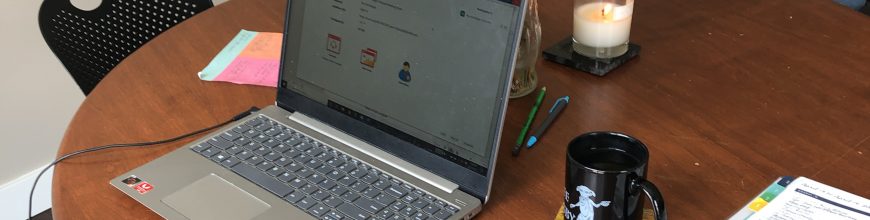
writing goals for 2024

As I think about my goals for the new year, I’m considering how I want writing to fit into my life in 2024. I have always seen myself as a writer, but after a few highly productive years leading up to the completion of a novel in 2019, I’ve been in a dry spell, at least by comparison. I do a lot of writing for my work–mainly emails and grading feedback–but in this post, I’m thinking about writing that is both more enjoyable and less ephemeral than those, important as they may be. So here are some writing goals I’d like to focus on in the new year.

  1. Get back into the habit of writing in my notebook for 15 minutes a day. I started doing this in September after I read Writing Down the Bones by Natalie Goldberg and wanted to rediscover the joy of writing, especially in longhand (a practice Goldberg speaks highly of). Throughout that month, I wrote for 15 minutes every morning. Most of what I wrote will never be shown to the world (though this post was a result of one particularly productive day), but it was a good practice, and I’d like to get back into it consistently in 2024.
  2. Research and revise two short stories based on incidents in the life of Christ that I drafted in 2023. These stories resulted from my daily writing practice. They are quick sketches that need research give them accuracy and authenticity. I may use my research and revision process to help me develop some resources for my students (I wrote about this idea here), but even if I don’t end up doing that, I would like to get these stories into a state that I’m happy with.
  3. Reread Sam’s Town to help me decide whether I want to work on the sequel. Sam’s Town is the novel I self-published in 2019. Soon after I completed it, while still riding a writing high, I started the sequel, Sam’s Home. But then I got married, moved, and lived through the pandemic, and the few brief attempts I’ve made to pick the manuscript back up haven’t really gone anywhere. So in 2024, I’d like to reread Sam’s Town in hopes of recapturing some of that excitement. Even if I ultimately decide not to make writing the sequel one of my goals for this year, I think I’ll enjoy revisiting those characters who played such an important role in my life for several years.

Three is a magic number when it comes to goal-setting, so I’ll stop there. What are some of your goals for 2024, writing-related or otherwise?

a prayer for humility

I wrote this prayer in my journal a few weeks ago. For clarity, Jordan is my husband, and BSF stands for Bible Study Fellowship.

When I think I know how Jordan is feeling and I really don’t

When I think I have the most insightful comment that could be made at that moment in my BSF group

When I assume a student’s tone in an email

Lord, help me to pause.

Help me to remember how little I know, and how good that is.

Creative writing tip: Find your Inklings

There’s a lot of talk these days about finding one’s “tribe” or one’s “people.” If taken to extremes or left unexamined, this attitude can worsen the polarization that plagues our society by excusing us from spending time with and listening to people who are different from us. But underlying this idea is a good impulse: the desire to connect with people who share our interests and joys.

Earlier this summer, I read Humphrey Carpenter’s The Inklings, which is a collective biography of C.S. Lewis, J.R.R. Tolkien, and Charles Williams, but even more than that, a fascinating account of an unusual group of men who “found their people.” The Inklings, as many of my readers will probably know, were an informal club of friends–mostly Oxford and Cambridge academics, mostly Christians–who met for years, twice a week, to eat, drink, have intellectually rich discussions, and–most famously–read aloud from their works in progress, some of which turned out to be genre-defining sagas like The Lord of the Rings and The Chronicles of Narnia. The atmosphere of the group, as well as some weird ideas that floated around during their intense discussions (Carpenter doesn’t shy away from these), was shaped by the group’s demographics (almost exclusively middle-aged white Englishmen) and the times in which they lived. But within their similarity, they were a remarkably diverse group in their marital status, politics, religious expressions, and philosophies on all sorts of things (e.g., how a fantasy world should be constructed). And, by all accounts, their strongly-held, often opposing opinions made the group exciting, not threatening. They were fans of each other’s work (even when they criticized it), and most importantly, they were friends.

In the decades since the Inklings met, aspiring writers (especially fantasy nerds) have been trying to recapture the heady atmosphere of their meetings. I was once part of a creative writing group called, unabashedly, the Inklings, which held long, food-fueled sessions in which we read aloud from our works in progress and received gracious yet detailed feedback from our peers. Like the original Inklings, we were brought together not only by our love of stories but also (for most of us) by our Christian faith, which deeply informed our group’s philosophy even though hardly any of us were writing explicitly Christian literature. And like the original Inklings, many of us developed close, trusting friendships.

If you are a writer–or if you don’t write yourself, but you enjoy a good story and know how to give helpful feedback (or are willing to learn how)*–I encourage you to join a creative writing group. Don’t try too hard to recapture the atmosphere of the original Inklings; you’re not them. You don’t have to wear tweed or meet every week or even meet in person. (My old group moved to Zoom during the pandemic.) Not all creative writing groups even involve critique of works in progress; some focus on support, encouragement, learning new techniques, or even writing silently in each other’s presence. The greatest gift of a creative writing group is not the activities that happen during the meeting or even the works of literature that its members produce, but that feeling of belonging, of being understood by other people who also have stories in their heads. Or, as C.S. Lewis put it, “the moment when one man says to another ‘What! You too? I thought that no one but myself . . .'”

Subscribe to get notified of upcoming posts: an ode to my grandparents’ cabin in the western Maryland mountains and an explanation of how adjunct faculty get paid (much more interesting than it sounds!). Also, if you’re a fan of the Inklings, subscribe to my podcast, It’s Lit Time!, for an upcoming series on rereading J.R.R. Tolkien’s Middle-Earth saga.

*Several of the original Inklings weren’t writers; they just enjoyed hanging out with their friends and hearing their stories.

monthly goals

Hello, blog readers! It’s been over a month since I’ve posted, and I miss you. I’ve had a couple of students tell me they’ve started following my blog, so I thought I should get on the ball with some new content. Before I do, though, I want to remind you about my podcast, It’s Lit Time! with Dr. Tess. While this blog focuses on teaching and learning, the podcast is about literature in a broad sense, including film and other forms of storytelling. I have some exciting conversations with guests coming up later this month, including discussions of The Godfather, superheroes, and mistakes writers should avoid. For now, check out my first two episodes:

Episode 1: What Is a Story? https://asynchronous.podbean.com/e/its-lit-time-episode-1-what-is-a-story/

Episode 2: What Is a Novel? https://asynchronous.podbean.com/e/its-lit-time-episode-2-what-is-a-novel/

And now that the commercial is over, today’s post.

I was reading last week about someone who shares her goals each month with her blog readers as an accountability method. I thought I would try doing this, with hopes that it will be useful not only for me but also for you–perhaps as an inspiration for a framework for your own goals. (The goals themselves, of course, will be highly individual.)

All year, I’ve been using a formula for my goals that involves the concept of loving others well. I started with three and have added one each quarter, so I’m up to five. Here they are:

  1. Love and serve God well.
  2. Love and serve Jordan well. (Jordan is my husband.)
  3. Love and serve my students well.
  4. Love and maintain my body.
  5. Love and maintain our home.

The first thing some of you might notice about these goals is that they are not the SMART (specific, measurable, achievable, relevant, and time-based) goals that many of us have been taught to make in organizational settings. (Teachers, you know these would not fare well as lesson objectives, as in “After this lesson, the student will be able to…”) This shortcoming is addressed partly by the fact that these goals deal with relationships in which I’m attuned enough to the other person or entity that I can usually tell intuitively whether things are going well or poorly. But also, as facilitated by my Cultivate What Matters Powersheets Goal Planner, I’ve broken down each of these large-scale goals into quarterly mini-goals, which are further broken down into action steps. My mini-goals for this summer range from the near-universal “Clean more regularly” to ones that are specific to my situation right now, like the one about helping Jordan transition back to the office three days a week after having worked almost entirely from home since March 2020. My action steps are even more varied, from setting my alarm earlier on Sunday morning to training for a race (I just signed up for a local zombie-themed 5K trail race) to making strategic use of apps like Forest and Love Nudge.

Once again, this post is meant to be inspirational, not prescriptive. And I realize that for some of you, the idea of making quarterly mini-goals and action steps sounds cheesy or restrictive. But for those of you who enjoy this kind of stuff–or are open to trying it–I hope this post gets you excited. Please feel free to keep me accountable–and to share your goals with me. Let’s help each other out!

“Not many of you should become teachers”

I am slowly memorizing the book of James in the Bible. Right now I am focusing on chapter 3, which opens with this statement: “Not many of you should become teachers, my brothers” (ESV). The humor here comes from the fact that James himself is clearly performing the role of a teacher throughout his letter, with his terse tone in which love for his audience competes with exasperation with them, his frequent questions and illustrations, and his short sentences, after which I can almost imagine him pausing to make sure his students are tracking with him. I would personify James’s narrative voice in this letter as a high school boys’ Sunday school teacher standing in front of a whiteboard alternating between outlining serious theological concepts and keeping an eye on the cutups in the back of the room. “Really, guys? You can be better than this.”

If James himself is a teacher, why is he warning others to pause before following in his footsteps? The second half of the sentence explains: “for you know that we who teach will be judged with greater strictness.” This makes me think of two of the great sayings of James’s brother Jesus: “I tell you, on the day of judgment people will give account for every careless word they speak” (Matthew 12:36) and “Everyone to whom much was given, of him much will be required” (Luke 12:48). All of us will be judged on the careless words we speak, but the more people who hear the careless words, the weightier the judgment. James is talking about influence.

If James were writing his letter today, he might say, “Not many of you should become influencers.” I think nearly all of us are at least a little bit allured by the idea of having a large platform with a large audience, whether it consists of book readers, podcast listeners, or social media followers (or all of the above, if you’re branding and marketing yourself as you should be). I don’t think there’s anything wrong with having those things, and I don’t think James would either. He is just saying: Before you take on that kind of responsibility, count the cost. Make sure your words have a firmer basis than your impression of what will sound wise or hip in the moment. People are listening.

James is talking specifically about teachers of the word of God, and I could write a whole series of posts about how influencer culture has…well, influenced the Church in the 21st century. But this blog is written for and by a different kind of teacher, and James’s principle applies to us too. Our students are listening. Preschool and elementary teachers realize this when they hear their students repeating their words and then wonder, “Yikes! Did I really say that?” (Most parents have had this experience too, I think.) I am always a little freaked out when one of my graduate or upper-level undergraduate students cites one of my course presentations in an assignment. [Fun side note: Now I’m starting to see my married name in citations: (Martinus, 2021).] My first reaction, even before I feel flattered, is a little bit of fear: “Oh, they’re actually paying attention. I need to be careful what I say!” I remember how cool and smart I thought my college professors were, especially those in my major. (And I should add, in case any of them read this, that they really were cool and smart!) I took their words very seriously. And I know I probably have some students now who think I’m cool and smart and who take my words very seriously. “Everyone to whom much was given, of [her] much will be required.”

Nobody is exempt from this principle, of course. We are all influencers. Some people have a wider (e.g. Instagram celebrities) or more intense (e.g. parents) influence than others. But no matter who you are, someone is hearing (or reading) your words and watching your life. You are a teacher. This is a great and a fearful honor. Yes, there is grace for when we make mistakes. But hear James’s warning whenever you are tempted to speak a careless word. Someone is listening.

Christmas anticipation–online professor style

When I taught on a university campus, the Christmas celebrations began as soon as the students arrived back from Thanksgiving break. (I should add that I taught at Christian universities, so the specific holiday of Christmas–not just a general air of festiveness–was celebrated loudly and proudly.) Everything had to happen early to get all the various departmental parties and campus traditions in before winter break. The maintenance crew had to start putting the lights up early (one of my universities meticulously outlined every tree on the main street of campus) so we could enjoy them for more than a day or two. Christmas music started floating out of various doorways, and colleagues started dropping cards and cookies on each other’s desks.

Even if the pandemic hadn’t happened, I wouldn’t have been able to experience all of that this year, my first year teaching completely online. While I’m probably going to get more accomplished this December than ever before because I’m not getting interrupted for things like the faculty Christmas card photo and the office decorating competition, I miss the excitement of December on campus. So I’m making a list of ways that I can make these next few weeks special as I work from home, and I’m sharing that list with you in hopes that it will inspire you to add a little anticipation and jollity into your December, even if you’re not an online professor.

  1. Listen to Christmas music. This is obvious, but what if you’re tired of the cycle of the same 50-ish songs that gets played on every radio station? Also, what if, like me, you prefer to listen to instrumental music while you work? Good news: There’s a ton of wordless Christmas music out there, in a range of genres from classical to bluegrass. Just search “instrumental Christmas” on Spotify or Pandora. One of my favorite artists in this niche is Craig Duncan, who has released a whole series of Celtic and other folk-inspired Christmas albums over the years. Also, a fun activity for you classical fans is to repurpose pieces that aren’t normally considered Christmas music. For example, this morning I was listening to Ralph Vaughan Williams’ “Fantasia on Greensleeves.” I listen to it year-round, but on December 1, it becomes “What Child Is This?,” like magic.
  2. Start your workday with an Advent reflection. You can take this in many different directions. I’ve never tried this, but I bet you could come up with readings for the whole month of December from Charles Dickens’s Christmas stories. For the past few years, I’ve been enjoying Biola University’s Advent Project: http://ccca.biola.edu/advent/2020/#. You can sign up for free by entering your email address, and every day from now until Epiphany (January 6), you’ll receive a multimedia devotional that includes two pieces of music to listen to, a work of art to look at, and a scripture passage, a poem, a reflection, and a prayer to read. Biola also does a Lent Project in the spring, and if you sign up once, you’ll get both series of devotionals every year. And they are very good about not sending junk emails; you’ll only receive the devotionals. I love this because it’s a moment of reflection and worship that comes right in the middle of my morning email check–a time when I very much need it!
  3. Upgrade everyday items. On December 1 or slightly earlier, I bring out my Christmas items. These are not just tree ornaments, though my husband and I do have three trees to decorate this evening! (That’s what happens when you get married after living alone for years and accumulating a lot of stuff.) I have Christmas mugs, Christmas coasters to put them on, Christmas socks, Christmas sweaters, Christmas earrings, Christmas candles, Christmas hand towels, Christmas notepads, Christmas soap and matching-scented room spray, a Christmas tablecloth, Christmas cookie cutters and tins, even a Christmas salt and pepper shaker set. I realize that to some people, bringing all this out every year and putting it away a month later probably sounds horribly stressful. But for me, a person who loves ritual and tradition, this is one of my most dearly anticipated activities every year. And you don’t have to go all out; even one or two special items can do the trick. Try it–a grading session is more fun (or at least more bearable) when you’re drinking tea out of a mug that says, “Have a cup of cheer.”
  4. Have your own office Christmas party. I haven’t tried this yet, but because my husband and I are both working from home right now, I’m hoping we can take some breaks during our workdays over the next few weeks to do something seasonal like watching a short Christmas movie, working on our cards, or taking a brisk walk in the frosty air (or the snow, if we ever get this lake effect snow shower they keep talking about). Our activities this year will not be centered on food because we’re doing the Whole 30 right now (great timing, right?), but if you’re working from home with someone else, you could have a cookie-baking party or re-create the classic office potluck (i.e., each of you searches the pantry and fridge and puts something yummy on a fancy plate). This is also a great time to listen to your favorite non-instrumental Christmas music.

I hope you got at least one idea from this post, and I hope you’ll share your ideas for making December special with me in the comments!

What’s next for Penelope?

I’ve been blogging at this site since December 2011. I started the blog so that I could review a couple of books that I wanted to receive for free. Since then, I’ve written about topics as serious as the Sandy Hook Elementary School shooting and as frivolous as my hypothetical Roller Derby name. I’ve told numerous embarrassing stories about cooking mishaps and breaking things. I’ve reviewed movies and albums, shared a couple of fan fiction stories, and hijacked the blog for a couple of months as a promotional platform for my self-published novel. I once seriously considered and made some steps toward re-branding this into a “Hufflepuff leadership” blog. (I still think someone should do that.) I’ve written about my job, my faith, and lately, my marriage. And I have nine partial drafts in my queue, including a “zany” travel mishap story that turned out to be boring when I wrote it down and a post tentatively called “what Ross Geller has in common with almost every Jimmy Stewart character (and me?).” (This one was doomed from the start.)

I realize that if I kept pressing forward for another year and a half, I could celebrate the tenth anniversary of this blog. But I think it’s time for me to end this long chapter in my writing life. I’ll keep the WordPress account in case I want to write a special post now and then, but these will likely be rare. Writing will always be one of my primary means of processing my thoughts and feelings, but not all of that writing needs to be shared with a readership.

Speaking of you, my readers–I know I’ve always had a small following, but you’ve been incredibly faithful. Some of you left long, frequent comments on my posts; others read the blog quietly for months, maybe years, before dropping into a face-to-face conversation the fact that you were reading it–always a delightful surprise. Thank you for paying attention.

I’ve thought for a while that it would be fun to have a podcast or a YouTube channel (actually, I have a great channel idea that I’m trying to convince my husband to help me with), but I don’t think I’ll jump into anything like that anytime soon. I’m thankful for the years I’ve been able to share my thoughts with you, and I hope we can stay in touch by other methods. Now I’m going to go cry a little.