For your listening and reading pleasure

Today, I offer you some podcasts and blogs you should check out.

  1. This one is shameless self-promotion: I was recently a guest on my colleague Clifford Stumme’s pop music podcast.  In this episode, we discuss the story arc of Mumford & Sons’s first album, Sigh No More.  In other episodes, Cliff discusses the meanings of songs by a dizzying array of artists, not all of whose music you might have thought worth taking seriously.  He shows you that pop music (a term he defines broadly) is a lot more than just a great beat you can dance to.
  2. I mentioned the podcast Does Anyone Really Need to Hear This? on my blog years ago, and I think it’s time to give it another shout-out.  Mark Stockslager (who, if you couldn’t guess by the name, is my brother) gives his often strong opinions on movies, books, TV, music, sports, and more.  His most recent episode, is a good one to start with, because in it he introduces some regular segments on some of the above-mentioned topics.  In another recent episode, he and his guests analyze–a more appropriate word would be “dismember”–the season 6 finale of The
    Walking Dead
    .
  3. Another colleague recently sent me two articles from the religion, arts, and culture blog Mockingbird, based out of Christ Episcopal Church in Charlottesville, VA.  The two articles he sent me (this really long but worthwhile one and this shorter one) are both about Harry Potter (people are always sending me Harry Potter stuff, which is fine by me!), but I’m looking forward to reading what these thoughtful bloggers have to say on other topics as well.
  4. If you work at a desk on a computer all day and aren’t using Spotify Free to provide a soundtrack to your day, why aren’t you?  I mostly listen to post rock (Spotify has a good playlist for this genre) and movie scores because they don’t have lyrics to distract me, but they also aren’t boring.  As I write this, I’m listening to John Powell’s exciting scores to the How to Train Your Dragon movies.

Now you have your assignments; go read and listen!

Happy Christmas from my tree

For my Christmas post this year, I thought I’d show you pictures of many of the 16 ornaments I bought while traveling in England (London and the Lake District) a few weeks ago.  I don’t have anything clever or profound to say this time–just that I hope you have a magical and blessed Christmas!

bird with carols written on its wings (from the British library) and bird on a post box (from Westminster Abbey)

bird with carols written on its wings (from the British library) and bird on a post box (from Westminster Abbey)

ornaments 2

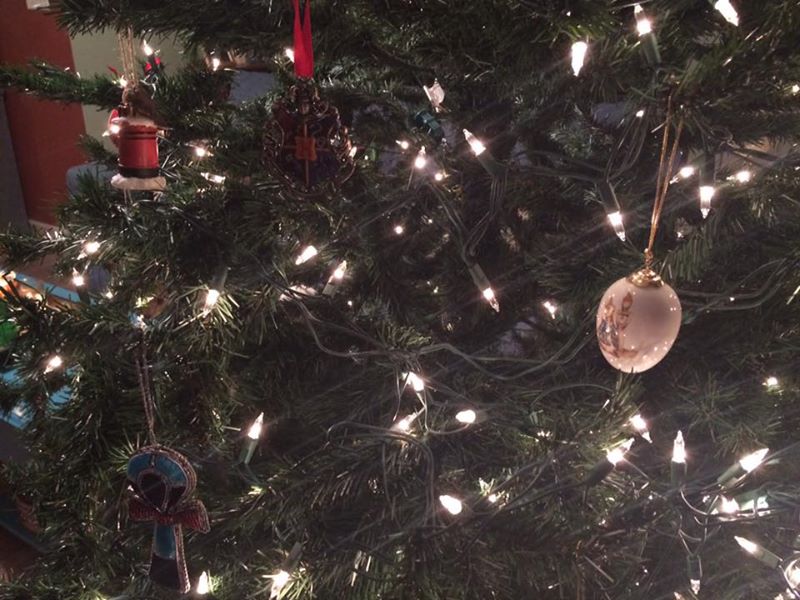
Celtic cross from the British museum (bottom left), Hogwarts crest from the Harry Potter studio tour (top), Peter Rabbit painted on an egg from The World of Beatrix Potter (right)

ornaments 3

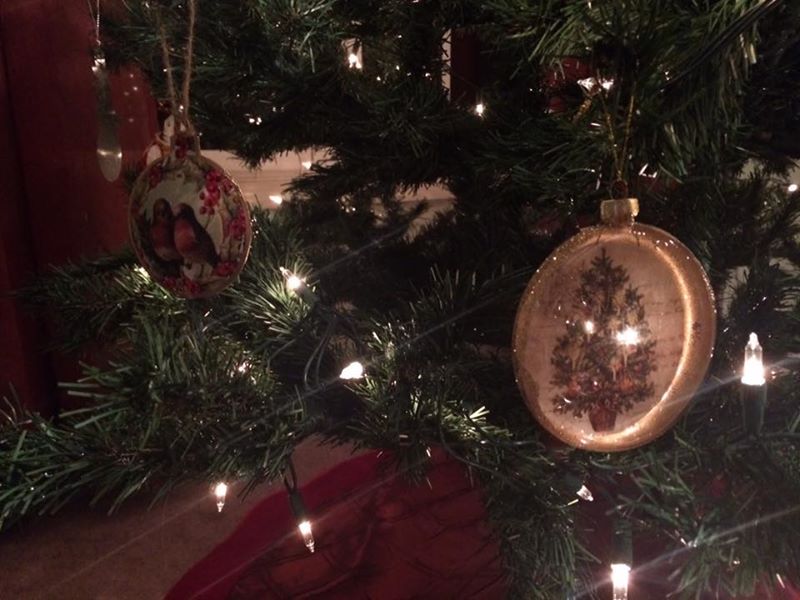
two Victorianesque ornaments: robins from Charles Dickens’s house and a Christmas tree from the British Library

ornaments 4

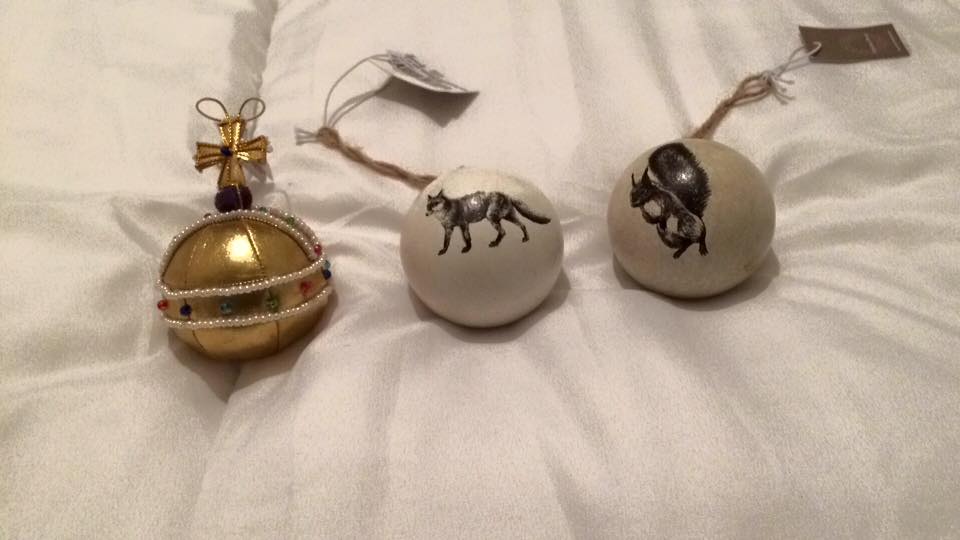
Here’s the postbox robin again, along with my other ornaments from Westminster Abbey. (That’s Queen Victoria.)

ornaments 5

These are from Harrod’s. I could have spent a fortune on ornaments there.

I forgot to take pictures of my Christmas pudding ornament, the heart-shaped ornament with Shakespeare’s face, and a few others.  But I hope these give you a taste of England at Christmastime!

My Month with Kenneth

Kenneth Branagh, that is.  See what I did with the title, there?

I’ve loved Kenneth Branagh and his art ever since my mom made me read Much Ado about Nothing and watch his exuberant 1993 adaptation when I was in middle school.  I love his non-Shakespeare stuff too; in Harry Potter and the Chamber of Secrets, he makes the cringe-worthy Gilderoy Lockhart funny and even likeable.

A few weeks ago, I watched Branagh’s 1994 film Mary Shelley’s Frankenstein twice within the space of four days.  I wanted to show it to the book club I’m faculty advisor for, but first I wanted to watch it (it had been quite a few years since I’d seen it) to make sure I could show it to the students in good conscience, considering that it’s rated R.  I decided that I could, but I prefaced our group viewing with a warning about why it’s an R-rated movie (mostly what the MPAA calls “thematic elements”–it is, after all, about a guy who sews and splices dead human body parts together).  Then I gave them another warning: There’s nothing subtle about this movie.  There’s weeping!  Screaming!  A huge house fire!  A bombastic soundtrack!  Dramatic gestures and facial expressions!  I told the students that I think part of the reason for this lack of subtlety is that it’s an adaptation of a novel from the Romantic period, a novel full of heightened language and unabashed displays of emotion.  (If I had a dollar for every time in the book that Victor Frankenstein flings himself into or out of a conveyance, or his eyes gush with tears…)  The dialogue in the 1994 adaptation is actually pretty understated, but the Romantic emotionalism appears elsewhere in the cinematic elements I mentioned above.

But I don’t think that’s the only reason for the heightened–well, the heightened everything of Mary Shelley’s Frankenstein, because the same over-the-top qualities appear in other Kenneth Branagh films.  I think the reason is that Branagh, like many film actors and directors from the UK, was first a stage actor and is still actively involved in live theater.  (More on this later.)  But unlike many others, Branagh has continued to bring that stage sensibility to the films with which he’s involved.  Everything is bigger on the stage because there’s no camera or audio equipment to swoop in and catch the flicker of an eyelash or a quiet sigh.  Over the years, the film industry has taught us to valorize intimacy and subtlety, and to view “stagey” as a derogatory term.  Kenneth Branagh’s films often challenge those conventions.  Just watch his wild and colorful Much Ado about Nothing, with its triumphant Patrick Doyle score, and compare it with Joss Whedon’s snarky black and white 2012 adaptation, with its smooth jazz score.

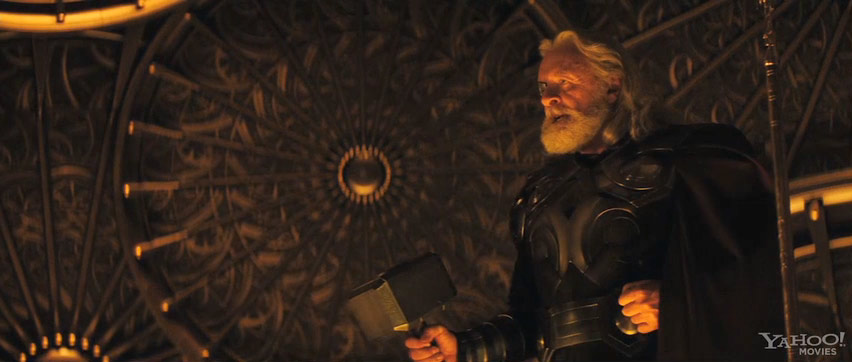
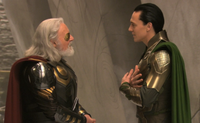
I thought about this more last night when I re-watched Thor (2011), which Kenneth Branagh shocked Hollywood by choosing to direct.  (The one that really shocked me was Jack Ryan: Shadow Recruit–I’m still not sure what Kenneth was doing there.)  Because I’m preparing to write an essay about the Thor movies (I’m sure I’ll say more about this in future blog posts), I was taking notes and paying particular attention to the Shakespearean allusions and the stage conventions that appear in this first film.  I noticed that the dialogue, at least in the Asgard scenes, is very different from the snappy, jokey language typical in superhero movies.  This is a Shakespearean family inheritance drama.  Stakes are high, voices are raised, accusations are flung, tears are shed.  I think that may partially explain why some die-hard Marvel fans didn’t care for this movie–it didn’t fit their expectations.

GET OUT OF MY HOUSE, UNGRATEFUL PUNK!!!!

GET OUT OF MY HOUSE, UNGRATEFUL PUNK!!!!

FINE!!  AND I'M NEVER COMING BACK!

FINE!! AND I’M NEVER COMING BACK!

"WHY DIDN'T YOU TELL ME I WAS ADOPTED???!!!" "BECAUSE I KNEW YOU'D FREAK OUT LIKE THIS!!!!"

“WHY DIDN’T YOU TELL ME I WAS ADOPTED???!!!”
“BECAUSE I KNEW YOU’D FREAK OUT LIKE THIS!!!!”

Anyways.  I’m not very good at creating memes.  My point is that there are some fantastic actors in this movie, so we can’t attribute all that yelling, nor those facial expressions (!), to bad acting.  In fact, several of them are also stage actors, and my guess is that they were totally on board with Branagh’s unconventional choice to make a superhero movie look a lot like a live production of Henry V.  (I chose that particular Shakespeare play for a reason, since Branagh on numerous occasions has compared the two stories.  See this fascinating article for details.)

I’ll close this post by saying that next Monday night, my parents are going to see Kenneth Branagh in Harlequinade, a very meta comedy about a troupe putting on A Winter’s Tale, at the Garrick Theatre in London.  (You know that part in the Bible that says, “Thou shalt not covet thy parents’ theater tickets”?)  If this rambling post has been accurate, they will be watching Kenneth Branagh do on stage what he has been doing on film (and directing others to do) for years now in defiance of Hollywood convention.  Stick it to ’em, Kenneth.

two good guys and a real woman

There’s apparently something about April that makes me want to write short stories.  (Check out last April’s creations, another brother story and a cousin story.)  This one is a best friend story, but it also has male protagonists.  For some reason I find it easier to write about men, but sometimes I need actual men to let me know if my characters are acting like men.  So feel free to critique.  I’m also aware that the non-male of my three main characters, Ramona, isn’t as compelling as the other two.  Since they clearly think she’s something special, I need to do a better job of showing why.  And I do know that the legal stuff the characters discuss about copyright and fan fiction is a bit murky.  I need to do more research on that, although this ultimately isn’t a very important part of the story. 

Please enjoy this as-yet untitled piece.  Warning: It is fairly long.

Back in college, they used to get pizza wasted.  This doesn’t mean that they ordered pizza while wasted.  This means that they ate so much pizza, they got stupid.  There was one three-week period when they watched Psycho every night, at least that’s how they remembered it later.  Every night they quoted the same lines.  “You’re going to put me in the fruit cellar.  Think I’m fruity, do you?”  After destroying three large stuffed crust Pizza Hut pizzas, they could barely breathe, far less think.  Adrian was skinny in college, even more than now.  Sam was, as now, bless-his-heart fat.  This made little difference.  They both demolished about a pizza and a half each.

Adrian was not exactly wishing, just now, that he was pizza wasted.  But he was thinking, with a twinge of nostalgia, about what a different setting he and Sam were in on this particular evening.  Instead of a B.O.-funky dorm room, they were in a vast hall with crystal chandeliers, which hurt Adrian’s eyes, and thick, somnolent carpets.  Sam was sitting at the front table, wearing a suit and looking flushed and sweaty but radiantly happy.  Adrian was sitting at one of the indistinguishable round tables with Ramona, who was falling asleep.  He saw that she had her phone in her lap and knew it was set to vibrate, so he texted her, “Wake up!”  Her eyes flew open, and she looked at Adrian sheepishly.  He texted again, “My little flower.  You wilt when there’s no natural light. :)”  She texted back, “Shut up and pay attention!,” but she was smiling.

Adrian looked up at the podium and tried to pay attention.  A middle-aged woman, who clearly didn’t read Sigyn: Intra-Yggdrasil Negotiator, was talking about Sam.  Sam wrote and illustrated comic books for a living.  He routinely referred to this as “the ultimate loser job,” but Adrian called it what it really was: living the dream.  Sam had pulled Sigyn out of a footnote in Norse mythology and turned her into the heroine of his hugely cult-popular series.  A national feminist organization had noticed that Sigyn was a “real” woman and now was honoring Sam for his work to advance realistic and positive portrayals of women in the comic book genre.  As far as Adrian, Sam, and Ramona had been able to tell, “real” meant that Sigyn didn’t take crap from people, and it also had something to do with the size of her hips.

Sam had been floored by this honor.  “I wasn’t trying to say anything,” he’d said last night while freaking out over his acceptance speech.  “I mean, she’s just a great character, and I think she’s hot.”  “I don’t think you should mention that last part,” Adrian had warned him.  “No, I don’t think the feminists would like that,” Ramona had agreed.  “Even if it is true.”  The laugh in her voice when she said this had made Adrian stare at her for a few moments, trying to see if he could find some hidden message.  Adrian had long suspected that Sam was modeling Sigyn’s appearance, and some of her mannerisms, after Ramona’s.  It was just little things, like her hair color and her fondness for wearing green.  Since Sam was clearly infatuated with his fictional creation, the possible connection between Sigyn and Ramona was one that Adrian was afraid to pursue.  He hoped he was just being paranoid.

Adrian snapped out of his reverie and realized that he was staring at Ramona, who was looking at Sam, who was now at the podium speaking.  Sam pushed a damp clump of hair off his forehead and took a sip of water.  “I’m so grateful for the love you’ve all shown Sigyn.  I was just trying to create a character who was smart and strong and happy and . . . you know . . . healthy, mentally and emotionally and . . . physically.”

Adrian and Ramona exchanged a glance.  So far Sam hadn’t said anything to get the feminists indignant.  Sam continued, “I think Sigyn’s greatest quality is that she brings peace with her wherever she goes.  She’s able to get these crazy, selfish, combative kings and demigods to stop fighting, and she can do that because she’s . . . like I said, smart, and emp–empathetic.”  He took a bigger swallow of water.  “So, I’m glad you love her too, and thanks for this . . . honor.”  Sam gave a tentative little wave and started to go back to his chair but stopped at a signal from the middle-aged woman who didn’t read Sigyn.  “Oh!” he exclaimed, sounding out of breath.  “Um, questions?”

A younger woman sitting in the press section raised her hand.  “There’s a lot of speculation on the message boards that Sigyn is having an affair with Balder.  What would you say in response?”

“STUPID QUESTION,” Ramona texted Adrian.

“Oh, that’s ridiculous,” Sam said, the hesitation gone from his voice.  “Balder’s not that kind of guy; he’s just a good guy, you know?”

Adrian texted back, “Seriously, what does she think this is, Inside Edition?”

“And besides,” Sam continued, “as weird as it sounds, the whole series is based on the premise that Sigyn actually loves Loki.  And in his limited, narcissistic way, he loves her too.”

The fact that Sigyn, true to the original mythology, was married to Loki was one of the reasons Adrian suspected that she was modeled from Ramona.  Unlike most normal women, Ramona wasn’t particularly attracted to Thor; it was the pale, dark troublemaker who caught her fancy, and for some reason this made Adrian extra jealous.  “Do you have to have a picture of Tom Hiddleston on your desktop?” he’d asked the other day, knowing he sounded petulant and ridiculous.  “Do you have to drool every time a preview with Jessica Chastain comes on TV?” she had rejoined, with a smile that said she didn’t take this nearly as seriously as he did.

Adrian wondered if he was becoming unreasonable, or worse, pathetic.  It wasn’t that he didn’t trust Ramona.  It was just that he sometimes, increasingly often, had the self-esteem of a 14-year-old girl.  There was no other reason for him to feel threatened by mythical gods and unattainable British actors, and by–well, by Sam, who now, it seemed, was finished answering questions.  The middle-aged woman was now making closing-type remarks while Sam stood at a deferential distance from the podium, his cheeks bright pink and his blonde hair turning dark at the ends from perspiration.

“Sam looks miserable,” Ramona texted.

“He’s fine,” Adrian typed at first, but backspaced this and wrote instead, “Those lights up there look really bright.”  What he wanted to write was, “Hey, I’m feeling kind of miserable myself over here, you notice?”  But that would really be pathetic.


Later, in the cab, Sam was happy again now that he’d taken off his jacket and tie and unbuttoned his collar.  “Man, I haven’t worn a suit since you two got married.”

“Yeah, but that time it was a tuxedo.  So this isn’t that bad,” Adrian pointed out.  Sam had been a groomsman in their wedding–not the best man, a distinction that had belonged to Adrian’s brother.  Sam didn’t have any siblings, nor did he have any other close friends, and his parents didn’t like to travel, which was why Adrian and Ramona had been his guests for the banquet.  (Of course, there was also the distinct possibility that Ramona was the inspiration for the character whom all the fuss was about, but nobody talked about that.)  After a brief, awkward spat, Adrian and Ramona had agreed to let Sam pay for their plane tickets and hotel room.  “I’m still shocked that I’ve made any money from writing comics,” Sam had said.  “And what better way to spend my money than to spend it on my best friends?”  Sam had a way of saying embarrassingly sincere things like that.

Now, in the cab back to the hotel, Sam punched Adrian in the arm.  Adrian cringed, which he knew was stupid, because it didn’t hurt and he normally didn’t mind being punched in the arm.  “Hey,” said Sam.  “Have you thought about it?  Are you gonna be Percy?”  Sam wanted to start a new series called Percy Weasley and the Ministry Aides, and he’d asked for Adrian’s permission to let him model the title character’s appearance after his own, which corresponded superficially to J. K. Rowling’s description of Percy.  Adrian found this annoying.  There was nothing particularly special about having red hair and horn-rimmed glasses.  Besides, all this was clearly just a formality, since Sam hadn’t asked for permission to model his other title character after Ramona.  Unless he had, and nobody had ever told Adrian.  But this was too enormous to be considered.

“Can’t you rest on your laurels for a while before starting your next project?” Adrian asked.

“But this one is going to be awesome!” Sam said.  “I’ve got it all planned out.  I think Percy is going to be kind of a hipster.”

“Why?” Adrian asked with an edge to his voice.  He certainly wasn’t hip enough to be a hipster.

“I don’t know; that’s just how I picture him.  I think it’s the glasses.  I’m thinking Cornelius Fudge can send Percy down to the local pub to get him a beer, and Percy comes back with this obscure craft brew called, like, Goblin Hoard.”

Ramona laughed.  She was the biggest Harry Potter fan of them all.  “Is Percy going to get reconnected with Penelope Clearwater?”

“Of course!” Sam exclaimed.  “I haven’t quite figured out how, though.  I think she’s working for the Daily Prophet.  Oh!  And I’ve already got the Christmas issue planned out.  Percy is going to get a card from his mom that just says, ‘Come home.’  And he isn’t going to come home, because this is before all the Battle of Hogwarts stuff, but he’s going to have this whole Christmas meltdown thing.  Great stuff.  I can’t wait.”

“Percy has always broken my heart,” Ramona said.

“J. K. Rowling is probably going to sue you,” Adrian said, even though Ramona had sounded like she was going to say more.  He was looking straight out the windshield; Sam and Ramona were leaning across him to talk to each other.  He felt a little sick.

“No, she isn’t,” Sam said.  “Has Marvel ever tried to sue me for using Loki and Thor and Odin?  I’m not famous enough to be a threat.”

“Yeah, but you might have to be more careful now that you’re a noted feminist artist,” Ramona said in a wink-wink voice.

Sam chuckled, always a fan of Ramona’s humor.  “Naah, this is the 21st century.  The whole concept of copyright is changing.  And I’m basically just writing fan fiction.  I’ve done my research; I won’t get in trouble for the stuff I do.”

“Please don’t go to jail, Sam!” said Ramona in an exaggeratedly worried tone and a proper British accent.  Ramona enjoyed doing British accents, especially when the context didn’t call for it.

“We’re at the hotel,” Adrian said, before the cab had even reached the breezeway.  He was angry at everyone in the backseat, especially himself, and he wanted to go to bed.

After Sam paid the driver, he hustled to catch up with Adrian and Ramona, who were already in the lobby.  “Hey,” he said.  “It’s probably just me, but–are you guys still hungry?”

“Actually, yeah,” said Ramona.  “I thought it was just me.”

“Kind of,” Adrian conceded.  “The food at that banquet was . . .”

“Not great,” Sam said apologetically, as if he felt bad for taking his friends to a lousy banquet.  “And there wasn’t much of it.  And I was so nervous, I couldn’t eat.”  He paused for a beat.  “Just kidding!”

Adrian never knew how to respond when Sam made fat jokes about himself, which this seemed to be.  “Earlier I saw a pizza place at the end of this block,” Adrian said.  “I’ll go get some pizzas.”

“We could just get delivery,” Ramona suggested.

“No, I want to walk,” said Adrian.

“I’ll go with you.  You’ll have a lot to carry.  And I want to pay,” said Sam.

“But you have your jacket and tie . . .”

“I’ll take them upstairs,” said Ramona.  “I have some grading to do, so I’ll wait up there for you guys.”

Adrian sighed.  He wanted to be alone, but at least this way Sam and Ramona wouldn’t be alone in adjoining hotel rooms.  “Okay, come on, Sam.”

It was a balmy night.  In spite of himself, Adrian was starting to feel calmer.  Sam seemed a little high from the evening’s events.  “Adrian,” he said.  “I want to tell you something.  I think you already know, but I want to say it out loud.”

“Don’t say anything you’ll regret,” Adrian said dryly, looking down at a pebble he was kicking along the sidewalk.

“Well, like I said, I think you know, but . . . I really . . . I mean I’ve always . . . I love your wife.”

Adrian nearly tripped mid-kick.  “What?”  He stopped and turned to look at Sam, whose face was redder than it had been all evening.  “Why would you tell me that?”

Most people would’ve had the decency to look away, Adrian thought, but Sam just looked at him with those big blue eyes that made him seem desperate even at the best of times.  “Come on, Adrian, I’ve loved Ramona pretty much ever since you two started dating–”

“Stop saying love!” Adrian shouted.  He was shouting, on a street that wasn’t entirely deserted, but he didn’t care.  “You don’t even know what that is!”

Now Sam turned away.  Adrian immediately realized what he’d said.  “I’m sorry, that was . . .” It was cruel, but that word sounded overly dramatic.  “Does she know?  Have you said anything to Ramona?”

Sam shook his head emphatically, still not looking at Adrian.  “Of course not.  You know me.  I would never act on this.”

“Because you’re a good guy,” said Adrian, in a dull voice now.  “And you know that as weird as it sounds, Ramona loves me, and I love her, in my limited, narcissistic way.”

Sam looked at Adrian now.  “What?  Did you think I was saying that about you?  That was just some literary crap that sounded good when I was on the spot.  It was about Loki, and you’re definitely not him.”

“Believe me, I know that!” Adrian turned and started walking briskly toward the pizza parlor.  Sam was shorter and practically had to jog to keep up with Adrian’s stride.  Adrian turned to speak again, as if Sam had kept the conversation going.  “Listen, I know this makes me sound like a douche bag, but it’s true.  You don’t know what it’s like to be married to a woman who’s whole leagues better than you, and to always be baffled about what she sees in you, and to constantly be paranoid about pretty much all the other men in the world, even if they’re fictional characters or . . . or really good guys.”

Sam stopped walking, forcing Adrian to stop too, and indicated his whole person in a sweeping gesture.  “Have you seen me, Adrian?  I’m a fat nerd.”

Adrian flung his arms out too, which he normally only did when he was teaching and making a very important point.  “Sam, did you sleepwalk through that banquet tonight?  Did you hear what those people were saying about you?  You’re like the Stan Lee of our generation.”  Sam snorted.  “Okay, maybe not yet, but you will be!  You spend all day, every day writing incredible stories that people all over the world love.  So don’t tell me–”

“I’m lonely, Adrian,” Sam cut in, not loudly.  It took Adrian a moment to realize what he’d said.  “I’m so lonely.  It’s worse than ever.  If I’d had to go to this thing by myself, I don’t think I could’ve gone.”  He paused to take a breath.  “Do you forget what that’s like?”

Adrian ran his fingers through his hair and straightened his jacket and his glasses, as if he’d been physically hit.  “Geez, Sam.”

They were at the pizza place.  Sam held the door open.  “How much pizza do you think we should get?”

Adrian shook his head.  “I don’t know.  Whatever.  All of it.”  He felt sick again.  “You decide.  I need to sit down.”  He went over to a far corner booth, sat down, took off his Percy glasses, and sat there with his face in his hands, while Sam placed what sounded like a very long pizza order.

Sam came over and slid into the opposite seat.  He let out a long sigh.  “It’s supposed to be ready in 15 minutes.”

Adrian put his glasses back on.  “You know what I was thinking about tonight?  Remember in college, how we used to get pizza wasted?”

Sam briefly chuckled.  “Oh, man.  Remember when we watched Psycho like 21 nights in a row?”

Adrian nodded.  “That’s exactly what I was thinking about.”  He paused, a moment of silence for their former selves.  “How did we pay for all that pizza?”

Sam shrugged.  “Student loans, I guess.”

“But . . . why did we do it?”

“I don’t know.” Sam shook his head.  “Actually, that’s not entirely true.  I know why did it.  I was especially miserable that year, and I was trying to numb it, I guess.  Kind of the story of my life.”

Adrian cringed again.  “Geez, Sam.”

“Sorry.”

“No, don’t be sorry.”  There was a long, comfortable silence, the kind men can generally pull of much better than women.

Finally, Adrian said, “Look.  I know I suck as a friend.”

“No, you don’t,” Sam insisted, with an are-you-crazy face.

“Yes, I do.  I’ve said some awful things to you tonight.  And just so you know, I was totally zoned out during at least half of the speaking part of the banquet.”

“So was I,” Sam laughed.

“Dude, the whole banquet was for you.”  Now Adrian had the are-you-crazy face.

Sam shrugged.  “I know.”

“Well, then we both suck as human beings.  But listen.  I’ll be Percy if you answer me one question.”

“What’s that?” Sam asked slowly, probably thinking that he’d spilled enough guts for one evening.

Adrian took a deep breath.  He thought he already knew the answer, but he was scared to hear it aloud.  “Is Ramona–when you draw Sigyn, are you really drawing Ramona?”

“Yes.”

Adrian let out the breath.  “I knew it.”

“But not on purpose, at least not from the beginning.” Sam closed his eyes for a second, the way people do when they’re trying to look into the past.  “I was just drawing a woman who was all those things I said in the speech earlier, strong, and–you know . . .”

“Smart, and happy, and healthy, and all that.”

“Yeah.  And then one day I was like, ‘Sigyn looks really familiar,’ and it wasn’t just because I’d gotten to know my character, although that was true; it was because I was drawing Ramona.”

Adrian look at Sam and realized he didn’t feel angry.  He then looked down at the table and realized he’d been tearing a straw wrapper to bits.  He brushed the pieces into a little pile.  “Well.  I think you should tell Ramona that she’s Sigyn.”

“What, really?”  Sam had been looking out the window, but he snapped back to look at Adrian when he heard this.  “But if I tell her, won’t she know–”

“Ramona is smarter than the two of us put together,” Adrian interrupted.  “She’s probably known about all this stuff–I mean all of it–for, like, ever.  And besides,” he added, “people like to hear nice things about themselves.”  For once in his life, Adrian wasn’t fishing for a compliment when he said this.  Which was good, because Sam didn’t give him one.

Instead, Sam just said, “Wow, okay.”  And then, after a pause, “Oh, hey.  Do you still like pizza without any tomato sauce?  Because I got you a whole one like that.”

“Sam,” said Adrian.  “I should start calling you Samwise, because you are, without a doubt, the world’s greatest friend.”  After a second of introspection, Adrian was pleased to find that he was perfectly sincere.

my literary crushes

First of all, you’ll all be glad to know that I’ve completed the first draft of the body of my dissertation.  Still to go: revisions, introduction and conclusion, and defense.

I thought I’d write a quick post to address something I’ve been saying a good bit lately.  I’ve been telling people that I “have a crush” on several different fictional characters.  What makes this notable is that I’m not talking about characters in movies, who have the benefit of being played by a cute actor.  I’m talking about characters from books.  Some of them have been portrayed in movies, but not in a way that impressed me in the particular way that I’m talking about.  I’m just going to address three here–two classics and a newcomer–but I’m sure I could come up with more if I thought about it.

1. Hamlet.  I hate it when people reduce Hamlet to the adjectives dark, brooding, and indecisive.  (I don’t think that last one is fair, anyway.  He’s trying to make up his mind about things like whether to believe a ghost and whether to kill his uncle.  These are not decisions to be made quickly.)  He’s also very funny in a reckless sort of way, a devoted son with conflicted but deep feelings about his dead father and his living mother, and a pretty deft swordsman.  He’s got a razor-sharp intellect, but that’s not his defining characteristic.

By the way, the main reason I’m thinking about Hamlet right now is that a friend and I tried to figure out his Myers-Briggs type today.  We settled on INFP.  I would date that.

2. The Deathless Man from Tiger’s Wife by Téa Obreht.  My book club recently read this 2011 magical realist novel.  The deathless man is this guy who shows up from time to time and basically fulfills the function of Brad Pitt’s character in Meet Joe Black, without the social awkwardness.  I fell in love with him early in the novel, when he was described as having large eyes, a feature I find very attractive.  (For a visual, look up a picture of JJ Feild RIGHT NOW.)  He continued to win me with his polite, calm, and occasionally gently sardonic manner, and then he totally stole my heart near the end when he ordered this fantastically sumptuous meal at a hotel in order to make a dying waiter happy, but clearly enjoyed it for what it was, not just for the good deed angle.  I like a man who likes to eat good food.

3. Sydney Carton from A Tale of Two Cities.  I guess it’s a cliché to fall in love with the guy who says, “It is a far, far better thing that I do than I have ever done.”  If so, I’m happy to be a cliché.  This is our current book club selection, and I’m about 100 pages in and remembering how much I love this man who sacrifices himself (in so many ways throughout the novel, not just at the end) without being an insufferable martyr, who is bitter without being cruel, and who loves long and hopelessly without being a sentimental sap.*  I’ve long noticed a similarity in stories between Sydney Carton and Severus Snape, but Carton is a more pleasant character because he doesn’t take himself so seriously.  (Note that this is a theme for me.)

While we’re on this topic: There hasn’t been a good Tale of Two Cities movie in a long time, so I’m taking suggestions for two actors who look similar enough to play Sydney Carton and Charles Darnay.  You can’t have the same actor play them, because then you’d have this weird fantasy doppelganger thing, which would take the focus off what’s really going on.  Please leave me your suggestions, along with your own literary crushes, in the comments.

*Which he could have easily become if Dickens hadn’t restrained himself.  I love Charles Dickens very much, but I’m willing to admit that he sometimes warms my heart so much I want to throw up.

Sometimes humility must come through humiliation

Luke 15:17-24 But when [the younger son] come to himself, he said, “How many of my father’s hired servants have bread enough and to spare, and I perish with hunger!  I will arise and go to my father, and will say to him, ‘Father, I have sinned against heaven and before you, and I am no longer worthy to be called your son.  Make me like one of your hired servants.'”  And he arose and came to his father. But when he was still a great way off, his father saw him and had compassion, and ran and fell on his neck and kissed him.  And the son said to him, “Father, I have sinned against haven and in your sight, and am no longer worthy to be called your son.”  But the father said to his servants, “Bring out the best robe and put it on him, and put a ring on his hand and sandals on his feet.  And bring the fatted calf here and kill it, and let us eat and be merry; for this my son was dead and is alive again; he was lost and is found.”  And they began to be merry.

The Voyage of the Dawn Treader, C. S. Lewis, chapter 7 (Eustace’s story about turning from a dragon back into a boy)*: “Then the lion said” – but I don’t know if it spoke – “You will have to let me undress you.” I was afraid of his claws, I can tell you, but I was pretty nearly desperate now. So I just lay flat down on my back to let him do it.

“The very first tear he made was so deep that I thought it had gone right into my heart. And when he began pulling the skin off, it hurt worse than anything I’ve ever felt. The only thing that made me able to bear it was just the pleasure of feeling the stuff peel off. You know – if you’ve ever picked the scab off a sore place. It hurts like billy-oh but it is such fun to see it coming away.”

“I know exactly what you mean,” said Edmund.

“Well, he peeled the beastly stuff right off – just as I thought I’d done it myself the other three times, only they hadn’t hurt – and there it was lying on the grass: only ever so much thicker, and darker, and more knobbly-looking than the others had been. And there was I as smooth and soft as a peeled switch and smaller than I had been. Then he caught hold of me – I didn’t like that much for I was very tender underneath now that I’d no skin on – and threw me into the water. It smarted like anything but only for a moment. After that it became perfectly delicious and as soon as I started swimming and splashing I found that all the pain had gone from my arm. And then I saw why. I’d turned into a boy again. You’d think me simply phoney if I told you how I felt about my own arms. I know they’ve no muscle and are pretty mouldy compared with Caspian’s, but I was so glad to see them.

“After a bit the lion took me out and dressed me – ”

“Dressed you. With his paws?”

“Well, I don’t exactly remember that bit. But he did somehow or other: in new clothes – the same I’ve got on now, as a matter of fact. And then suddenly I was back here. Which is what makes me think it must have been a dream.”

“No. It wasn’t a dream,” said Edmund.

“Why not?”

“Well, there are the clothes, for one thing. And you have been – well, un-dragoned, for another.”

“What do you think it was, then?” asked Eustace.

“I think you’ve seen Aslan,” said Edmund.

“Aslan!” said Eustace. “I’ve heard that name mentioned several times since we joined the Dawn Treader. And I felt – I don’t know what – I hated it. But I was hating everything then. And by the way, I’d like to apologize. I’m afraid I’ve been pretty beastly.”

“That’s all right,” said Edmund. “Between ourselves, you haven’t been as bad as I was on my first trip to Narnia. You were only an ass, but I was a traitor.”

“Well, don’t tell me about it, then,” said Eustace. “But who is Aslan? Do you know him?”

“Well – he knows me,” said Edmund. “He is the great Lion, the son of the Emperor-beyond-the-Sea, who saved me and saved Narnia. We’ve all seen him. Lucy sees him most often. And it may be Aslan’s country we are sailing to.”

Harry Potter and the Deathly Hallows, J. K. Rowling, chapter 30 There was a scuffling and a great thump: Someone else had clambered out of the tunnel, overbalanced slightly, and fallen.  He pulled himself up on the nearest chair, looked around through lopsided horn-rimmed classes, and said, “Am I too late?  Has it started?  I only just found out, so I–I–”

Percy spluttered into silence.  Evidently he had not expected to run into most of his family.  There was a long moment of astonishment, broken by Fleur turning to Lupin and saying, in a wildly transparent attempt to break the tension, “So–‘ow eez leetle Teddy?”

Lupin blinked at her, startled.  The silence between the Weasleys seemed to be solidifying, like ice.

“I–oh yes–he’s fine!” Lupin said loudly.  “Yes, Tonks is with him–at her mother’s–”

Percy and the other Weasleys were still staring at one another, frozen.

“Here, I’ve got a picture!” Lupin shouted, pulling a photograph from inside his jacket and showing it to Fleur and Harry . . .

“I was a fool!” Percy roared, so loudly that Lupin nearly dropped his photograph.  “I was an idiot, I was a pompous part, I was a– a–”

“Ministry-loving, family-disowning, power-hungry moron,” said Fred.

Percy swallowed.

“Yes, I was!”

“Well, you can’t say fairer than that,” said Fred, holding out his hand to Percy.

Mrs. Weasley burst into tears.  She ran forward, pushed Fred aside, and pulled Percy into a strangling hug, while he patted her on the back, his eyes on his father.

“I’m sorry, Dad,” Percy said.

Mr. Weasley blinked rather rapidly, then he too hurried to hug his son.


*The selection I really would have liked to include here is a passage from The Lion, the Witch, and the Wardrobe that doesn’t actually exist: the talk that Aslan has with Edmund after rescuing him from the White Witch.  That talk takes place off-stage, and afterward Aslan simply says to the other children, “Here is your brother . . . and – there is no need to talk to him about what is past.”  The passage I’ve posted here isn’t quite what I wanted, but I thought of it because my sister posted a link on Facebook to a song by the Oh Hellos called “The Lament of Eustace Scrubb.”  And I do like this passage, because it features both of Narnia’s repentant sinners comparing notes about Aslan.

The Author Who Loved

The title of this post is a pun on “The Author Who Lived,” the title of the doctoral dissertation I’m working right now, which in turn is a pun on Harry Potter’s famous nickname “The Boy Who Lived.”  (My dissertation is about Charles Dickens’s and J. K. Rowling’s unusual relationships with their audiences; you can read a piece of the proposal here.)  All I want to do right now is to share with you a quote I was delighted to come across in my Dickens research.  It was written late in Dickens’s career/life by the respected critic Charles Eliot Norton.  The first sentence could be interpreted as a snide back-handed compliment, but keep reading; it isn’t.  I know there are writers who would disagree with me, but I think Norton in this statement gives Dickens the greatest praise anyone could give a writer.  And perhaps the second-to-last sentence will remind you of someone else.

No one thinks first of Mr Dickens as a writer.  He is at once, through his books, a friend.  He belongs among the intimates of every pleasant-tempered and large-hearted person.  He is not so much the guest as the inmate of our homes.  He keeps holidays with us, he helps us to celebrate Christmas with heartier cheer, he shares at every New Year in our good wishes: for, indeed, it is not in his purely literary character that he has done most for us, it is as a man of the largest humanity, who has simply used literature as the means by which to bring himself into relation with his fellow-men, and to inspire them with something of his own sweetness, kindness, charity, and good-will.  He is the great magician of our time.  His wand is a book, but his power is in his own heart.  It is a rare piece of good fortune for us that we are the contemporaries of this benevolent genius.

My annual Oscar rant

Right on cue, here is my yearly collection of thoughts on the Academy Awards.

  • Gravity is clearly going to win a lot of awards.  One that it seems nearly guaranteed to win is Achievement in Directing for Alfonso Cuarón.  When people like me think of Alfonso Cuarón, we think of his darkly whimsical interpretation of Harry Potter and the Prisoner of Azkaban.  Do you think he could find a way to work an Azkaban shout-out into his acceptance speech?
  • I was excited when I saw that my favorite movie music composer, Thomas Newman, was nominated for his beautiful score to Saving Mr. Banks.  But I was annoyed when I did my predication research this evening and saw that he isn’t even being mentioned as a possibility to win.  All I can say is that the Academy is going to owe Thomas Newman one massive Lifetime Achievement Award segment.
  • I never thought I’d see the day when a movie called Jackass Presents: Bad Grandpa was nominated for an Oscar.  I realize that the category is Achievement in Makeup, and I’m willing to concede that the nominee, Stephen Prouty, did a pretty good job on that guy’s face.  But I’ve vowed never to watch the Oscars again if this movie wins.
  • I have a plan.  The Academy should create some new award categories: Best Actor, Actress, Supporting Actor, and Supporting Actress in a Genre Film.  That way, the people who do excellent acting work in films that aren’t “literary” (to borrow a term from the book publishing world)–e.g., science fiction, fantasy, and superhero movies; romantic comedies; “children’s” movies that aren’t animated–can be honored.  Because, let’s face it, they’re not going to be nominated in the traditional acting categories, except in very unusual cases like those of Johnny Depp in the first Pirates of the Caribbean (and there was no way he was going to win) or Heath Ledger in The Dark Knight–an extremely unusual case indeed, since he did win.  The only potential problem here is that creating such a category could further marginalize these types of movies and prevent genre-transcending films like The Dark Knight from getting the recognition that the Academy was actually prepared to give them.

So I’m curious: Who would you nominate if we had the Acting in Genre Films categories this year?  And what are your two cents, in general, on the 2014 Oscars?  Do share.

Scholars with wand collections

I’ve discovered recently that there’s a word for people like me–the people I describe in the title of this post, those of us who see no incongruity between loving a text and studying a text.  The word is aca-fan, and it’s been attributed to media scholar Henry Jenkins, whose blog is called Confessions of an Aca-Fan (henryjenkins.org).  Skim over Confessions and you’ll see basically what I want my blog to be.  Jenkins’s book, Textual Poachers: Television Fans and Participatory Culture (1992), is perhaps the foremost and certainly one of the earliest texts that showed the world that fans aren’t glassy-eyed drooling idiots, and yet somehow I missed out on it while doing my preliminary dissertation research.  (I put in an inter-library loan request for it tonight, and I plan to read passages from it to my Walking Dead fan community next Sunday night.  Just kidding–or am I?)

I also learned tonight that there’s a term for what wizard rock is, except it’s a broader category and existed long before wizard rock (or indeed, Harry Potter) was a thing.  The term is filk, and apparently it comes from a misspelling of folk on a conference program.  (I learned that from Henry Jenkins.)  Essentialy, it refers to nerdy music about fictional characters.  Am I the only person who didn’t know about this?

Ok, one more post about the survey.

I checked my Harry Potter canonicity survey today, and I’ve received 200 responses, which is a good round sum. Also, the responses have lately been trickling rather than pouring in. So I’ve decided to deactivate the survey. Now I can share the results with you!

I’m not going to post the table of all the responses, because it’s a little overwhelming to decipher. (Let me know if you want it in a Word document.) Basically, though, the average respondent ranked the novels as the most canonical source of information about the Harry Potter world and fan fiction as the least. (Not really a surprise there.) J.K. Rowling’s statements ranked as second most canonical. The movies and Pottermore are essentially at a tie for third place based on my cursory glance at the results, but I’m sure that some deeper statistical analysis would reveal some interesting differences. (If I find any, I’ll let you know.)

Thank you to everyone who completed the survey! I hope I get to meet you at LeakyCon someday. 🙂 Now that the survey is closed, feel free to wax verbose about your responses in the comments to this post.