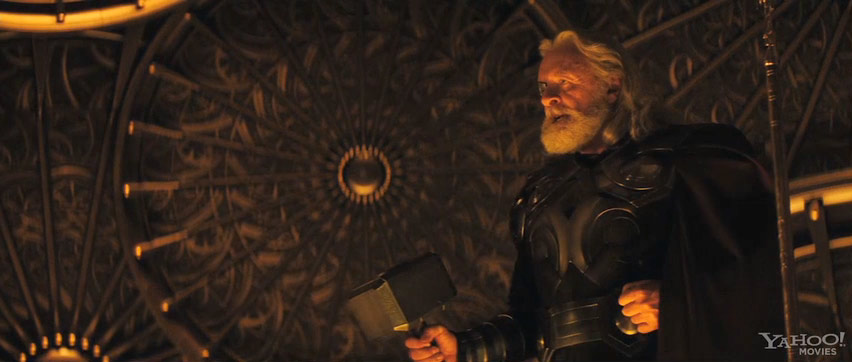
Who am I?

I’m Jean Valjean.  Actually, this post is not about Les Miserables; I just thought I would create a fake segue from last week’s post to this one.  That line is one of the best moments in the musical, though.

This morning the topic of faculty convocation at my institution was “The Modern Identity Crisis.”  We do realize that this is now the postmodern era, but the title was a reference to a paradigm shift that occurred during the Enlightenment.  Broadly speaking, in ancient and medieval times, you were born into a certain family, class, and trade, and you didn’t worry about discovering who you were really meant to be.  (So that question in A Knight’s Tale, “Can a man change his stars?”–nobody was really asking it at that time period.  But they also weren’t listening to classic rock.  That movie is a fantasy, in case you weren’t sure.)  But in the modern period, the question of individual identity became paramount, and it’s only become more confusing as the world has become simultaneously more diverse and more homogenous.

In this post, I want to point out a few recent manifestations of the drive to self-define that may appear silly or harmless, but that are actually quite telling and potentially powerful.  One is the proliferation of assessment tools, ranging from research-based psychiatric tests to three-question quizzes on advertising webpages (“What’s your guest bathroom decorating style?”), designed to help us categorize ourselves and others.  Young adult literature fans very seriously discuss the implications of being in a particular Hogwarts (and now Ilvermorny) house or a certain faction in the dystopian world of Divergent, and each of these fandoms offers a variety of official and unofficial tests and quizzes for determining where one belongs.  Many people, including myself, never tire of talking about the Myers-Briggs Type Indicators and the rampant memes that lead us to identify ourselves with characters from various worlds (The Lord of the RingsThe Office, the Bible) based on MBTI. We give these assessment instruments so much power that they are almost like a postmodern version of divination.  Instead of looking to stars or tea leaves to tell us how are lives are going to turn out, or how to make decisions, we look at our personality types.

Our self-defining statements can also create limitations on who and what we are willing to be and do.  Some of these statements give us excuses for our perceived weaknesses (“English people don’t do math,” or vice versa); others allow us to feel superior to others (“Academics don’t watch football”).  And some of these statements, especially when made and believed by children and teenagers, can actually create deep-rooted habits that can shape the quality of a person’s life (“Nerds don’t do physical exercise”).

I’m not trying to be dire or dour.  I think it’s fun to discuss these things (as long-time readers of my blog know, I’m a Hufflepuff, and I’m also an ISFJ), but I’m afraid too many of us are limiting ourselves because we’re letting our categories determine our destinies.

He’s no Charles Dickens, but…

…Victor Hugo is pretty great too.  I realized this in 2012, when Tom Hooper’s lavish film adaptation of Alain Boublil and Claude-Michel Schonberg’s musical Les Miserables came out.  The musical is very much in the spirit of Hugo’s novel of the same title, which I read last summer over the course of several months (and I’m not a slow reader).  Last November, I got to see the musical on stage in London, and while I didn’t buy one of those iconic t-shirts with Cosette’s waifish face and streaming hair, I think this experience qualified me as a Les Mis fangirl.  So I’ve been meaning to blog about Les Miserables for a while, but what really prompted this post was my attendance this past weekend at Alluvion Stage Company’s production of the musical The Hunchback of Notre Dame, which is directly adapted from the Disney animated film of the same title, but apparently is closer in plot and tone to Hugo’s novel Notre-Dame de Paris.*  (I say “apparently” because I haven’t read the novel yet, so please forgive any factual inaccuracies in what follows.)

I compared Hugo to Dickens because they lived around the same time and wrote big, sprawling novels with themes of poverty and systemic injustice that nevertheless entertain.  They even met each other once.  I think I’m biased toward Dickens because I’m able to read his works in their original language, which eliminates any linguistic awkwardness that might come with translation.  But Dickens also does humor a lot better than Hugo, who takes himself and his subjects too seriously, and he also was a lot better at editing himself (probably because of the serial format in which he wrote), as anyone will attest who has read Hugo’s encyclopedic mid-novel histories of the Paris sewer system and of the convent where Jean Valjean and Cosette found sanctuary.  Dickens was able convey an intimate knowledge of London without having to bring his plot to a screeching halt.

But I’m supposed to be writing about what’s so great about Victor Hugo.  Well, there are a number of things I could say, but I think the most significant is that he treats the subject of mercy–and its foil, justice–better than any other writer I know of.  Jean Valjean is a flawed Christ figure whose life is transformed by mercy, whereas his counterpart Javert is doomed because he doesn’t understand mercy either as an abstract concept or a practical act.  In Notre Dame, the priest Frollo has a nominal understanding of mercy from his reading of Scripture, but he can’t accept it or extend it, so he, too, is doomed.  If the musical I saw is anything like the novel, Notre Dame is an ironic tragedy because although it takes place in and around a building where the gospel is proclaimed many times a day, nobody really understand the gospel.  Les Miserables, however, ends with hope (despite its title) because most of its central characters have learned to forgive because they were forgiven.

I know I’m stating the obvious to those who are familiar with these stories, but if you’re not familiar with them, watch one of the musicals or pick up one of the novels.  Victor Hugo’s stories have certainly deepened my understanding of my own Christian faith.

*By the way, I’m intrigued by the title of the novel because it means that the protagonist is not Quasimodo, the hunchback, but rather the cathedral itself–or maybe we’re supposed to read Notre-Dame not as a proper name but as “our lady,” in which case the novel is really about Esmeralda, the sanctified pagan Mary.

“Satisfaction is not in my nature.”

I’ve recently read several books and articles that argue that nearly everyone’s deepest motivations can be placed into one of just a few broad categories, such as power or belonging.  I also recently read The Gift of Being Yourself, in which the author, Christian psychologist David G. Benner explains the ugly side of that same concept: everyone’s besetting sins can be traced back to a deep need they feel is unfulfilled, and that these deep needs can be organized into one of nine categories.  Of course, there’s infinite variety in the manifestations of our motivations, needs, and sins, but at the root, we’re all more similar than we like to think.

The title of my post is something that Loki, in an unusually honest moment, said to Thor in Thor: The Dark World.  His point was that taking revenge on those who had killed the brothers’ mother, Frigga, wouldn’t bring him any closure or contentment.  In fact, as is abundantly clear in the series of films, nothing can really content Loki, because he wants EVERYTHING: a throne, Odin’s respect, the world, the universe…and even that wouldn’t be enough.

Satisfaction isn’t in my nature, either.  I’m realizing that a lot of my surface-level sins and struggles–anger, for instance–arise from a deep desire to have it all.  Here are some examples:

I envy other people their talents.  Because I don’t want to just be good at writing and teaching.  I want to be good at everything.

I sometimes eat more than I should.  Because I want to try one of everything!  And maybe more than one.

I crowd my schedule and wear myself out by saying “yes” not only to too many work obligations and volunteer commitments, but also to too many fun activities.  Because FOMO.

The tricky thing about this lack of satisfaction is that most Western societies today act like it’s a good thing.  Contentment gets associated with mediocrity, laziness, and an unnatural lack of desire.  Lack of contentment, on the other hand, is repackaged as ambition (which is supposed to be good unless you’re talking about Slytherin House or Macbeth), willingness to change and improve, and an insatiable thirst for learning, excellence, awesome experiences . . . you name it.

This is one of the many reasons why the Christian message is so counter-cultural.  Today we use the term “sheep” to refer to lazy conformists who can’t think for themselves, but David in Psalm 23 and Jesus in the gospels use sheep as a symbol for people who admit their dependence on God and who are humble enough to receive, as a gift, something as simple as their daily food.  Content, satisfied people don’t worry about missing out, because they trust that what their shepherd has given them is exactly what they need.

I get where Loki is coming from because I have the same desires.  I mean, I don’t want to rule the Nine Realms, but I want to be the ruler of my own life.  But I’ve learned, over and over again, that I’m a really bad ruler.  I’m a sheep.  And I think I’d be a lot happier if I just admitted that.

For your listening and reading pleasure

Today, I offer you some podcasts and blogs you should check out.

  1. This one is shameless self-promotion: I was recently a guest on my colleague Clifford Stumme’s pop music podcast.  In this episode, we discuss the story arc of Mumford & Sons’s first album, Sigh No More.  In other episodes, Cliff discusses the meanings of songs by a dizzying array of artists, not all of whose music you might have thought worth taking seriously.  He shows you that pop music (a term he defines broadly) is a lot more than just a great beat you can dance to.
  2. I mentioned the podcast Does Anyone Really Need to Hear This? on my blog years ago, and I think it’s time to give it another shout-out.  Mark Stockslager (who, if you couldn’t guess by the name, is my brother) gives his often strong opinions on movies, books, TV, music, sports, and more.  His most recent episode, is a good one to start with, because in it he introduces some regular segments on some of the above-mentioned topics.  In another recent episode, he and his guests analyze–a more appropriate word would be “dismember”–the season 6 finale of The
    Walking Dead
    .
  3. Another colleague recently sent me two articles from the religion, arts, and culture blog Mockingbird, based out of Christ Episcopal Church in Charlottesville, VA.  The two articles he sent me (this really long but worthwhile one and this shorter one) are both about Harry Potter (people are always sending me Harry Potter stuff, which is fine by me!), but I’m looking forward to reading what these thoughtful bloggers have to say on other topics as well.
  4. If you work at a desk on a computer all day and aren’t using Spotify Free to provide a soundtrack to your day, why aren’t you?  I mostly listen to post rock (Spotify has a good playlist for this genre) and movie scores because they don’t have lyrics to distract me, but they also aren’t boring.  As I write this, I’m listening to John Powell’s exciting scores to the How to Train Your Dragon movies.

Now you have your assignments; go read and listen!

#FakeSummerBlockbusters


I was going to tweet these, but since I haven’t posted here in a while, and I think people are just as likely to look at my blog as my Twitter, here are some movies that aren’t actually coming out this summer.

From Christopher Nolan, a football movie that rips the very fabric of time and space: InterCeption.

Which Zombie Is Eating Gilbert Grape? –starring the kid from Fear the Walking Dead who looks like young Johnny Depp.

A boring superhero who wears blue and always does the right thing vs. a rich guy who doesn’t have superpowers but wears a cool suit.

Oh, wait, this movie already has come out this year.  Twice. #justkidding #LuvUCapAmerica

#hobbitlife

Several times on this blog, I’ve stated or hinted that I feel I have quite a bit in common with a hobbit.  (See, for example, I am not fast” and my comments on “Another schizophrenic post.”) Yesterday, I formulated my most thorough, yet succinct, statement of this resemblance to date.  I wrote it for a different venue, but I thought I’d share it here.  Enjoy.

If you want to understand me pretty well, you really just need to think of Bilbo Baggins. Like Bilbo, I love my house, and I’m quite proud of keeping it tidy and homey. I like my routine, my alone time, and my square meals. But if you show up at my door and ask me to go on an adventure–well, I might need a little prodding, and I might freak out about forgetting my pocket handkerchiefs, but once you get me on the road, you’ll find me a dependable traveling companion, and I might even pleasantly surprise you with my resourcefulness and (occasionally) courage.

Just as a clarification, I don’t have big ears or hairy feet.

My Month with Kenneth

Kenneth Branagh, that is.  See what I did with the title, there?

I’ve loved Kenneth Branagh and his art ever since my mom made me read Much Ado about Nothing and watch his exuberant 1993 adaptation when I was in middle school.  I love his non-Shakespeare stuff too; in Harry Potter and the Chamber of Secrets, he makes the cringe-worthy Gilderoy Lockhart funny and even likeable.

A few weeks ago, I watched Branagh’s 1994 film Mary Shelley’s Frankenstein twice within the space of four days.  I wanted to show it to the book club I’m faculty advisor for, but first I wanted to watch it (it had been quite a few years since I’d seen it) to make sure I could show it to the students in good conscience, considering that it’s rated R.  I decided that I could, but I prefaced our group viewing with a warning about why it’s an R-rated movie (mostly what the MPAA calls “thematic elements”–it is, after all, about a guy who sews and splices dead human body parts together).  Then I gave them another warning: There’s nothing subtle about this movie.  There’s weeping!  Screaming!  A huge house fire!  A bombastic soundtrack!  Dramatic gestures and facial expressions!  I told the students that I think part of the reason for this lack of subtlety is that it’s an adaptation of a novel from the Romantic period, a novel full of heightened language and unabashed displays of emotion.  (If I had a dollar for every time in the book that Victor Frankenstein flings himself into or out of a conveyance, or his eyes gush with tears…)  The dialogue in the 1994 adaptation is actually pretty understated, but the Romantic emotionalism appears elsewhere in the cinematic elements I mentioned above.

But I don’t think that’s the only reason for the heightened–well, the heightened everything of Mary Shelley’s Frankenstein, because the same over-the-top qualities appear in other Kenneth Branagh films.  I think the reason is that Branagh, like many film actors and directors from the UK, was first a stage actor and is still actively involved in live theater.  (More on this later.)  But unlike many others, Branagh has continued to bring that stage sensibility to the films with which he’s involved.  Everything is bigger on the stage because there’s no camera or audio equipment to swoop in and catch the flicker of an eyelash or a quiet sigh.  Over the years, the film industry has taught us to valorize intimacy and subtlety, and to view “stagey” as a derogatory term.  Kenneth Branagh’s films often challenge those conventions.  Just watch his wild and colorful Much Ado about Nothing, with its triumphant Patrick Doyle score, and compare it with Joss Whedon’s snarky black and white 2012 adaptation, with its smooth jazz score.

I thought about this more last night when I re-watched Thor (2011), which Kenneth Branagh shocked Hollywood by choosing to direct.  (The one that really shocked me was Jack Ryan: Shadow Recruit–I’m still not sure what Kenneth was doing there.)  Because I’m preparing to write an essay about the Thor movies (I’m sure I’ll say more about this in future blog posts), I was taking notes and paying particular attention to the Shakespearean allusions and the stage conventions that appear in this first film.  I noticed that the dialogue, at least in the Asgard scenes, is very different from the snappy, jokey language typical in superhero movies.  This is a Shakespearean family inheritance drama.  Stakes are high, voices are raised, accusations are flung, tears are shed.  I think that may partially explain why some die-hard Marvel fans didn’t care for this movie–it didn’t fit their expectations.

GET OUT OF MY HOUSE, UNGRATEFUL PUNK!!!!

GET OUT OF MY HOUSE, UNGRATEFUL PUNK!!!!

FINE!!  AND I'M NEVER COMING BACK!

FINE!! AND I’M NEVER COMING BACK!

"WHY DIDN'T YOU TELL ME I WAS ADOPTED???!!!" "BECAUSE I KNEW YOU'D FREAK OUT LIKE THIS!!!!"

“WHY DIDN’T YOU TELL ME I WAS ADOPTED???!!!”
“BECAUSE I KNEW YOU’D FREAK OUT LIKE THIS!!!!”

Anyways.  I’m not very good at creating memes.  My point is that there are some fantastic actors in this movie, so we can’t attribute all that yelling, nor those facial expressions (!), to bad acting.  In fact, several of them are also stage actors, and my guess is that they were totally on board with Branagh’s unconventional choice to make a superhero movie look a lot like a live production of Henry V.  (I chose that particular Shakespeare play for a reason, since Branagh on numerous occasions has compared the two stories.  See this fascinating article for details.)

I’ll close this post by saying that next Monday night, my parents are going to see Kenneth Branagh in Harlequinade, a very meta comedy about a troupe putting on A Winter’s Tale, at the Garrick Theatre in London.  (You know that part in the Bible that says, “Thou shalt not covet thy parents’ theater tickets”?)  If this rambling post has been accurate, they will be watching Kenneth Branagh do on stage what he has been doing on film (and directing others to do) for years now in defiance of Hollywood convention.  Stick it to ’em, Kenneth.

I am not fast.

A brief explanation to the people I’ve been road-running with (that is, in the wake of) recently.

My running style can best be understood if you keep in mind that I am basically a hobbit.  I’m about 5’2″ and (this is a nice and fairly accurate way of putting it) solidly built.  I like to walk barefoot and can be quiet and light on my feet, but never graceful like an elf.  I enjoy and am quite good at hiking long distances, like to the Old Forest on the borders of the Shire.  I can carry my dearest (emaciated) friend up the side of Mount Doom, no problem.  But if you expect me to be fast, there we encounter a problem, unless you intend to give me a piggyback ride as Boromir did for Merry and Pippin.

Speed is not my skill.  Endurance is.  I’m well aware that endurance is not glamorous.  It is hard to depict in literature or film, and boring to read or watch.  For me, though, it’s something to be quietly proud of.  I take pride in the fact that during the Virginia Ten-Miler, I keep running steadily up Farm Basket Hill when most of the runners around me, some of them generally faster than I, are slowing down to walk.

Apparently I also have endurance in other areas of my life.  My chiropractor says I have a high pain tolerance, which is kind of an ugly cousin to endurance.  The first time I had a phone conversation with my dissertation chair, whom I’d never met in person, he said he thought I had grit, another close relative of endurance.  I’d like to believe it was the steely note of determination in my voice, but I think he was probably just bluffing.  Still, he must have been right, because I finished my dissertation (relatively quickly, I think, considering some of the logistical difficulties I encountered), and anyone who completes a doctoral dissertation must have grit.

I composed this post in my head during a recent run when I was feeling really bad about the fact that the second-slowest runner was so far ahead I couldn’t even see him.  I’ve framed it as an explanation to my fellow runners, but I think it’s actually just validation for me.  And I’m sharing it on my blog because there may be some other hobbits out there who need to look at their boring endurance trait from a new perspective.  Keep trudging, my friends.

movie marathon: the Statue of Liberty and immigration

Remember when I suggested (implicitly) that you should watch The Godfather Part III alongside Thor: The Dark World because of all the juicy family drama?  Well, now I’m suggesting that you watch The Godfather Part II alongside An American Tail (yes, 80’s kids, that’s the first Fievel movie).  Despite the radically different audiences to which these two films were marketed, the similarity is actually pretty obvious: both follow the adventures of a European boy (or young male mouse) who arrives in New York Harbor during America’s golden age of immigration.  If you watch them together, you’ll see all kinds of connections.  Here’s a disclaimer: I’m writing this post as a movie fan, not a historian.  I’m getting some relevant details from Wikipedia and drawing my own conclusions.  If you want a thorough and thoughtful history of American immigration, don’t read this.  If you want an idea for a movie marathon that will involve your mind and your heart, keep reading.

1. An American Tail (1986).  The Mousekewitz family leaves Russia, fleeing violence,* and sails to America in the crowded third-class hold of a ship.  Their young son, Fievel, falls overboard and washes up in New York Harbor, alone and afraid.  During his brief stint as a street urchin, Fievel runs afoul of a nasty underground (literally) crime boss, attends a political rally, and has some cross-cultural immigrant experiences when he visits an Irish wake and makes friends with an Italian teen.  After participating in a successful plot to break the crime boss’s hold on the community, he is reunited with his family.

Oh, also–the Mousekewitzes are mice fleeing cat violence, Fievel is fished out of the harbor by pigeons, the crime boss is a cat, and Fievel also makes friends with a harmless (vegetarian, tender-hearted, and silly) cat during his underground adventures.  That Italian “teen” is a mouse, and so is pretty much everyone else in the movie.

But none of this detracts from the seriousness of the story.  An American Tail is still an excellent film about family, fear, injustice, resilience, and American diversity.  The animation is timeless, the story is taut and exciting, and the music, scored by James Horner (whom we miss), is emotionally pitch-perfect.  Some of the songs have become classics.  Even if you’ve never seen this movie, you’d probably recognize the sad split-screen scene in which Fievel and his sister both sing “Somewhere Out There” against the background of an enormous full moon.  And “There Are No Cats in America,” the rousing number sung in the hold of the ship, is basically the rodent version of Bruce Springsteen’s “American Land”–both are deliriously hopeful songs of immigrant dreams that America could never fulfill.

Much of this movie’s action takes place against the heavily symbolic backdrop of the Statue of Liberty, whose construction is completed during the course of the story.  In An American Tail, the Statue represents hope.  It’s there, to a nest in Liberty’s torch, that Fievel is first taken by the pigeons, and it’s there that the head pigeon (who is French, to represent the Statue’s designers) tells him, in song, to “never say never.”  The Statue is one of the last images we see in the film as well.  The overall tone of An American Tail is celebratory of the opportunities that American affords, yet it isn’t blindly so.  The irony of “There Are No Cats in America” sounds a cautionary note: no country can fulfill the wildest dreams of the desperate.

Fievel and Henri the pigeon fly past the Statue of Liberty www.tradingcarddb.com

Fievel and Henri the pigeon fly past the Statue of Liberty
http://www.tradingcarddb.com

2. The Godfather Part II (1974).  By the time the silent 9-year-old Vito Andolini arrives at Ellis Island (alone, like Fievel) in 1901, escaping a vendetta in his hometown of Corleone, Sicily, the Statue of Liberty has been finished for 15 years.  An immigration official misreads Vito’s identification tag and writes down his name as “Vito Corleone,” and the rest is history–movie history, anyway.

I’m not going to summarize The Godfather Part II for you.  It’s 200 minutes long.  (An American Tail is only 80.)  It has two major plot lines, and both of them sprawl over giant swaths of time and space.  For the purposes of this post, I’ll say that among all the film’s many themes (such as family, fear, injustice–actually, they’re really similar to An American Tail‘s themes), immigration–specifically, what we mean when we say that America is a melting pot–is a big one.  And that’s not only true in the young Vito, 1920’s-NYC plot line, but also in the plot line that takes place in 1958, after both the Corleone family and America have gotten a lot bigger and a lot more complicated.

I’ll give you one example: listen to the vitriolic ugliness of Senator Geary’s bigoted comments in the privacy of Michael Corleone’s study at the beginning of the movie, and then listen to the senator’s awkwardly well-rehearsed speech about his “Italian-American friends” in the hearing scene near the end.  Official tolerance masks private hatred in the hypocrisy (as Michael rightly calls it) of relations between politics and crime.

The Statue of Liberty isn’t a major symbol in The Godfather Part II, but young Vito and his fellow passengers take a slow, lingering look at it while they are still aboard the ship.  (Three-hour movies can afford a lot of slow, lingering looks.)  Some of the fellow passengers seem enraptured by the promise of America, but the young boy’s face is inscrutable.  There’s another shot a few minutes later in which Vito’s face is juxtaposed with a reflection of the Statue.  Again, he doesn’t appear to have any grand hopes.  For him, arriving in America simply means that he isn’t dead yet.
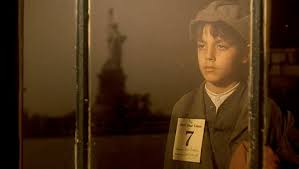
young Vito and Lady Liberty

young Vito and Lady Liberty

So, here’s the plan: block off five hours of your life, get your hands on these two films, and prepare to laugh, cry, and think.  After that, you might want to watch Fievel Goes West (a challenging exploration of the meaning of Manifest Destiny…well, sort of) and The Godfather (which opens with the line, “I believe in America”).  Stay tuned for more movie marathon recommendations!

*The violent event at the beginning of the film appears to be a cross between an attack by Cossack marauders and an anti-Jewish pogrom.  There are overtones of both.

Jesus’ 30th birthday

Here’s an interesting fact: The English Romantic poet John Keats died when he was 25 years old, but not before he’d written some of the greatest odes in the English language.  I sometimes share this fact with my students, with a mild joke to the effect that they’d better get busy over the next few years.  Although I’m not trying to make my students feel like they’ve wasted their lives up to this point, I sometimes feel that way myself when I look at what I’ve accomplished and compare it with the accomplishments of luminaries in various fields.  The disparity is particularly striking when I compare myself with people, like Keats, who died very young.  Heath Ledger, for example, was only 28 when he passed away back in 2008, and he’d delivered a few stunning, even epoch-making performances in the few years prior.  [Did his Dark Knight tour de force usher in the dominance of the mischief/chaos-making villain in present film?  I think so, but that’s another blog post.]  And then, if you went to Christian school like me, you also have some big-name servants of God (I hesitate to call them rock-star martyrs) with whom to compare yourself, like David Brainerd, who died at 29 after wearing out his health in service to the Native Americans back in the 18th century.  It’s hard not to look at people like that and think, “Basically, I’ve accomplished nothing so far.”

I’m going to turn 30 next month.  So I took notice this morning when I read Luke 3:23a: “Now Jesus Himself began His ministry at about thirty years of age.”  Until that point, Jesus had been living in obscurity, probably working alongside his adoptive father Joseph in the “secular” profession of carpentry.  During that time, we can assume that his heavenly Father was quietly preparing him for those crucial–and short–three years of ministry that would follow.  God the Father didn’t look down at Jesus on his 30th birthday and say, “You’ve been messing around building tables long enough; now it’s time to do some real Kingdom work.”  In fact, because we know that Jesus was sinless and that his whole life was directed toward a mission, we can confidently say that the tables were not a waste of time.  Backed by Colossians 3:23, we can go so far as to say that they were an act of worship to his Father.  Building tables was part of what Jesus was born to do and part of how he readied himself for the history-shattering events to come later.

It may be helpful to ask from time to time, “Have I accomplished anything that’s made an impact?”  It’s a tricky question, though, because our actions have effects that we don’t see and that we can’t control.  I think it’s more useful to ask, “What kind of person am I becoming?”  That, with God’s help, we can control.  So as my birthday approaches, I’m trying to tell myself that it’s okay that I haven’t written a poem to rival “Ode to a Nightingale.”  Here’s what I should really be asking myself: Am I loving?  Am I joyful?  Am I thankful?  And am I ready for whatever big things may come later?