I need your help: One-question survey

As part of my dissertation research, I am attempting to gauge Harry Potter fans’ perceptions of the relative canonicity of different sources of information about the universe of the story.  The term canon generally refers to an entire fan community’s collective understanding of what constitutes accepted information about the world of the shared text, but in a large and highly participatory fan community like the Harry Potter one, each person may have a different opinion about what sources are canonical and what makes them that way.  This survey is an attempt to find out how different fans rate the canonicity of several major sources of Harry Potter lore.  Please read the prompt carefully and answer the question thoughtfully.  Also, I’d like to get as large a sample as possible, so please send the survey link to other fans.

https://qtrial.qualtrics.com/SE/?SID=SV_4PJzrBq5xWEkQVD

The child is father to the man

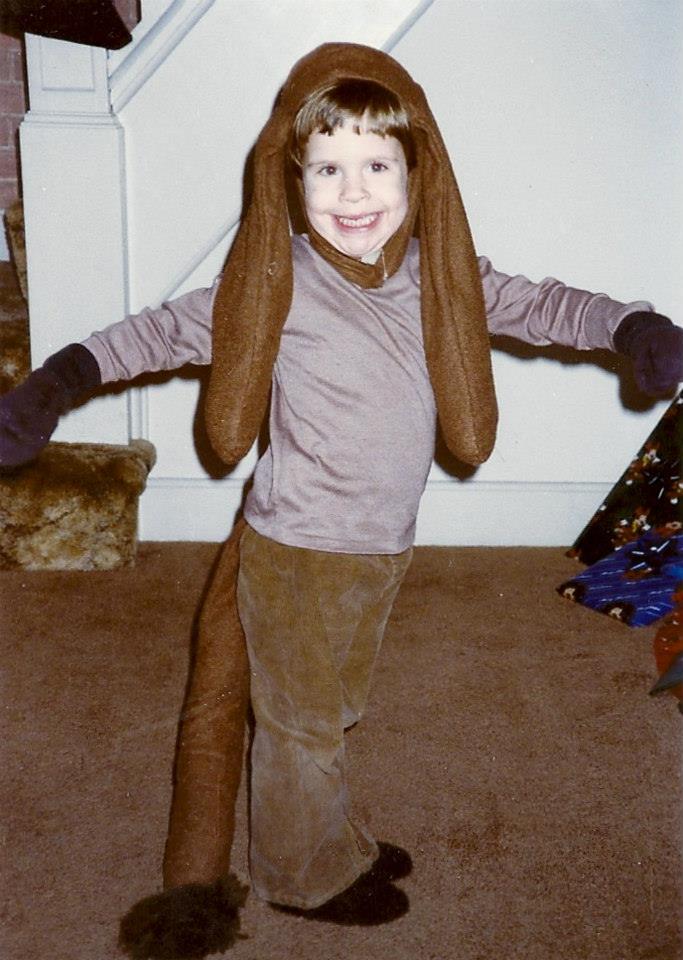
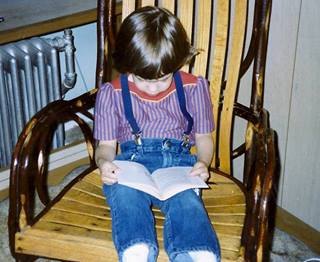
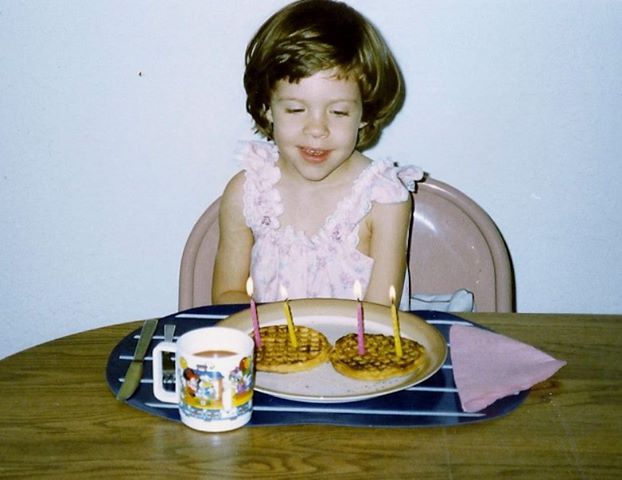
Well, so much for posting every week. My last few weeks have been busy, but I’m hoping to get back on a regular schedule. The purpose of today’s post is clear: I want to show you how darn cute I was as a child. Also, I want to point out how some of my interests were established at a very early age. Photo credits are shared by whichever parent took them ages ago and Sarah, who recently scanned them. P.S. If you know the origin of the quote in the title, and/or what it’s supposed to mean (without Googling it!), feel free to show off your knowledge in the comments.

I still enjoy . . .

1184884_10202220966431908_1525965432_n

being feted, especially when presents are involved.

1236203_10202220973152076_1071870549_n

wearing costumes.

1238848_10202220973952096_51811587_n

being in charge.

1235322_10202220974072099_2094589987_n

reading.

1235514_10202220974232103_1783739923_n

breakfast.

I want your sympathy.

I’m reading The Casual Vacancy, J. K. Rowling’s 2012 debut “adult” novel, with the intention of having read all of her published works before I really get started writing my dissertation.  (I’m going to wait another week or two to see if inter-library loan can get me The Cuckoo’s Calling before I give up and order it from Amazon.)  I had heard multiple versions of two different, but compatible, assessments of The Casual Vacancy: that it was “racy” (invariably that was the word used) and that it was depressing because the characters were hard to like.

I’ve just finished Part One and found both of these evaluations to be true.  But I’ve also found something I didn’t expect: The Casual Vacancy reminds me strongly of a George Eliot novel.  What tipped me off to the resemblance was the name “Fairbrother”–it’s the last name of the man who dies at the beginning of Rowling’s novel, setting the story in motion, and it’s awfully close to “Farebrother,” the surname of a character in Middlemarch.  But this is just one of many resemblances between The Casual Vacancy and the Eliot canon, especially Middlemarch; others include themes of small-town life (and the pettiness that often accompanies it), sharply accurate depictions of mismatched marriages, long descriptions of characters’ interior thoughts, discussions of the problems of urbanization, and a particular focus on characters moving up or down the English social class scale, which appears in Vacancy to be fascinatingly (and depressingly) little changed since the nineteenth century.

What I don’t see in The Casual Vacancy, at least not yet, is any attempt on the author’s part to help us identify with the characters, especially the ones we don’t like.  Eliot did this a lot, and she did it masterfully, though not very subtly, often using direct second-person commands (“Ask yourself whether you would. . .”), all in an effort to develop the quality of “sympathy” (a key term for Eliot) in her readers.  Sympathy here is not feeling sorry for someone, and it’s not a naive ignorance of anyone’s faults.  It’s the ability to put ourselves imaginatively into another character’s situation and come to the conclusion that we would probably be inclined to act in a very similar way.  The point here is not to make a moral judgment about what would be the right thing to do in the situation, although that would be a logical next step.  The point is to be honest about ourselves.  I think all good realist novelists want their readers to develop sympathy; they just aren’t all as deliberate about it as George Eliot.  I think J. K. Rowling wants that for her readers too; she just isn’t making it very easy in The Casual Vacancy.  But a hard-won sympathy is probably more lasting than the knee-jerk kind anyway.  I’ll reserve my final judgment until I finish the book.

Let me make two more quick points about sympathy in a shameless effort to drag Charles Dickens and Harry Potter into this post:

1. It often takes multiple readings of a book to develop sympathy for a particular character.  When I first read David Copperfield, I thought David’s “child-wife” Dora was an annoying little twit, but now that I’ve read it several times I can see that she is remarkably self-aware in her own way and that she has a better grasp of the flaw in their marriage than David, apparently the more analytic one, does.  You gotta watch out for those first-person narrators.  They think they know everything.  (KATNISS EVERDEEN)

2. One valid reason for writing fan fiction is to try to develop sympathy with an unlikable, “minor,” or even villainous character.  Possibly this may be why there’s a lot of Draco Malfoy fanfic.  Certainly, some of it is of the shallow sort (“He looked extremely sexy and vulnerable as he knelt there weeping onto his elegantly cut black suit”), but I would also imagine–I haven’t actually read any Draco fanfic–that there’s some good stuff that explores, for example, what growing up in Malfoy Manor as an only child with those parents would do to a kid psychologically.

I promise I didn’t intend to write a literary criticism post this week; my original intention was to post pictures of my cute decorations for the afternoon party I hosted yesterday.  But I forgot to take pictures, so this is what you get.  I hope you’ll give me some sympathy.

“The last scud of day”

I think what stuns me the most about Walt Whitman’s poetry is how old it is chronologically, and how new (or young?) stylistically.  He wrote much of his audaciously hubristic, rhythmically unrhymed, New Agey but never fuzzy poetry before they had electric lights, before he saw the Civil War tear up America.  England was just warming up to the Victorian period, man.  This’ll blow your mind: the first edition of Whitman’s Leaves of Grass was published in 1855; that’s just five years after William Wordsworth died.  Wordsworth was the guy who called for poets to write in the language of the common man, and tried to follow his own advice.  Before Wordsworth, poets were pretty much still writing like John Milton.  Too bad Wordsworth couldn’t have lived a little longer to see Whitman do this:

The spotted hawk swoops by and accuses me,

he complains of my gab and my loitering.

I too am not a bit tamed, I too am untranslatable,

I sound my barabaric yawp over the roofs of the world.

The last scud of day holds back for me,

It flings my likeness after the rest and true as any on the shadow’d wilds,

It coaxes me to the vapor and the dusk.

I depart as air, I shake my white locks at the runaway sun,

I effuse my flesh in eddies, and drift in in lacy jags.

I bequeath myself to the dirt to grow from the grass I love,

If you want me again look for me under your boot-soles.

You will hardly know who I am or what I mean,

But I shall be good health to you nevertheless,

And filter and fibre your blood.

Failing to fetch me at first keep encouraged,

Missing me one place search another,

I stop somewhere waiting for you.

(from “Song of Myself,” 1855)

Goat cheese biscuits

This post doesn’t have a clever title, partly because I couldn’t think of one, and partly because I figured the phrase “goat cheese biscuits” would sell itself.  This is a follow-up to my review of Bread and Wine: A Love Letter to Life around the Table by Shauna Niequist.  Last Saturday morning, a small contingent of our book club (only four of us could make it) gathered at the lovely home of one of our members, the same one who got us the free copies of the book, to share brunch and our thoughts on the book.  Maybe because what we were doing (eating) was for once related to the book topic, and maybe because we’d all read the book, we actually managed to carry on a sustained discussion about the book for, like, at least ten minutes.  (What normally happens in our book club is that somebody introduces a discussion, it peters out quickly, and we talk about other things until somebody awkwardly revives the topic of the book.  All this is fine with me; it’s a club, not a literature class.)

Each of us chose a recipe from the book and brought the result to share.  Although we didn’t know ahead of time what the others were bringing (well, I did; I got to cheat because I was the person who sent out all the emails about this particular meeting), the four dishes turned out to constitute a perfect, (mostly) healthy yet comforting meal for a quiet, overcast Saturday morning in the summer.  We ate Bacon-Wrapped Dates, Robin’s Super-Healthy Lentil Soup (I forget who Robin is, but she’s probably one of Shauna Niequist’s many friends), Goat Cheese Biscuits, and Gaia Cookies (named for a cafe, though you are perfectly free to imagine yourself as an earth goddess when you eat them).  The consensus was that all of these recipes were delicious, relatively simple to make, and versatile–for example, the dates would perform equally well as an appetizer at a fancy dinner, and the cookies could function as either a dessert or a breakfast.  You can see pictures of the food in this post by another book club member, whose blog is a lot more fun than mine.

I made the biscuits.  I think it would be ungracious of me to post the recipe here after receiving the book for free from the publisher, but you may be able to recreate it, or something like it, on your own, especially when I tell you that you’re basically taking biscuits and putting goat cheese in them.  I mean, it’s a little more complicated than that, but those are the essentials.  I thoroughly enjoyed preparing, eating, and sharing these biscuits.  My whole apartment smelled like butter while I was baking them (that’s another hint), which usually means something good is underway.  I do want to give you one modification and one piece of advice in order to enhance your goat cheese biscuit experience.

The modification: Niequist says that if you make golf-ball sized balls of dough, you’ll get about 12 biscuits.  I’m thinking Niequist isn’t a golfer (which surprises me; see my review), because I got 17.  Maybe she meant to say “baseballs.”  My point here is that you don’t need to skimp; make your biscuits a size that you would actually want to eat, and you won’t run out of dough.

The advice: Please reheat your biscuits before enjoying them.  They are okay at room temperature, but they are best when the cheeses (hint!) are melting.

Housekeeping and hypotheticals

Get excited!  The long-promised Penelope Clearwater Revival has arrived.  You can expect two new things from my blog:

1. More frequent posts.  Now that I have more followers, and not all of you are people who know me and are willing to put up with my slacking, I feel I owe it to you to post on a more regular basis, perhaps weekly.  I can’t promise these will be long posts–after all, I’m supposed to be working on my dissertation as well–but that may be for the best.  (“Amen,” says the chorus.)

2. A better organizational scheme.  Yes, it’s true: I’ve had this blog since December 2011, and only just this past weekend did I start adding categories and tags.  I did this retroactively for all my posts, which was a fun exercise for me; I especially enjoyed seeing my most commonly used tags as calculated by WordPress.  (“Charles Dickens” was the winner by far, but there were some surprise runners-up.  Who knew I’d written so many posts about Moneyball?)  I’d love your feedback on this endeavor–if you notice a common theme among two or more posts that I haven’t seen, let me know so I can add a tag or possibly create a new category.

I hope these changes will enhance both your and my enjoyment of the blog.  So that this post won’t be completely boring, here are some fun “if” statements.  I’d love to hear how you’d complete the statements for yourself.

1. If I could write and illustrate a comic book series, it would be called . . . The Adventures of Sigyn, Intra-Yggdrasil Diplomat.  I’ve actually thought quite a bit about this.  Sigyn is a minor character in Norse mythology whom I discovered while reading Edith Hamilton.  She (Sigyn, not Edith) is Loki’s wife.  So I thought I could make a pretty fun comic series–and also send positive messages about world peace and women’s empowerment–out of the idea that Sigyn is going around trying to negotiate satisfying compromises between her husband’s world domination schemes and the contrary purposes of people like Odin and the Avengers.

2. If I wrote a screenplay, it would be called  . . . The Darlings.  I’ve thought even more about this one, and I might really write it someday.  The Darlings is about Wendy, John, and Michael after they’ve grown up.  To my knowledge, this particular Peter Pan variant hasn’t been done before. The basic premise: Michael doesn’t believe they really went to Neverland or that it’s even real (he was too little to form his own memories of the event); John knows it really happened but has only negative memories and doesn’t like to talk about it; Wendy has happy memories of Neverland and is still enamored with Peter Pan but has married a man who’s the opposite of Peter in pretty much every way.  Plus there’s a bunch of other stuff going on with careers, university studies, romance, and sibling rivalry.  Maybe I’ll write this when I’m finished with my PhD.

3. If I were on a roller derby team, my derby name would be . . . Tess of the Disturbervilles.  This is never going to happen, folks, so you can just use your imagination.

The Weasley fanfic, part 2

Another result of going to LeakyCon is that I temporarily lost my inhibitions about writing fan fiction.  I wrote the following story on the plane ride home.  It’s loosely a sequel to a very sad story I wrote last year.  But unlike its predecessor, this story has dialogue.  So I’m looking for feedback about the three characters as manifested through their voices: Can you tell them apart?  Do they sound like men (something I always worry about)?  Do they interact like brothers?  And–this is very important to me–do you like them?

That fall, the Weasley men, including Harry, spent a weekend at Shell Cottage.  Everyone kept finding reasons to propose toasts to Fred and tell each other what he would have been doing if he were there.  Fred’s absence wasn’t the only thing that made the old easy camaraderie impossible to recreate.  Charlie had just moved back to England and was out of step with the family in little ways–nothing significant, but he would forget things, like the fact that Bill didn’t like pumpkin juice.  Ron sometimes retreated inside his head or had long whispered conversations with Harry.  Percy was very quiet and unnecessarily deferential.

But there were plenty of happy moments that weekend, and one of the best was on the last night when they built a bonfire on the beach and ate supper out there, telling embarrassing stories from when they were kids.  When it started getting dark, Arthur, Bill, Ron, and Harry went inside to talk to their wives and girlfriends by Floo network.  The wind had begun picking up when the sun began to set, and there was a definite chill in the air as George walked across the sand toward the fire, where Percy was still sitting.

“I brought you your pretty little jumper,” George said and threw a grey pullover at his brother’s head.

“Too kind of you,” said Percy with a wry face.

“Where’s Charlie?” George asked.

“He’s down there trying to skip rocks in the ocean.  Which I’m pretty certain is impossible.”

In the twilight George could just make out Charlie’s stocky figure.  “Well, let’s go tell the poor lad he’s getting himself all worked up for nothing.”  He started walking down toward the shoreline, and Percy followed, pulling on his sweater.

Charlie was, indeed, hurling bits of shingle into the choppy water.  “Oy!” George called.  “What are you doing that for?”

Charlie turned and wiped his wet hands on the back of his jeans.  “I dunno.  Something to do.”

“Well, come along with us.  I need to talk to you two gentlemen.”  George started walking backward along the edge of the water, facing his brothers.

“Is this about how strange Ron has been acting?” Percy asked.

“No, this is about how strange you two have been acting.”  Charlie and Percy looked at each other.  George turned around and fell into step with his brothers.  “Listen, I need some advice.  I have this brother who’s just moved back to the country, supposedly because he wants to be with his family, but we all really know it’s because he’s after Rubeus Hagrid’s job.”

Charlie snorted.  “Your brother sounds like a real git.”

George nodded emphatically.  “That he is.  Anyway, Hagrid won’t retire until he’s dead, and that isn’t going to happen anytime soon.  So my brother needs some gainful employment for the meantime, and he hates working in an office.  That’s problem number one.”

“Well, maybe I can help you with that,” said Charlie.  “But can we walk up to the fire?  I’m freezing.”

“That’s because your trousers are all wet,” Percy said.

“Yes, Mum,” said Charlie.

“Stop fighting, kiddies,” George said, angling back toward the bonfire.  “Let me tell you about my second problem.  I’ve got this other brother who hates his job.  He’s working at the Ministry, in the Misuse of Muggle Artifacts Office.  But that’s really not his kind of work, and besides, that whole big dark ugly building has given him lots of bad memories.  But he doesn’t want to quit because he feels like that’s his only option, and he doesn’t want to hurt Dad’s feelings.”

Percy had stopped walking.  “I never told you any of that,” he said.

George shrugged.  “You didn’t need to.  You’re an open book, mate.”

Percy shook his head and walked faster to catch up with his brothers.  They had nearly reached the bonfire.

“Now, here’s the third and most important piece of my little story,” said George.  He didn’t add anything until they had all sat down by the fire.  “All right.”  He ran his fingers through his hair, which meant that there was something he didn’t know how to say.  This rarely happened.  “Listen, I know it’s stupid to say things like ‘I know Fred would have wanted this,’ because how can we really know.”

Charlie mumbled an agreement; Percy nodded.  “But I spent nine months in the womb with him,” George went on, “so if anyone has a right to say stuff like that, I guess it’s me.  And”–he ran his fingers through his hair again–“I think Fred would want me to open the shop back up.”

“I think that sounds great–” Charlie began to say something awkwardly affirmative, but George kept going.

And, I think it would be nice if my unemployed brother and my unsatisfactorily employed brother would join me in business.”

“Oh,” said Percy after a brief pause, evidently dumbstruck.  “In your joke shop?”

Charlie laughed.  “I think you’ve just blown out little prefect’s mind.”

“Yes, in Weasley’s Wizard Wheezes,” said George, quite seriously.  “It’s always been a family business, you see.”

“But surely you don’t expect us to–invent joke products?” Percy asked.

“Heaven forbid,” George said, finally cracking a smile.  “No, I’ll do the inventing, and you two can do the boring things like running the till and making sure we don’t go bankrupt.”

“Oh.”  Percy’s expression relaxed.  “I can do those things.”

George grinned.  “Also, Charlie, I’m hoping you can use your international connection to help me get hold of some rare magical items.”

Charlie looked very impish all of a sudden.  “Do you mean like dragon stuff?”

“Among other things,” said George.  “Rumor has it that you and your Romanian colleagues have been known to engage in some serious mischief.”

“That may be true,” said Charlie with a lopsided smile.  “I confess nothing.”

There was a silence, and then George asked, “But will you tell me later?”  Charlie and George burst out laughing.

Percy finally allowed himself a small smile, though he still looked overwhelmed.  “So we’re going into business, then?”

“We are going into business, lads,” said George.  “And I think the sooner the better.”

“We should shake on it,” Charlie said.

Percy, thinking this was a good idea, leaned over to shake George’s hand.

“Or you could just give me a hug, you two jobless gits,” said George.

And that’s what they did.
LeakyCon Portland 2013

This past weekend my mom and I attended the fourth annual LeakyCon in Portland, Oregon.  (This year there is also a London LeakyCon.)  LeakyCon began as a Harry Potter convention (named for the website The Leaky Cauldron, which in turn is named for the tavern that marks the boundary between Muggle London and the magical shopping district Diagon Alley), and while it now represents a number of fandoms, it’s still a Harry Potter convention to me.  The following is simply a highlight reel representing one person’s experience of the convention.

Best chance encounter: My mom was buying a pop at a concession stand and I was playing Wordsmith on my phone* when Mom said, “Hey, that guy’s wearing a cardigan like Neville’s.”  I quickly noticed that he also had the Sword of Gryffindor hanging from his belt and was indeed cosplaying, quite convincingly, as Neville Longbottom, who, as you probably know, is my favorite character.  We asked him for a photo, and he ran to retrieve the Sorting Hat so that his costume would be complete.  On Facebook and Twitter you can see a picture of me standing next to a very BA “Neville” as he draws the sword out of the hat.

*I’m calling this the luckiest five minutes of my life because in addition to the encounter I’m about to describe, I played my highest-valued word to date, for 98 points.

Most heartwarming story: We got to attend a panel featuring three actors from the movies: Devon Murray (Seamus Finnegan), Scarlett Byrne (Pansy Parkinson), and Ellie Darcey-Alden (young Lily).  They all seemed like good quality people, but Devon was (predictably) the scene-stealer, telling story after goofy story from both his personal life and his on-set experience.  One story, though, was just plain sweet: Devon confessed that he didn’t read the Harry Potter books until after he finished filming the movies, explaining that he has dyslexia and wasn’t into reading as a kid.  While he still isn’t an avid reader, he credits what interest he has in reading to his costar Matthew Lewis (Neville!), who dragged Devon along to a bookstore and got him started on the same series that Matthew was reading.  Introducing someone to reading is one of this greatest kindnesses a person can show, in my opinion.

Most informative session (and best souvenir): My favorite regular session that we attended (a close second would be the live episode of the MuggleNet podcast Alohomora!) featured still frames and script excerpts of scenes that weren’t included in the movies, along with discussion of why they might have been left out.  Not only was it a fascinating session, but I also won a bottle of pumpkin juice because I started following the presenter on Twitter.

These were my favorite moments from the convention.  As I recall other events and conversations that made an impression on me, I may add them here.  If you were there, tell me about your favorite experiences!

Review: the three Fs (food, fun, and fellowship!) in a new light

I started this blog in order to review two new-release books provided to me by a friend who had connections with a publisher.  My reviews were positive overall, but not purely laudatory or harmlessly unopinionated, which may be why I haven’t been asked to review another book on my blog until now, a year and a half later.

My book club (which is a wonderful thing; you should join one for the fellowship and to be forced to read outside your literary comfort zone) is currently reading Bread and Wine: A Love Letter to Life around the Table, with Recipes by Shauna Niequist (Zondervan, 2013).  This book can best be described as a collection of short pieces of “life writing” (as they’re calling it these days), most of which are followed by a recipe.  One book club member hooked us up with free copies from the publisher with the understanding that we would each review the book (either on Amazon or on a personal blog) and cook a recipe from it.  I haven’t picked out a recipe yet; they nearly all look delightful, and only a few seem to be outside my cooking skill capacity.  But I can go ahead and tell you what I think of the book and just add a brief appendix later about the food.

Since I mentioned cooking skill capacity, I’ll begin by identifying one of the main messages of this book: You can and should cook, even if you don’t think you can.  As Niequist puts it, “start where you are” (40).  Generally, Niequist does a good job of conveying the persona of somebody who’s right there with you, still learning and expanding her repertoire.  Occasionally, however, this persona will show cracks, as in the chapter in which she whips up a “last-minute lunch party” that includes a perfectly-paired salad, appetizer, and dessert (213-217).  She’s the kind of person who just happens to have feta cheese and kalamata olives in her refrigerator on a normal day, but that probably has less to do with her cooking expertise than with the part of the country she’s from, just outside Chicago.  We find out toward the end of the book that she’s in a yacht club, and it isn’t surprising.  I also thought Niequist talked an awful lot about alcohol consumption for a pastor’s daughter, but again, that’s a cultural thing; I grew up in rural Pennsylvania’s mini-Bible belt, not outside a major American city.

Overall, however, I found Niequist’s stories remarkably relatable, because she writes about things nearly all American women can understand, regardless of regional or socioeconomic differences.  I particularly identified with the chapters on the intersections between appetite, femininity, and body image (there are several of these) and on the shame we experience when we feel our homes aren’t presentable (105-111); other women may find her struggles with infertility and miscarriage more compelling emotionally.  (The stories of these struggles comprise the closest thing this book has to a continuous narrative.)  The book’s thesis is that cooking, eating, and especially sharing food are ways by which we connect with and show love to others, and God shows love to us.  Niequist’s Christian faith is made explicit at several points and subtly informs the whole book, but readers of other faiths or no particular faith won’t feel alienated–thought they might be drawn by Niequist’s winsome testimony to read more books by Christians.

Niequist has a few annoying writing habits, most of which can probably be attributed to an effort to sound lyrical.  She overuses the word lovely, but that’s not such a bad word to overuse.  Instead of using a serial comma, she tends to pile up ands.  She also will occasionally take a simple declaration and turn it into a Pronouncement by adding an introductory clause such as “So this is what I’m going to do” (230) or “This is what I knew” (69) and then a colon.  I probably shouldn’t even tell you about these quirks because now you’ll be looking for them instead of enjoying Niequist’s literate yet friendly prose style.  But I work at a writing center, and I can’t stop myself.

I read this book in five days, but I could have finished it much faster.  A couple times I wanted to cry, and many times I wanted to cook, but alas, I didn’t have quinoa or goat cheese just sitting around my kitchen.  Trying out the recipes comes next.  Assuming the food is good (or that if it’s bad, the fault is all mine), I’m pleased to recommend Bread and Wine to you and your book club.

Next post: LeakyCon Portland 2013–the recap!

A bit of a work in progress

I thought I’d share an excerpt from my dissertation proposal, which I’m working on right now:
According to several of the scholars I am planning to cite in my dissertation, including Henry Jenkins, Lisa Lewis, and Jennifer Hayward, it has become acceptable for fans to write academically about the texts they love and the experience of being fans. I am relieved to hear it, because I am a fan of both of the authors this dissertation is about. But there was a time when I hesitated to produce scholarly work on the texts I read for enjoyment. When I was working on my master’s thesis, on eating and bodies in George Eliot’s novels, I said things like “Eliot is for work; Dickens is for fun.” I was afraid, I think, that in order to write academically about Dickens’s novels, I would have to adopt a drearily critical stance toward David Copperfield (my absolute favorite) and all the rest. I was afraid, in other words, that I would have to stop loving Dickens.
Something happened in 2009 that changed my perspective: I discovered Harry Potter. Not that I’d never heard of him before; I’d just considered him annoying and beneath my notice. The story of how I changed my mind is probably delightful only to me, so I won’t narrate it here. Suffice it to say that I arrived at the party very late; all of the books had been released by the time I started reading them, but at least I made it in time to see the last three movies come to theaters. I had finished reading the series by September 2009 and was already getting together with friends to make butterbeer (our version consisted of cream soda, butterscotch, and, yes, sticks of butter) that fall. Sometime around the end of the year, I received a call for papers for a casebook on Harry Potter. And the funny thing is that I never hesitated over whether writing an academic essay for the casebook would destroy my newfound love. Of course I wanted to write an essay about Harry Potter; I wanted to do everything about Harry Potter.
My academic interest and my fan interest in the series grew simultaneously. In summer 2010, I learned that my proposal for the casebook had been accepted, and I got Virginia license plates that said HAFBLOD (i.e., Half-Blood, as in the Half-Blood Prince). In the three years since then, the casebook has been published, and I have presented papers on Harry Potter at two academic conferences; in the same period of time, I have visited the theme park The Wizarding World of Harry Potter and accumulated a respectable collection of memorabilia (including three wands). As I write this proposal I am preparing for a trip to Portland with my mom, who introduced me to Harry, to attend LeakyCon, the largest and most respected Harry Potter fan convention. Certainly I hope to gather information relevant to my dissertation during this trip, but I’m also going for fun.
By early summer 2012, when I started thinking about my dissertation, I had let go of the division I had formerly set up between books read for work and books read for fun, but I was at a bit of a crossroads in my scholarly identity. I called myself a Victorianist, but I was at least as much a Harry Potter-ist. I don’t know what sparked the idea that I could be both, at least in my dissertation; it may have been a conversation with my dad, who was reading through Dickens’s novels for the first time, or it may have been the early buzz about Pottermore. Whatever the cause, I recognized a potentially fascinating link between author-reader interactions in the nineteenth century and those occurring today. And, just as important, I saw a way to revel in fandom for a couple of years while telling people I was doing it for a project.