Don’t try to do everything–but do something.

Last year, I enjoyed writing an Advent-themed post for each Monday leading up to Christmas (and I hope you enjoyed reading them), so I’ll be doing it again this year.  Christmas Day is a Monday this year, and I plan to post as usual!

Today, I want to give you a life hack from The Girl Who Tries to Do Everything.  Ever since Facebook started suggesting events in my area (sometime this past summer, I think), I’ve become obsessed with marking myself “Interested” in as many events as possible.  They all look so fun!  The events I actually show up to comprise, predictably, only a small percentage of the ones I star.  Also predictably, the number of suggested events that look really fun has increased sharply with the onset of the Christmas season.  And also predictably, I didn’t go to a single one of the events I was supposedly interested in this past weekend.  But I did have a lovely time at home decorating my tree, writing Christmas cards, listening to the same Christmas albums I always listen to, and drinking way too much hot chocolate.  So here’s my advice: Don’t try to go to every event and participate in every activity that comes to your attention this Christmas season.  But, conversely, don’t let your inability to do everything paralyze you into inaction.  Do a few meaningful things that make you happy–which may not be the same as mine.

Here are some things I’ve decided to do this month:

  1. Go see ONE Christmas play/show/concert: A friend of mine is stage-managing a production of White Christmas, and since I know that I love this story and its music (here is a post that addresses an interesting sartorial question from the film), I know that attending the show will be worth my time.  Accordingly, I’ve already bought myself a ticket and put it on my calendar.
  2. Pick ONE recipe to take to parties: Fortunately, several of the Christmas parties I’m attending this month are catered or at a restaurant.  But for those parties where I’m excepted (or feel obligated) to contribute food, I’m not trying a different ambitious recipe for each one; I’m making festively-shaped sugar cookies.  That’s it.  I do love to cook and bake–you know that if you read my blog regularly–but I can get serious burnout at this time of year if I’m not careful.  By reserving my cooking/baking powers, I should have enough motivation to contribute quite a bit to my family’s holiday meals at the end of the month.
  3. Look at Christmas lights: Along with listening to music, it’s one of the only forms of holiday entertainment that is free and can be done on the way to something else.  My neighborhood is making a solid showing this year, so all I need to do in order to infuse a bit of Christmas cheer into my day is take a slightly different route to my house.
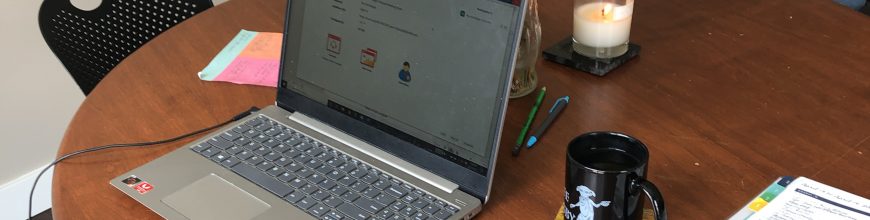
  4. Make every moment special: That sounds like it belongs on an especially cheesy greeting card, but it’s actually quite practical advice.  In December, if I’m sitting down to grade papers or read a book, I plug in my Christmas tree, light all my candles (and there are a lot–I like to pretend I have a fireplace), put on some Christmas music, and make some hot chocolate in one of my festive mugs.  So I’m celebrating Christmas even when I’m not celebrating Christmas.
  5. Spend time with people: I’ve made it sound like I’m doing all of this alone, and I certainly do enjoy hibernating in my house.  But this year, I had friends over to help decorate my Christmas tree, and even though I didn’t attend any of those events I starred this past weekend, I did spend some time with people each day.  Because in the end, what we do is less important than who we do it with.  And that’s sappy, but I can say it because it’s Christmas.

Silobration: more than just a lot of shiplap

This past weekend, I traveled with my mother and sister to Waco, Texas for Silobration 2017, a festival marking the third anniversary of Magnolia Market at the Silos, the anchor location of the home decor and lifestyle empire of HGTV it couple Chip and Joanna Gaines.  Waco is a small city that seems to be in the middle of economic revitalization, surely due in large part to the jobs created and tourism attracted by the Silos and other businesses that would not exist if not for Fixer Upper–such as Harp Design Co., a boutique in a residential part of town that probably has never been fashionable.  Waco is in what used to be (and maybe still is, though I didn’t see much evidence of it other than a ton of hamburger joints) cattle country, in the middle of the rural space between Dallas and Austin.  The city is home to Baylor University, museums about Texas Rangers, prehistoric mammoths, and Dr. Pepper (which was invented in Waco), and what used to be, a long time ago, the tallest building west of the Mississippi (the Alico building familiar to those who watch Fixer Upper).  Yet none of those attractions–even at the now-past height of the Baylor football program–could bring in a crowd the size of what we saw this past weekend.

Why did all these people stand in the blazing heat to wait in line for cupcakes at the bakery, push through crowds in the Magnolia Market itself to buy #shiplap t-shirts, and stand on tiptoe during Friday and Saturday nights’ concerts to see Chip and Joanna on stage?  Something about this couple–their laid-back yet charming aesthetic, their work ethic, their countercultural emphasis on family and hospitality–has struck a chord with Americans of a surprisingly wide range of ages, ethnicities, and styles.  (And there were a lot of men there too.)  I’m not going to wear a t-shirt that says, “Love me like Chip loves Jo” (I saw several of those on people, though it wasn’t sold in the store), but I am on the Magnolia bandwagon.  And if nothing else, I’d like to go back to get another grilled cheese sandwich from the Cheddarbox food truck permanently stationed behind the Market.  I think grilled cheese is a bandwagon we can all get on.

Let’s talk about the zombie apocalypse.

Classes started at my university today, and even though I’m not even teaching on Mondays, right about now I’m really relating to that song in Fight Club, “Where Is My Mind?”  (See my post from the beginning of the spring semester, “This is my brain on the first day of classes.”)  So in honor of not having a functioning brain—but also because I’ve been working on this particular project lately—let’s talk a little bit about my zombie apocalypse story.  I’ve been going to a creative writing group and getting some awesome feedback, but I’d love to hear your thoughts as well on a key issue: the title.  My working title for the story, which I eventually want to turn into a screenplay, is “Sam and Adrian in the zombie apocalypse.”  That’s nice for helping me find my Word document, but that’s about the extent of its usefulness.  Here are some other titles I’ve considered:

  • “Jungleland,” as in the Bruce Springsteen song.  It evokes the proper sense of chaos, but that song is very much about a city, and my story takes place mostly on rural roads and in a small town, so the title may be misleading.
  • “The Pursuit of Happiness,” an ironic reference to the central plot device: a man is running out of his antidepressant medication and is searching for more in a world where there are no doctors and most pharmacies have been depleted by looters.  But this title could also be confusing; I can just see audience members grumbling, “I thought this was the movie where Will Smith solves the Rubix cube!”
  • “The Road to Hibbing” because roughly the last half of the story takes place in Hibbing, Minnesota, the hometown of Bob Dylan and also of one of my protagonists.  (The first half is about getting there.)  The title accurately describes what happens, but I think it sounds a bit too whimsical.  It also makes me feel like Irish ballads should be playing during the movie trailer.  That’s not really the musical tone I’m going for.
  • “Life Is Hard,” which is going to be a recurring line in the story.  (It also gives a very subtle nod to a line from a Bob Dylan song: “Life is sad, life is a bust.”)  Effective, but a bit heavy-handed, perhaps?
  • “Sam’s Town,” as in the Killers album.  The name of my character who grew up in Hibbing and returns to his hometown is Sam, so again, an accurate description.  However, this title might lead to more disgruntled viewers—this time, people who were expecting to see a Killers tribute (though I do like the idea of using one or two Killers songs on the soundtrack, along with Dylan and Springsteen).  A similar option would be “Sam’s Home”; I like this one because it can be interpreted two different ways.  I think of this story/screenplay as, among other things, a supernatural twist on the “30-ish guy moving back in with his parents” plot, and “Sam’s Home” riffs on that a bit.

Titles are important, so I’ll probably be thinking about this for a while.  I’d love your feedback on these suggestions, along with other title ideas you may have.

what I’m listening to

This is the third in the trilogy of posts on what I’m watching, reading, and listening to.  I may make this a regular, periodic feature.  

This category is harder to write about because listening to music is easier to do, and therefore I do so much of it throughout the week.  As you probably do, I listen to music while I’m doing other things, though I make a point of not listening to music with lyrics while I’m working or reading.  (I’ve had that personal rule for several years now, ever since I heard a neuroscientist talk about how lyrics distract us on some level even when we think we’re not listening to them.)  This means that at work, I listen to a lot of classical, post-rock, ambient music, movie scores and trailer music, and yoga/New Age/relaxation music.  I’ve also been listening to a bit of modern funk, a lot of which has no lyrics.  Spotify (I use the free desktop version) is brilliant at finding me new tracks in these genres, so my Discover Weekly playlist, which I listen to every Monday, is almost all instrumental.  (If you’ve never listened to your Discover Weekly playlist, try it–Spotify “curates” it from music similar to what you typically listen to.)

Lately, I’ve also been listening to ambient music, nature sounds, and something called “binaural beats” (supposedly scientifically proven to help you relax) while falling asleep.  I find these tracks on a meditation app called Insight Timer.  The Yoga Radio station on Pandora is also a good sleep soundtrack.

In the car, I mostly listen to audiobooks, and although those are not the topic of this post, I will mention that I’m thoroughly enjoying The Key to Extraordinary by Natalie Lloyd, another recent children’s lit selection.  When I feel like rolling down the windows and singing, I like modern folk, like the Avett Brothers, and timeless-sounding rock, like Dawes.  I also enjoy Pandora’s 80’s Alternative station when driving or running.

But let’s talk about the music I love enough to buy.  Lately, I have been buying music only in the form of records.  My record collection is growing and extremely eclectic, and it includes some thrift store finds that are just plain weird, like Sacred Music from the Russian Cathedral and an electronic version of Holst’s The Planets.  Here are my most recent acquisitions: Bruce Springsteen’s Born to Run, Dawes’s We’re All Gonna Die, NEEDTOBREATHE’s The Outsiders, and an orchestral album that includes songs from Star Wars and 2001: A Space Odyssey.

I always say I’m going to take a tour of my albums, listening to all of them in some sort of order (alphabetical, chronological, or just the order they happen to be sitting in), but I end up listening to whatever I feel like at the moment.  Sometimes, there are strategic reasons for my choice (e.g., I had people over Saturday afternoon and didn’t want to put on something with distracting lyrics, so I chose the soundtrack to Fantastic Beasts and Where to Find Them); other times I just feel like listening to The War on Drugs or The Head and the Heart.  Last Tuesday evening, I knew I was going to be cooking for a while so I chose to listen to my entire Decemberists collection.  (It consists of only two albums, The Crane Wife and The King Is Dead, but the former is a long album.)  Yesterday, before I watched the Steelers’ pre-season game, I put on Born in the USA because both Bruce and the Steelers make me think of steel, sweat, and working-class America.

I hope you didn’t start reading this post expecting me to review recently-released albums.  I don’t listen to much new music.  But maybe some of my scattershot name-dropping has inspired you to revisit a classic or look up an artist you haven’t tried.  Let me know what you’re listening to, too!


what I’m watching

I was inspired by my brother’s podcast, Does Anyone Really Need to Hear This(listen to the latest episode here) to begin regularly reporting on what I’m watching, reading, and listening to.  But since the blog format is less tolerant of long-windedness than the podcast format, I am going to focus on just one of these today—on the three movies I watched this past weekend, to be exact.

  1. Logan.  I may have mentioned before that I’m a regular platelet donor and that one of my favorite parts about donating (aside from knowing that I’m helping to save people’s lives) is getting to watch a movie while tucked under one or more electric blankets.  Last Thursday, I chose to watch Logan, the first X-Men movie—indeed, the first Marvel movie—to have Oscar hopes.  I’m always a little hesitant to watch violent movies while donating because it’s hard to escape or even look away from a particularly gruesome scene when I’m strapped to a bed, but even though this R-rated film was very violent (more than I expected), I’m glad I watched it.  Probably the most striking feature of Logan is how well it captures the artistic trends and cultural anxieties of 2017.  The setting—a not-too-distant, not-quite-apocalyptic future (technology still works, but things are quickly falling apart, especially along the US/Mexico border)—reminded me of The Walking Dead and even more of its borderland spinoff Fear the Walking Dead.  Fears about genetic experimentation devoid of human conscience were represented in the character Laura, basically an 11-year-old female Wolverine, who, in her silent and deadpan (and occasionally delighted) observation of the “normal” world, reminded me of Eleven from Stranger Things.  The cinematography made the whole world look hot and tired, and the music (especially the Johnny Cash song in the credits) added to the weary and foreboding tone.  In spite of the cynicism of both the characters and the general tone, the movie still had the heart of a more traditional Marvel film, and I nearly cried at the end.  I had always thought of Wolverine as one of the least interesting X-Men, but, like many viewers of this startling film, I’ve done a complete reversal on that opinion.
  2. Jaws.  One of our local theaters was showing this 1975 classic last week, and I saw it Friday night.  It was my first time seeing it in many years, and it was both gorier (they blew up a shark!) and better than I remembered.  John Williams’s score, though sometimes over the top, is a classic of his early style.  The acting is fantastic, the writing is straightforward yet understated, and even though the special effects are not what they would be today, the pacing of the film contributes to a dramatic tension that never lets up.  I’m kind of a sucker for male bonding stories, so I really like the camaraderie (and tension—more tension) among the three men who go out to hunt down the shark.  It’s a classic seafaring story.  And now that I’ve used the word “classic” three times in one paragraph, I think I’ve made my point, so I’ll move on.
  3. Moonlight.  On Saturday night, I finally watched the real Best Picture winner of 2017.  I can’t comment on whether it’s better or worse than La La Land; the movies are too different.  But I can say that it’s very good.  And although it couldn’t be more diametrically opposed to Jaws in every way, Moonlight, too, has some great dramatic tension.  I think I may have been holding my breath for the last 20 minutes of the movie as I watched the main character and his old high school friend (and lover? That’s what he wants to find out) conversationally dance around and around the topic neither of them wants to broach.  The score of this movie is also excellent, and the camera work and lighting, combined with the bright colors of many of the buildings in Miami, make everything look not cheerful but lurid and sad, in keeping with the story.  And Maharshala Ali deserved that Best Supporting Actor win, even though he’s only in the first third of the film.

If you’ve seen any of these movies, let me know what you thought.  Next week I’ll be back with what I’m reading.

State of the Blog

Today I thought I would take the time to tell you how I think this blog is doing and to ask for feedback from you, my readers, without whom this blog would be nothing but the digital equivalent of a secret diary hidden under my mattress.  A couple things prompted me to do this.  For one thing, it’s been about a year since I implemented my weekly (usually Monday, sometimes Tuesday) post–before that, I was writing whenever I felt like it, and sometimes months would go by before you heard anything from me.  Another reason I wanted to stop and assess the blog this week is that I heard from some people yesterday who either mentioned a specific post they had enjoyed or indicated they knew something about the style of my blog–people I had no idea were reading it.  So that made me curious as to how many “silent” readers I have out there and what they’re thinking.

Let’s start with the weekly post thing.  I began this practice as part of a larger discipline of writing something (anything–could be a PowerPoint presentation for a class or a sketch of one of my screenplay ideas) for 30 minutes each weekday afternoon, which was inspired by the class on spiritual disciplines in the workplace that I audited last summer at Regent College.  (See below for a link to the series of posts I wrote following the course.)  Besides the fact that I’m now posting every week, another thing this practice changed about my blog is that my posts are now limited to what I can write within half an hour, which–I think–is keeping them to a manageable length, in contrast to the marathon posts that I used to write.  But, with the emphasis on actually writing for 30 minutes, I’m including fewer pictures, videos, and external links in my posts.  What do you think about all this?  Am I posting too often/not often enough?  Have my posts been too short lately, or are they still too long?  Would you like me to shut up occasionally and direct you to other people’s work (through the aforementioned pictures, videos, and links)?

I would also like your feedback about the topics I write about.  My blog has always been, unapologetically, about a wide variety of topics.  I know that I’d probably get a bigger readership and more mentions on the web if I focused in on a niche, like travel or home decor (or even something that I actually know a lot about, like Harry Potter), but I’m not trying to get famous or make money through my blog.  Although, as I hope this post attests, I do care very much about my readers, my blog is just as much a vehicle for me to process what I’m thinking and learning.  So I’m not sorry for writing a string of posts recently about The Godfather, even though most of you–at least those who are talking to me–don’t care about the Corleones (and, I still maintain, don’t know what you’re missing).  But I do want to know which topics you’d like to see more of–and what topics I haven’t addressed that you’d be interested in reading about.  Anecdotally, it seems that some of my most popular posts have been the confessional, gut-spilling ones where I let you snoop into the embarrassing parts of my interior life, usually through the screen of humor.  But I know that many of you also share my love of music, movies, and TV, and so you prefer posts on those topics.  Let me know what you think.  I will take your suggestions seriously, and I’ll write about pretty much anything that I know something about (and maybe even some things I know nothing about!).

In closing, let me share what I think have been some of the highlights of this past year on penelopeclearwater:

  • Here is the first of the series I wrote following the class on spiritual disciplines.  The series continued through July and August 2016–check out the archives.
  • There was a lot of excitement on my blog leading up to and following the release of Fantastic Beasts and Where to Find Them.
  • This post from a few weeks ago–which was both a confessional post and a music post–got a lot of good feedback.

I believe in America.

Because it’s the Fourth of July, and because I indicated last week that I’d be writing about the Godfather trilogy again, I titled my post with the first line of the first film.  In the opening scene, a minor character whose daughter was assaulted by two young men, who were given what he sees as a lenient penalty, is asking Don Vito to help him avenge her.  Fascinatingly, he begins with this qualification, following it up with “I have raised my daughter in the American way.”  It’s like he feels compelled to defend his chosen country before he goes on to express his frustration with its (in his perception) slow, unfair, and heartless (that is, emotionless) justice system–especially for immigrants like himself.

I’ve written elsewhere about how the Godfather trilogy, in addition to being an amazing family saga, is a story about the Italian-American immigrant experience in the 20th century.  But right now I want to focus on those interesting opening words: “I believe in America.”  If you insert the name of another, older nation in that sentence, it doesn’t sound right.  You can love (for example) England, but you probably wouldn’t say that you believe in it.  That’s because America is an experiment, and on the timeline of world history, it’s still a relatively new one.  Another family/political drama I enjoy watching, the AMC show Turn: Washington’s Spies (as in George Washington), makes clear just how close this experiment came to never even getting off the ground.  So if I say that I believe in America, I’m implying that I’m rooting for the American experiment to turn out okay–and that I’m still waiting to see the outcome.

That’s why it’s possible to be a loyal American and still acknowledge times when the experiment has gone off track (and, at risk of getting slightly political here, I would say that immigration, in general, has been one of those areas where America’s efforts have often been clumsy).  In fact, I’d say that it’s imperative to acknowledge those times if you’re a person who truly loves and believes in America and wants what’s best for it.  This reminds me of a conversation I had a couple of days ago in which I was trying to explain Bruce Springsteen’s “Born in the USA” to a friend.  I started by saying that it’s not a patriotic song, and I would still say that it’s not, if by “patriotic” you mean uncritically proud of America.  But I concluded by saying that it’s also not an anti-American song.  For all of its references to the ugly, confusing war in Vietnam and the hardships of growing up in working-class East Coast towns where the factories are closing down, that song really isn’t saying “America is great” or “America is bad.”  It’s just saying, “Living in America is hard,” which is the same as saying, “Life is hard.”

Of course, I need to qualify what I just said by adding that there are a lot of countries where life is a lot harder than it is in America.  Nobody can deny that our standard of living here (and I’m not just talking about money, though that’s certainly part of it) is much higher than in most of the world, and we’re foolish if we’re not grateful for that.  But we should also acknowledge that America is a really big country, so my American experience is not going to be the same as yours.  And for some, life here isn’t easy.

So, America–I believe in you, and I’m cheering for you.  And I’m thankful that I’m allowed to speak up when I think you’ve made a mistake.  But I think you’re doing pretty well, all things considered.

the Babel podcast

Dear readers, this has been a stereotypical Monday, which means that I don’t have the energy to write a full post.  But here is, as I promised last week, a link to the episode of my colleague Clifford Stumme’s podcast The Pop Song Professor in which he and I discuss Mumford and Sons’ 2009 album, Babel.  Let me know what you think, especially if there’s something on the album we didn’t discuss that you have an opinion about.

Also, I watched one of my favorite movies, The Godfather Part 2, on Saturday, and was thoroughly depressed, as always.  Expect to read more about this next week.


I’ll walk slow.

In the fitness program that I’m in right now, we were asked to choose a “power word” or phrase (that’s the acceptable Christian substitution for “mantra”) and keep a record of how often we used it.  I chose something off the top of my head and ended up using it only a few times during the week in question.  But last Tuesday, two events converged to suggest a power phrase that I’m actually going to use–and that I consider worth blogging about.

Event #1: Tuesday evening, my team completed a tough AMRAP (as many rounds as possible) workout involving sandbags.  It wasn’t a race, but for the first few rounds, it would be very obvious how fast each person was working.  Cocky and obnoxious as I am, I assumed that because I’m already a regular exerciser, I would be one of the faster participants.  So imagine my pride-goeth-before-a-fall devastation when I realized I was the only person still at the starting line doing overhead lifts while every single other member of my team–all nine of them–had moved to the next spot to do squats.  I was in dead last place.

If you’re even a casual reader of my blog, you probably know that I like winning, and I tend to turn things that aren’t competitions into competitions.  So even though I got a really great workout Tuesday night, and my team ended up getting more reps in this workout than any of the other three teams (that part of it actually was a competition), I went home feeling embarrassed at how slow I had been.  The fact that I started out using one of the heaviest sandbags didn’t make me feel better, especially because I had to give it up fifteen minutes into the workout and use a lighter weight.

Event #2: When I got home, I decided to mow my lawn while I was sweaty anyway.  While mowing, I listened to Mumford and Sons’ Babel.  (I was listening to this album over and over last week in preparation for a podcast I recorded on Thursday with my colleague The Pop Song Professor–more on this next week, probably.)  One of my favorite songs on that album is “Lover’s Eyes,” which contains these lyrics, repeated multiple times: “I’ll walk slow/I’ll walk slow/Take my hand, help me on my way.”  I had already noticed that the whole album seems to have a theme of humility and willingness to be taught and led–think of lines like “Keep my eyes to serve, my hands to learn” (from “Below My Feet,” another of my favorites).  But on Tuesday night while I was mowing, the line “I’ll walk slow” struck me for obvious reasons.  And later, yet another of my favorite songs, “Not with Haste,” struck me as well–again, for obvious reasons, I hope.

Since Tuesday night, that line “I’ll walk slow” has come to my mind many times, such as when I worried about once again coming in last place in Thursday evening’s workout.  It may be a counterintuitive “power phrase,” but–like many people, I suspect–I usually don’t have to make myself try harder or go faster.  I have to make myself slow down and enjoy what I’m doing.  I have to learn how to accept not being the best, and specifically, the fastest.  I sometimes have to, as the lyric says, reach out my hand and allow myself to be led by people who are better at things than I am.  I have to be okay with slow progress in areas of my life where I want to see immediate change.  Because–and now I’m going to preach for a second–walking slow is better than standing still.

Here I raise my Ebenezer

What most people think of when they hear the proper noun in my title–if they think of anything at all–is the protagonist of A Christmas Carol.  And since I can’t let a reference to Charles Dickens pass without pausing on it, let me digress before I even begin.  My guess is that Dickens chose the name “Ebenezer Scrooge” for its sound.  Dickens tended to choose names for that reason, and this particular name is odd and old-fashioned like its owner, but also harsh like its owner, with all those long vowels and hard consonants.  “Ebenezer” is the type of obscure Old Testament name that might be given to the child of people who subscribed to the type of bleak, joyless religion that Dickens so hated.  (Dickens fan fiction writers–I know there are a few of you out there–here’s a topic for you.)  Whether Dickens intended it or not, the name may also have a deeper significance in a story about a person reaching a milestone in his life.  And it gets even more interesting: his pivotal moment takes place at a literal stone–a memorial stone.

That’s significant because the name “Ebenezer” was originally given to a stone set up by Samuel the prophet.  The word literally means “stone of help,” and when Samuel dedicated it, he said, “Hitherto hath the Lord helped us” (1 Samuel 7:12).  This statement is quoted almost verbatim in my favorite hymn, “Come Thou Fount of Every Blessing,” which I in turn quoted in my title for today.  Here’s the full line, addressed to God: “Here I raise my Ebenezer; hither by Thy help I’m come / And I hope, by Thy good pleasure, safely to arrive at home.”  A similar idea occurs in another beloved hymn, “Amazing Grace”: “Through many dangers, toils, and snares, I have already come / ‘Tis grace hath brought me safe thus far, and grace will lead me home.”

For the past few days, I’ve been thinking about this concept of stopping and looking back on the road by which God has led me to this point and looking forward in hope–the theological kind of hope, which has a sure basis.  (By the way, it’s almost impossible to talk about this concept without using road metaphors; even the word “milestone” comes from road travel.)  One reason it’s been on my mind is that last week I had to write my salvation testimony and reflect on my spiritual growth over the years since then.  I closed my response by referring to Jesus as the Good Shepherd.  I don’t know where he will lead me next, I said, but I trust that he will lead me into green pastures and beside still waters (and sometimes through the valley of the shadow of death, but never to stay there).

I’m also thinking about the Ebenezer stone because it seems that change is in the air–for an unusual number of people around me, and maybe even for me.  I used to be afraid of change.  I was scared of not being able to control how things changed.  The so-called butterfly effect–the idea that if I go a different route to work this morning, I could change the whole trajectory of my day and even my life and maybe even THE WHOLE OF HUMAN HISTORY–didn’t make me feel powerful; it terrified me.  But I’m coming to understand and trust that God’s guiding hand–what old historians and theologians called Providence–is working to shape those events.  I’m not in control, and that is a very good thing.  I probably wouldn’t have chosen the job I’m in, the friends I have, or–dare I say–the family I belong to, and yet these are the greatest blessings of my life.  God has brought me to a good place, and he will continue to guide me.  Ebenezer!