More Beauty and the Beast thoughts: Be my guest

Sorry, I just really wanted to use one of those cheesy thematic post titles that I told you last week I wasn’t going to use.  Before I move on to other topics (such as, possibly, another Fantastic Beasts post next week, since the Blu-Ray is coming out tomorrow!), I want to share a few more observations about Beauty and the Beast  (the live-action Disney adaptation released earlier this month, as if I needed to clarify that).

  1. Last week I wrote about literacy, which crops up a number of times in the film, and I later posted on Facebook that the literacy issue is also an issue of wealth and poverty.  Many of Belle’s fellow townspeople would probably argue that they are too busy working to have time to read or even learn to read, and there’s also an access issue: clearly the town has a shortage of books and of educators (and the limited resources that do exist are allocated almost exclusively to boys).  Meanwhile, the Beast in his castle can afford a magnificent library and, as a member of the leisured class, has plenty of time to read the books it contains.  Maybe I’ve just read A Tale of Two Cities too many times, but the castle storming scene in this film had definite French Revolution overtones for me, especially when I remembered the Prince’s pre-curse ball we witnessed at the beginning of the film– lavish and luxurious almost to the point of being laughable, and very Marie Antoinette-style.  I don’t think the filmmakers were trying to make a political point necessarily–after all, the Beast isn’t really the bad guy, and it’s hard to pin down the exact time period (as it should be in a fairy tale)–but the contrast is definitely there.  Two more things to consider on this topic: a. The Enchantress is portrayed as an impoverished outcast.  b. On the other hand, it does appear that the Prince’s castle was a source of steady work for some people in the village.  We learn at the end of the film that both Mrs. Potts and Cogsworth were married to townspeople.
  2. If you’ve read my review of the Walt Disney World restaurant Be Our Guest, you know it really bothers me that in the original animated film, Belle doesn’t get to eat during that iconic song.  I argued that this results from the misguided idea that a fairytale princess could never be seen to eat because eating is somehow a coarse, unfeminine, embarrassing activity.  So I was happy to see that in the new film, Belle at least appears to be hungry (she frantically reaches for several dishes as they dance by), but disappointed that, in the end, she still doesn’t get to eat anything–and that she walks away from the table seemingly okay with that.
  3. Before the film was released, someone told me she’d heard that Belle has to save the Beast in the wolf attack scene.  This is not true.  The scene plays out almost identically to the parallel scene in the animated movie.  The Beast is perfectly capable of saving himself (he is a beast, after all), but Belle does have to help him get back to the castle.  So rather than an in-your-face attempt to make Belle a proper 21st-century feminist, this scene is actually a lovely example of two people caring for each other in a budding relationship (well, a relationship that’s about to bud).  Because Belle was already such a strong character in the animated version, there was really no need to update her to make her extra tough, so I’m glad there was no attempt to do so.  The reason Disney’s Belle is still one of my fictional role models is that she’s both brave and kind (like Disney’s 2015 Cinderella), capable and feminine.

Please continue to send me your thoughts about the movie!

This is going to make a good story.

Last Tuesday night–Wednesday morning, technically–between 2:00 and 4:00 am, I found myself driving around Bedford and Amherst counties, including brief stints on the Blue Ridge Parkway and the ominously named (and very dark and narrow) Father Judge Road north of Madison Heights.  I saw a lot of deer and a raccoon, and I almost hit a small waddling creature that I didn’t have time to identify.  This isn’t the place to go into why I was doing all this nocturnal driving, but I assure you that it was all legal and mostly safe, and I wasn’t up to anything unsavory.  My point in sharing about this adventure is that although I was in a constant state of frustration, with occasional moments of mild terror, a small part of me–the creative part–was having a good time, because it kept thinking, “This is going to make a good story later.”

Because I spend a large percentage of my waking time reading, watching, and interpreting stories (and some of my sleeping time dreaming stories–I had a really stressful one after going back to bed at 4:08 Wednesday morning), I tend to see my own life as a narrative, with some experiences standing out as particularly excellent story material.  I’m a pretty decent storyteller, I think (actually, someone told me that last week, and I was flattered), and I have to admit that I enjoy keeping an audience entertained and feel like I’ve failed when my stories don’t have the impact I’d imagined they would.  And of course, there’s always a temptation to make my stories a little bit funnier or more shocking by altering events a bit.  Telling stories always involves editing–deletion, highlighting, etc.–but I try to avoid crossing the line into fabrication, not least because I find it satisfying to think that my real life (just like your life, reader) is stranger than anything I could make up.  I don’t think it’s an accident that some of my favorite–and most popular–blog posts have simply been stories about stuff that happened to me, like when I almost choked on the fumes of some spicy soup I was cooking or when I got angry and went all Hulk in my office.

Another occupational hazard of being a storyteller, even an amateur one, is the compulsion to come up with a lesson at the end of every story.  So bear with me while I draw a spiritual parallel here: We can see our lives as a lot more bearable, exciting, and significant if we keep saying to ourselves, “This is going to make a good story later.”  One of the hallmarks of a Christian worldview is the idea that God has written and yet somehow still is writing a story in which our planet is a major setting and every human being is an important character.  The theological implications of this are too gigantic to even be broached in a short blog post like this, but I’m just asking you right now to think of yourself as a character in a story.  That means a number of things: the decisions you make are significant, you are significant, and there’s more story to come.  Isn’t that exciting?  Even more exciting than a 3:00 am drive on the Blue Ridge Parkway, I’d say.

This is my brain on the first day of classes.

Although I warmed up by teaching an intensive class last week, nothing ever really prepares me for the first day of a semester.  Today, after teaching a maxed-out children’s lit class (there’s a waiting list–not because of my popularity, but because it’s a required course for education majors), conducting a meeting while hungry (I hate that), and answering the emails that kept pouring in–plus the ones I neglected over the weekend–I barely have enough brain function left to make a cup of tea, let alone craft a memorable blog post.  But I think it’ll be easy enough to list some of the things that made me happy over the weekend and today.  So here we go.

  1. Saturday-Sunday, I went camping, backpacking (though I barely carried the pack a quarter of a mile, since our campsite was so close to the car), and scrambling up a popular local rock face known ominously as Devil’s Marbleyard.  Although I love hiking and being outdoors, I’ve rarely camped and never backpacked. Fortunately, I was with a friend who is a certified wilderness EMT and adventure guide and I don’t know what else, so she showed me how to set up a tent, boil water for hot chocolate (very important) in a Kelly Kettle, and wash dishes with hippie soap (it seriously had hemp in it) in a freezing cold creek by the light of a headlamp.  The part I was most worried about was staying warm at night, but with a zero-degree sleeping bag and a lot of those Hot Hands packs that are popular with hunters at this time of year, I was downright cozy.  As for scrambling up the rock face, I just pretended like I was Frodo or Sam traversing the Emyn Muil–just without the elven rope.
  2. Last night I went to see Hacksaw Ridge (side note: I went out last night wearing leggings as pants, and I was regretting that style choice all the way to the theater and thinking, “Wow, I’ve really let myself go.”  Immediately after getting there, I saw at least three women wearing leggings as pants.).  If all you’ve heard about Hacksaw Ridge is that Andrew Garfield has a bad accent in it (he really doesn’t, though, and he is adorable), you should give it a chance.  It’s about Desmond Doss, a WW2 medic who refuses to carry a gun due to his religious convictions and past traumas, but ends up saving dozens of lives in one night, under relentless attack, through his (figuratively) insane work ethic and (literally–almost) insane fearlessness.  It was especially poignant to watch the film in Lynchburg, VA, where Doss grew up.  (We actually drove on the PFC Desmond T. Doss Memorial Expressway while coming back from the mountains yesterday.)  If you think you’ve seen enough WW2 movies, see this one anyway; you’ve probably never seen one about a conscientious objector.  They tend not to make movies about conscientious objectors.
  3. After the movie, I rushed home to watch the second half of the Steelers-Chiefs game.  I rarely write about football on this blog, and I won’t take the time to start now, but since I’m listing things that have made me happy, I’ll just say that I’m happy that the Steelers won–and, like all good Western Pennsylvanians, sick with apprehension about next week.
  4. Finally, my students, as they so often do, have made me happy today.  My children’s lit students seem to think I’m a comedienne (I try), and most of them appear to be totally on board with the Walt Disney World-style character breakfast I’m planning for the last day of class.  Meanwhile, a student from last week’s class sent me a Harry Potter article and a recording of Neil Gaiman reading A Christmas Caroland he told me that I’m currently his go-to person to discuss Harry Potter with.  Just what I’ve always wanted to hear.

Time to go outside and try to clear my head with fresh air.

the Harry Potter list

Sometimes there’s so much Harry Potter stuff going on, I have to make a list to keep it all straight.

  1. The illustrated edition of Chamber of Secrets was released very recently, but I just finally got around to reading the illustrated Sorcerer’s Stone.  Jim Kay’s illustrations are gorgeous, highly detailed (you can stare at the Hogwarts interiors for hours), sometimes surprising (Hagrid dresses like a biker–which makes sense since we first see him on a motorcycle, but I never thought of it!), and occasionally even startling (Snape’s creepy eyes!).  I’m looking forward to seeing how he approaches memorable book 2 characters like Gilderoy Lockhart and the basilisk, and I’m really curious as to whether the ratio of pictures to text will continue to be similar as the books get massive.
  2. Tomorrow is the first day of November, which is release month for Fantastic Beasts and Where to Find Them!  I realize that Harry Potter is not going to be in this movie, nor any of our beloved characters (I hear Dumbledore is namedropped, but I think that’s about the extent of it), but I’m really excited about getting back into the Wizarding world.  This is the first movie for which J. K. Rowling has actually written the screenplay, which means, if nothing else, that it’s going to be lush with detail.  It also helps that Eddie Redmayne is beautiful.  But the element of this film I may be looking forward to the most is the fact that there’s a major character who’s non-magical.  What will it mean for HP fandom that people like us are now part of the story?  I will be blogging about this, no doubt.
  3. With all the publishing action happening this year, Harry Potter festivals seem to be back on the rise.  I attended one this past Saturday in Scottsville, a very small town in central Virginia that for three years running has transformed its (also very small) downtown business district into Hogsmeade.  Lines were long at places like Honeydukes (normally a bookstore and coffee shop) and Ollivander’s (normally a tattoo and massage parlor), but in other establishments, it was easy to duck inside, take in the fabulously creative displays (I loved the hand-lettered envelopes at the owl post location) and perhaps contribute to the local economy by making a purchase (I bought two beeswax taper candles at the owl post place, which in its Muggle life is a beekeeping supply shop).  Perhaps the most fun part of the festival (other than getting a signed photo of Gilderoy Lockhart at Flourish and Blotts–that guy was fabulous) was the people-watching.  I saw some fantastic costumes (Moaning Myrtle, the painting of Sirius Black’s mother, a trio of house-elves) and a lot of fairly obscure fan t-shirts–the kind you can’t just impulsively buy at Target.  I hope to return to this festival next year, and I also hope the weather will be more seasonally appropriate.  It was about 80 degrees on Saturday, and I was dressed as Professor Trelawney.  There was a lot of fabric draped over and around me.
  4. Today is Halloween.  That means that it’s the anniversary of Lily and James Potter’s tragic death (I saw their gravestone in Scottsville, too–there was a lovely old church with the Godric’s Hollow graveyard recreated outside), as well as of the baby Harry Potter’s amazing, unlikely defeat of Voldemort.  Halloween is also a good day to have a huge feast with live bats swooping overhead (that always seems unsanitary to me)…and a good day for…wait for it…a TROLL IN THE DUNGEON!  Thought you ought to know.

IWCA recap

I just got back from the International Writing Centers Association conference in Denver.  Besides a gorgeous view of the Rockies, some Mellow Mushroom pizza, and a lot of dedicated time for grading in a quiet, cushy hotel room, I got a whole slew practical strategies and provocative topics of consideration that I can apply to my own institutional context.  This post, in which I highlight a few of those strategies and provocations, is clearly pitched toward my writing center colleagues, but you might find something interesting even if if you’re not entirely sure what a writing center is.

  • I went to a session on dissertation boot camps, a type of event in which doctoral students try to knock out as much writing as they possibly can while in a supportive environment (support = writing consultants/coaches, coffee, and food).  I’ve been hearing and reading about dissertation boot camps for several years now, but this time was different, because I’m now on my way to joining the ranks of the cool kids who have actually hosted them.  This morning I tossed the idea to our very proactive on-staff Ed.D. dissertation consultant, and as of this afternoon we’ve taken the first steps toward scheduling a weekend dissertation-writing event (I’m not sure how I feel about the term “boot camp”) for next spring.
  • I went to several sessions about writing center space, and in one of them, we were all asked to draw a picture of our current space and one of our ideal space.  Although I half-jokingly told a fellow participant that the session had sent me back to feeling depressed about our space–which I had been starting to make peace with–the session actually forced me to think about what we can do with our space, other than whining about it.
  • The last two sessions I went to got me thinking about the “personality” of our writing center–the image it projects to people who walk through the door or encounter our people outside of the actual physical space.  In one session, a director presented the results of an “inclusivity audit” she had performed by asking faculty members from other departments to visit the center and comment on the ways in which it made them feel welcomed, excluded, etc.  One faculty member said that the center appeared too “English-y” (e.g., there were inside-jokey posters about literature and grammar; there were too many books as part of the decor).  My initial reaction was to roll my eyes and say, “Of course there are books in a writing center!,” but if we profess to serve writers from all disciplines, then we may be sending a conflicting message if we project an image of welcoming only one discipline.
  • In the next session I went to, there was a presentation about whether writing center tutors identify themselves as writers.  This is another case in which we might want to say “of course,” but six of the 15 surveyed tutors did not see themselves as writers, which raises a whole lot of questions about how we define “being a writer” and whether the students who visit the writing center feel out of place because they don’t see themselves as writers, either.  Another presentation during this session was about Myers-Briggs types, which is the whole reason I went to the session (I’m a sucker for a good MBTI discussion).  The presenter’s argument was that Idealist types–NFs–are overrepresented in writing center work, while they make up only a small percentage of the U.S. population at large.  I spent most of this session trying to decide whether I actually am an Idealist (this is a perennial identity crisis for me–I usually say I’m ISFJ, but sometimes I skew toward INFJ), but I also thought, again, about the image our center may be projecting.  Are we saying that only dreamy, abstract, creative types (obviously, I’m overgeneralizing) are welcome to come discuss writing with us?  I suggested at the end of the session that all the presenters (there was one more excellent presentation I haven’t even discussed here) should do a mega-study about the writing center’s personality, but really, I want to do my own study on this topic here at my own institution.

Also, I want to get a Mellow Mushroom in Central Virginia.  Can someone start working on that?


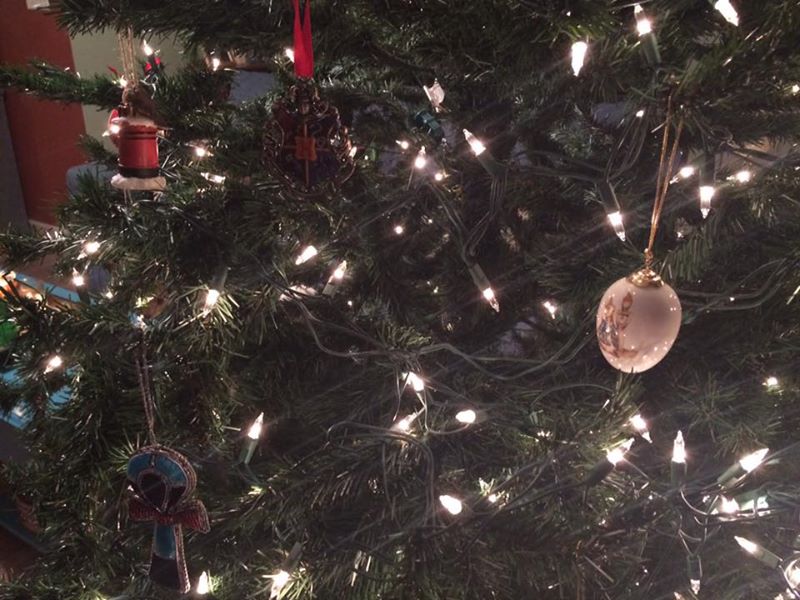
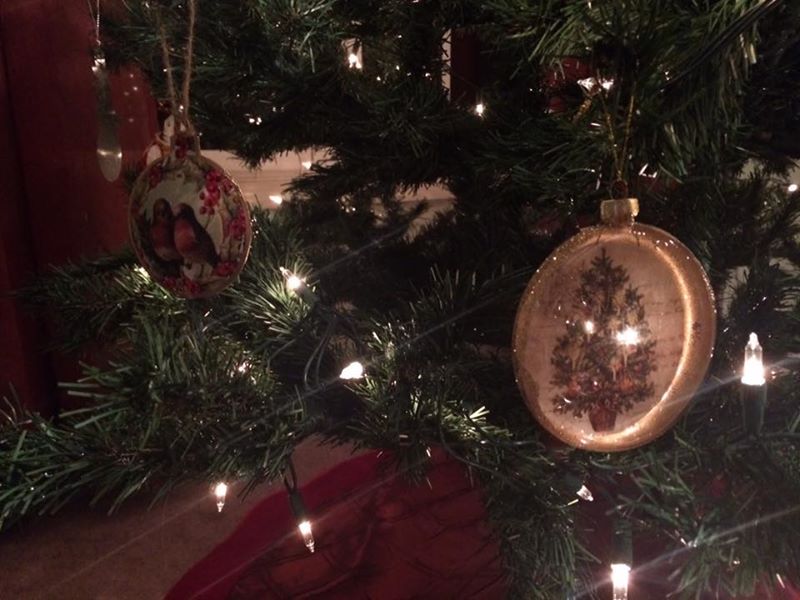
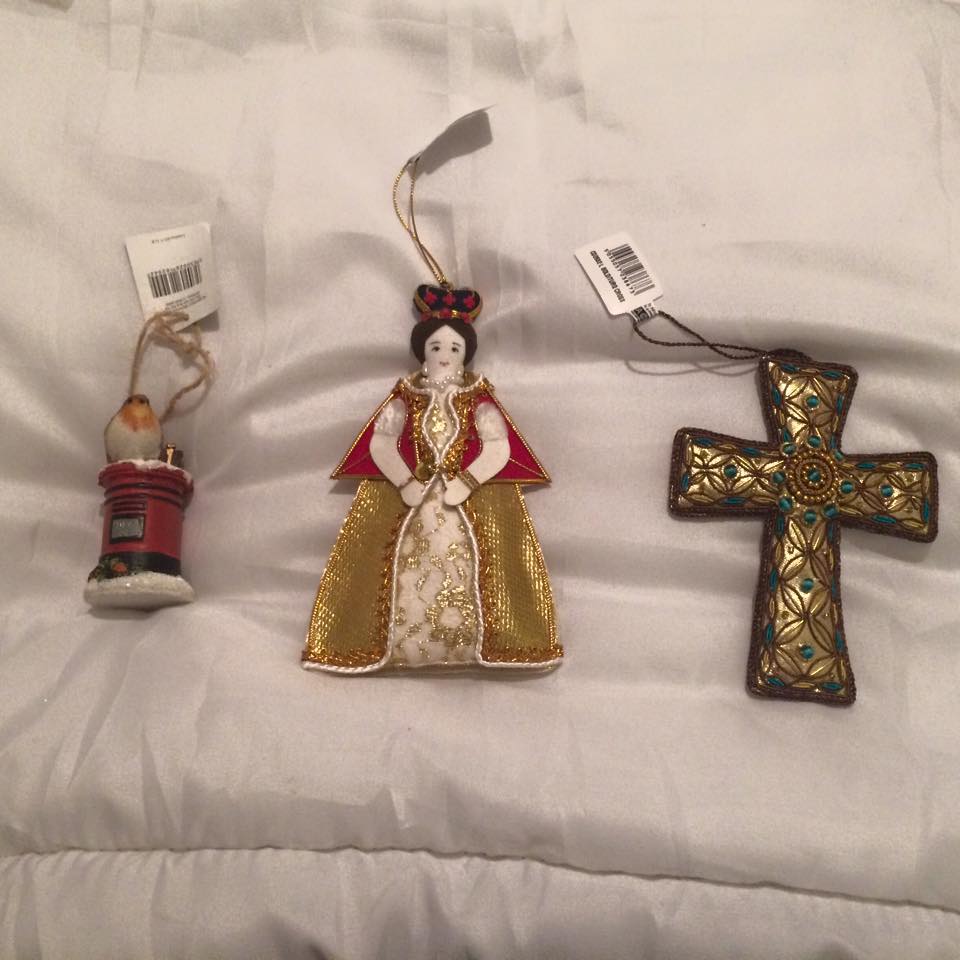
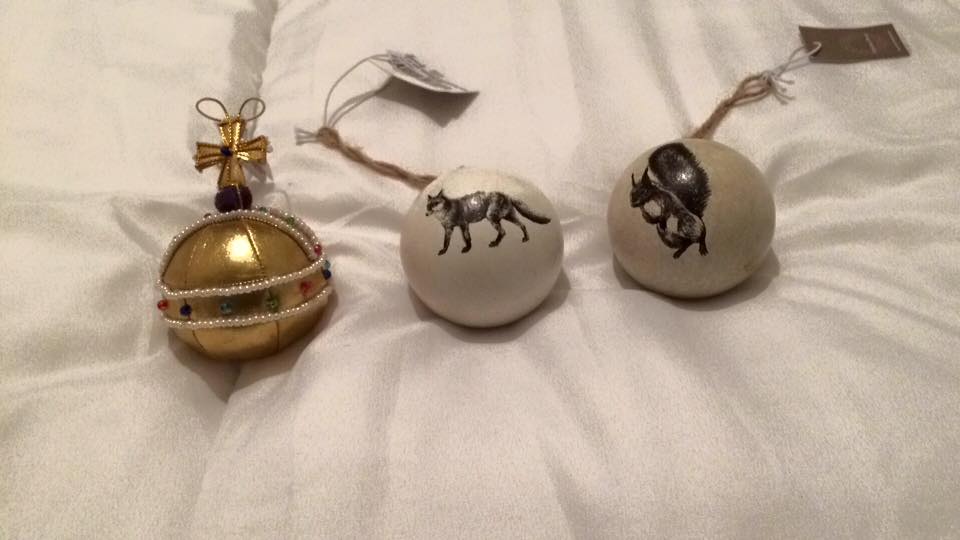
Happy Christmas from my tree

For my Christmas post this year, I thought I’d show you pictures of many of the 16 ornaments I bought while traveling in England (London and the Lake District) a few weeks ago.  I don’t have anything clever or profound to say this time–just that I hope you have a magical and blessed Christmas!

bird with carols written on its wings (from the British library) and bird on a post box (from Westminster Abbey)

bird with carols written on its wings (from the British library) and bird on a post box (from Westminster Abbey)

ornaments 2

Celtic cross from the British museum (bottom left), Hogwarts crest from the Harry Potter studio tour (top), Peter Rabbit painted on an egg from The World of Beatrix Potter (right)

ornaments 3

two Victorianesque ornaments: robins from Charles Dickens’s house and a Christmas tree from the British Library

ornaments 4

Here’s the postbox robin again, along with my other ornaments from Westminster Abbey. (That’s Queen Victoria.)

ornaments 5

These are from Harrod’s. I could have spent a fortune on ornaments there.

I forgot to take pictures of my Christmas pudding ornament, the heart-shaped ornament with Shakespeare’s face, and a few others.  But I hope these give you a taste of England at Christmastime!

movie marathon: the Statue of Liberty and immigration

Remember when I suggested (implicitly) that you should watch The Godfather Part III alongside Thor: The Dark World because of all the juicy family drama?  Well, now I’m suggesting that you watch The Godfather Part II alongside An American Tail (yes, 80’s kids, that’s the first Fievel movie).  Despite the radically different audiences to which these two films were marketed, the similarity is actually pretty obvious: both follow the adventures of a European boy (or young male mouse) who arrives in New York Harbor during America’s golden age of immigration.  If you watch them together, you’ll see all kinds of connections.  Here’s a disclaimer: I’m writing this post as a movie fan, not a historian.  I’m getting some relevant details from Wikipedia and drawing my own conclusions.  If you want a thorough and thoughtful history of American immigration, don’t read this.  If you want an idea for a movie marathon that will involve your mind and your heart, keep reading.

1. An American Tail (1986).  The Mousekewitz family leaves Russia, fleeing violence,* and sails to America in the crowded third-class hold of a ship.  Their young son, Fievel, falls overboard and washes up in New York Harbor, alone and afraid.  During his brief stint as a street urchin, Fievel runs afoul of a nasty underground (literally) crime boss, attends a political rally, and has some cross-cultural immigrant experiences when he visits an Irish wake and makes friends with an Italian teen.  After participating in a successful plot to break the crime boss’s hold on the community, he is reunited with his family.

Oh, also–the Mousekewitzes are mice fleeing cat violence, Fievel is fished out of the harbor by pigeons, the crime boss is a cat, and Fievel also makes friends with a harmless (vegetarian, tender-hearted, and silly) cat during his underground adventures.  That Italian “teen” is a mouse, and so is pretty much everyone else in the movie.

But none of this detracts from the seriousness of the story.  An American Tail is still an excellent film about family, fear, injustice, resilience, and American diversity.  The animation is timeless, the story is taut and exciting, and the music, scored by James Horner (whom we miss), is emotionally pitch-perfect.  Some of the songs have become classics.  Even if you’ve never seen this movie, you’d probably recognize the sad split-screen scene in which Fievel and his sister both sing “Somewhere Out There” against the background of an enormous full moon.  And “There Are No Cats in America,” the rousing number sung in the hold of the ship, is basically the rodent version of Bruce Springsteen’s “American Land”–both are deliriously hopeful songs of immigrant dreams that America could never fulfill.

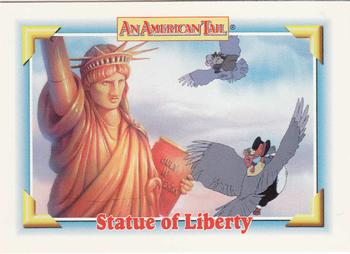
Much of this movie’s action takes place against the heavily symbolic backdrop of the Statue of Liberty, whose construction is completed during the course of the story.  In An American Tail, the Statue represents hope.  It’s there, to a nest in Liberty’s torch, that Fievel is first taken by the pigeons, and it’s there that the head pigeon (who is French, to represent the Statue’s designers) tells him, in song, to “never say never.”  The Statue is one of the last images we see in the film as well.  The overall tone of An American Tail is celebratory of the opportunities that American affords, yet it isn’t blindly so.  The irony of “There Are No Cats in America” sounds a cautionary note: no country can fulfill the wildest dreams of the desperate.

Fievel and Henri the pigeon fly past the Statue of Liberty www.tradingcarddb.com

Fievel and Henri the pigeon fly past the Statue of Liberty
http://www.tradingcarddb.com

2. The Godfather Part II (1974).  By the time the silent 9-year-old Vito Andolini arrives at Ellis Island (alone, like Fievel) in 1901, escaping a vendetta in his hometown of Corleone, Sicily, the Statue of Liberty has been finished for 15 years.  An immigration official misreads Vito’s identification tag and writes down his name as “Vito Corleone,” and the rest is history–movie history, anyway.

I’m not going to summarize The Godfather Part II for you.  It’s 200 minutes long.  (An American Tail is only 80.)  It has two major plot lines, and both of them sprawl over giant swaths of time and space.  For the purposes of this post, I’ll say that among all the film’s many themes (such as family, fear, injustice–actually, they’re really similar to An American Tail‘s themes), immigration–specifically, what we mean when we say that America is a melting pot–is a big one.  And that’s not only true in the young Vito, 1920’s-NYC plot line, but also in the plot line that takes place in 1958, after both the Corleone family and America have gotten a lot bigger and a lot more complicated.

I’ll give you one example: listen to the vitriolic ugliness of Senator Geary’s bigoted comments in the privacy of Michael Corleone’s study at the beginning of the movie, and then listen to the senator’s awkwardly well-rehearsed speech about his “Italian-American friends” in the hearing scene near the end.  Official tolerance masks private hatred in the hypocrisy (as Michael rightly calls it) of relations between politics and crime.

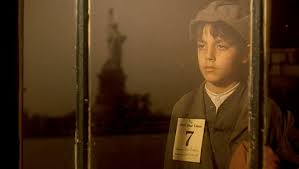
The Statue of Liberty isn’t a major symbol in The Godfather Part II, but young Vito and his fellow passengers take a slow, lingering look at it while they are still aboard the ship.  (Three-hour movies can afford a lot of slow, lingering looks.)  Some of the fellow passengers seem enraptured by the promise of America, but the young boy’s face is inscrutable.  There’s another shot a few minutes later in which Vito’s face is juxtaposed with a reflection of the Statue.  Again, he doesn’t appear to have any grand hopes.  For him, arriving in America simply means that he isn’t dead yet.

young Vito and Lady Liberty

young Vito and Lady Liberty

So, here’s the plan: block off five hours of your life, get your hands on these two films, and prepare to laugh, cry, and think.  After that, you might want to watch Fievel Goes West (a challenging exploration of the meaning of Manifest Destiny…well, sort of) and The Godfather (which opens with the line, “I believe in America”).  Stay tuned for more movie marathon recommendations!

*The violent event at the beginning of the film appears to be a cross between an attack by Cossack marauders and an anti-Jewish pogrom.  There are overtones of both.

music about places

Some of my favorite music is the kind that tells a story about a place, or in some cases, not just a story but a whole novel.  In that latter category I put Bruce Springsteen’s “Jungleland,” which ranks with Charles Dickens’s Bleak House in its ability to evoke a city with its depravities, deprivations, and transitory beauties all jumbled together.

Other music is less specific in its description, relying more on sound than on lyrics to call up a picture of a place.  U2’s The Joshua Tree instantly takes me out West, and I know that’s largely because of the album title, but it’s also in the music itself.  As proof of this, I don’t picture the southern California location of the actual Joshua Tree National Park when I hear this album; I actually think of somewhere more like where Nevada meets Idaho.  (N.B. My brother recently said that U2’s music is more American than John Mellencamp’s.  Harsh but true.)

Two of my favorite composers are Aaron Copland (his “populist” works) and Ralph Vaughan Williams, whose music would strongly suggest their respective countries even if they didn’t incorporate famous national folk tunes.  I just read something interesting on Wikipedia: Copland didn’t actually call his famous ballet Appalachian Spring; someone else gave it that title later.  His goal was just to write “music for an American ballet.” (http://en.wikipedia.org/wiki/Aaron_Copland#Popular_works)  This probably explains why I don’t picture the Appalachians when I listen to it; I think of someplace flatter (hence bigger), like Oklahoma.  The point is that I definitely think of America.

One of my favorite things to do in the whole world is to listen to music while driving–any music will do, but the best is music that fits the place I’m driving through.  I love to turn on my Avett Brothers Pandora station while I’m driving back to Lynchburg, VA, after visiting my family in Pittsburgh, PA.  My route stays just east of the Appalachians, in the foothills, pretty much the whole way.  The Avett Brothers are actually from North Carolina (which is close enough), but the kind of music that comes up on the station is more broadly country–and here I don’t mean that extremely popular genre that comes out of Nashville; I mean from the country, the part of America that used to be the frontier back when all the fancy people closer to the coast were creating the United States of America on paper, although now it’s usually just lumped in with the East.  I grew up hearing this kind of music and didn’t appreciate it then.  Now I think it’s so beautiful it sometimes makes me want to cry.

Then there’s the whole category of music that I associate with a particular place not necessarily because of anything in the music itself, but because I had an early or memorable experience with that music in that place.  I still like to listen to my Coldplay library when I’m on an airplane (which is a type of place, right?), because on my first truly long flight, to the U.K. in 2009, I listened to their albums on my iPod all night, coming in and out of sleep to hear Chris Martin’s familiar falsetto.

I could go on, but I’ll turn it over to you.  What songs, albums, or artists make you think of places, because of either the lyrics, the music, or some association personal to you?

Be Our Guest

As you know if you read my May post entitled Disney Memories, Beauty and the Beast is one of my favorite Disney animated movies. In that post, I wrote about what an excellent role model I think Belle is. (I don’t agree with the assessment that she’s a victim of Stockholm syndrome; I think she makes an independent and well-considered decision to pursue a relationship with the Beast.) But there’s one thing that bothers me about the portrayal of Belle, and that is that during the classic song “Be Our Guest,” practically a hymn to fine dining, she doesn’t actually eat anything. Sure, she takes a little sample of the grey stuff (and apparently finds it, as advertised, delicious), but after all the song’s fanfare about how she’s going to be sated with food as well as with music, she walks away from the table having eaten essentially nothing.
This post is not going to be a diatribe about the unspoken assumption that a Disney princess couldn’t possibly have a physical body that needs to eat, drink, rest, etc., although I think it’s important to discuss that assumption. Instead, I’m going to tell you about a recent way in which Disney has gone some way toward correcting the missed opportunity for somebody to actually eat all that food that Lumiere and co. prepared with such gusto.
Earlier this year, Walt Disney World added a new section to Fantasyland in the Magic Kingdom. Aside from the fun roller-coaster called the Seven Dwarfs Mine Train, a throwback to the first Disney movie, the new section pays homage to two animated features from the early 1990s, now a nostalgic time for people in their 20s and 30s: The Little Mermaid and Beauty and the Beast. The visual focal point of the area is the Beast’s castle, which, unlike the iconic Cinderella’s Castle, is merely a cluster of decorative turrets on top of a huge faux rock formation, giving the impression of a large castle viewed from a distance.
Inside the “rocks” is where the culinary magic happens at Be Our Guest, a full-service restaurant with a French-inflected menu and majestic decor that should please young (and older) princesses looking to step inside their favorite movie, as well as adults who prefer a grown-up atmosphere. Guests can eat in the West Wing, an authentic (if better-lit) re-creation of the Beast’s gloomy Byronic bachelor pad, the Rose Gallery, where the centerpiece is a larger-than-life music box featuring a dancing Belle and Beast, or–where my family was seated–the Ballroom, with a breathtaking high ceiling and tall windows looking out on a dim “French countryside,” where it’s perpetually snowing. Guests are allowed to tour all of the dining rooms, as well as the vestibule with its beautiful tapestries and stained-glass depictions of scenes from the movie. Periodically, the Beast (announced by a striking selection from the film’s musical score) sweeps through the dining room and enters his study, where (as a commanding voice from above informs us) he will be receiving guests.

I ordered hot tea because I often do in restaurants and because I had a cold (alas) and thought it would feel good on my throat. I wasn’t thinking about Mrs. Potts and Chip, but I was delighted when my little teapot and cup arrived (plain white, no faces) and my sister reminded me of the connection. Everything on the menu looked good; I chose the braised pork, coq a vin style, served with creamed cauliflower and asparagus. It was excellent, and I can only imagine how much more excellent it would have been if all my senses had been working properly. Others in my party ordered ratatouille, sautéed shrimp and lobster in a pastry crust, and lamb with a side of buttered celery root, and everyone really enjoyed their meal.
For dessert, we were invited to try the grey stuff (a dessert featuring grey frosting atop a chocolate shell), and everyone else in my family did, but I chose, mainly on the basis of visual appeal (we were shown the desserts table side), a beautiful triple chocolate cupcake topped with a raspberry and a chocolate square embossed with the restaurant name. It also happened to be delicious.
Although we didn’t end up going into the study to meet our host, we felt royally welcomed and thoroughly enjoyed our meal. I tried to enjoy it for Belle, too.

Disney memories

Last night while trying to fall asleep, I chose my five favorite animated Disney movies (not counting Pixar) and figured out why I like them so much.  They can be categorized into two I loved when I was a kid (1 and 2), one I liked as a very small child and later rediscovered for different reasons (3), and two that are my favorites now and probably always will be (4 and 5).

1. Sleeping Beauty.  I think it’s accurate to say that this movie inspired my first experiences with cosplay.  As a little girl I used to put on a blue dress and pretend to be–no, not Princess Aurora, but Merryweather, the chubby fairy who doesn’t speak but always seems to be indignant about something she can’t articulate.  I was an odd little girl.  I haven’t seen the movie in years, but I still think it’s beautiful and effectively scary.  Am I excited about the Maleficent movie coming out next week?  Not really, though I’ll probably go see it.  I have a hard time with Angelina Jolie.

Merryweather

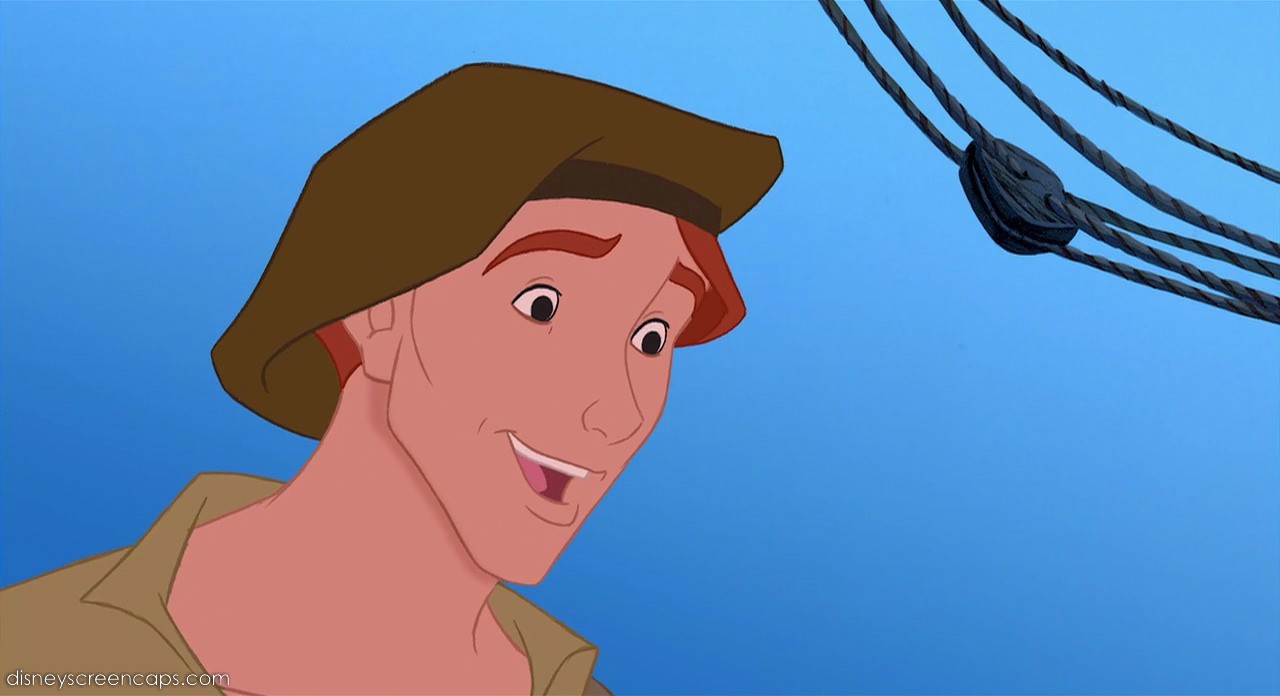
2. Pocahontas.  This movie came out when I was 11, and I was really into it.  I had a lot of Pocahontas merch–I remember a nightshirt, when nightshirts were a big thing, and a necklace that I took apart so that I could string the beads onto other necklaces.  I was an odd tween.  I knew all the lyrics to “Colors of the Wind,” and of course I still do, because you don’t forget songs you learn in childhood (which is why I still know the lyrics to most of The Eagles’ greatest hits–another story).  Pocahontas also gave me my first crush, at least the first I remember.  And no, it wasn’t on John Smith, but on Thomas, the naive and timid redheaded sailor (voiced by Christian Bale) who accidentally shoots Pocahontas’s boyfriend Kocoum.  Some things don’t change.  Again, I still think this is a beautiful movie.  I know people complain about the historiography, but it was never intended as a documentary.

Image

Thomas

3. Bambi.  As a child, I had a Bambi stuffed animal, and I liked Thumper (I remember quoting, “If you can’t say somethin’ nice, don’t say nothin’ at all,” still good advice for most contexts) and Flower, the really cute androgynous skunk.  Then I guess I got “too old” for Bambi and kind of forgot about the movie until one family trip to Disney World; I believe it was the one shortly after I graduated from college.  We were at Disney Studios watching one of those compilation films about the magic of animation or whatever, and suddenly the frantic pace of the clips slowed down and they showed that scene in which Bambi steps out into the clearing and asks, “Mother?” and the stag–Bambi’s father, though Bambi doesn’t know it–approaches and says, “Your mother won’t be with you anymore, Bambi.”  Standing in a room full of tourists, I started weeping.  It was embarrassing, but cathartic.  I still think that’s a brilliant scene–no music for emotional manipulation, just the stark colors of the deer against the snow and that spare, heartbreaking dialogue.  (Ok, I’m tearing up while writing this.)  Bambi is like that in general–a very simple story, no flashy songs and a small cast of (non-wisecracking) characters.  The animation is beautiful.  I am not ashamed to say that I own a Bambi t-shirt.

4. Beauty and the Beast.  I liked this movie when I was a kid, but didn’t truly appreciate it until I grew up.  I’ve always identified with Belle because she likes to read, but now I see that there’s much more to her.  She’s a lot like Jane Eyre in that she has just the right combination of strong will and empathy to be able to transformatively love a selfish and deeply wounded man while still retaining her own identity and protecting herself emotionally.  This, too, is a beautiful movie.  Of course the songs are great, but so is the score.  The settings are so atmospheric: the gloomy castle perfectly matches the Beast’s mood, and the forest outside it is truly desolate.  And I love the way the prologue uses animated “stained glass” to tell the Beast’s back-story.

5. Peter Pan.  This is one of my favorite stories, period.  (It’s Victorian, and it’s magic.  Therefore, I love it.)  The Disney movie isn’t a perfect adaptation, but there’s no such thing.  Certain things about it are perfect, at least to me, like the iconic image of the children flying over the nighttime silhouette of London, something no previous adaptation was able to capture and no subsequent one has attempted to try.  The songs are very good, especially “You Can Fly.”  I also love the way the musical sequences add to the character development in subtle ways.  (For example, the song “Following the Leader” seems like nothing more than a fun romp, but it illustrates the idea, which is barely latent in the J.M. Barrie story but makes perfect sense, that John Darling would see Peter Pan as a rival.)  I know most people think of Tinkerbell when they think of this movie, but I could take her or leave her.  For me, it’s about Peter, who is one of my favorite trickster figures, and the Darling children, who react to being essentially abducted from their home in fascinatingly different ways.  I also like the Lost Boys.  And the Peter Pan ride at Magic Kingdom is wonderful.  Yes, it’s a really short ride with a really long line, but it’s totally worth it.

Second star to the right and straight on ’til morning!