beautiful sights in “Rust Belt” America

I put the term in the title in quotation marks because it often connotes ugliness and depression, and while it’s certainly true that much of America’s Midwest has experienced economic decline over the past decades, that doesn’t mean that there isn’t beauty–in all its senses, including aesthetic beauty–to be found throughout this region.  Here are a few word pictures of beautiful sights I saw in Ohio and western Pennsylvania this past weekend.

The Laurel Highlands with a dusting of snow: I always say that the temperature drops five degrees as soon as you cross into Somerset County, PA, and it sounds like a joke, but it’s a real weather phenomenon that others besides me have observed.  Last Wednesday as I drove west on the Pennsylvania Turnpike, Somerset County–the crown jewel (or the frozen heart) of the Laurel Highlands–was the only place where a powdered-donut coating of snow lingered, from a previous shower, on the trees and hillsides along the road.  I’m glad no new precipitation fell during my trip, but the snow coating added to the festive feeling of driving home for Thanksgiving.

Entering Pittsburgh through the Squirrel Hill tunnel in daylight: On Saturday, my dad and I took a day trip west to Ohio.  It was a sunny day, and when we hit Pittsburgh around 9:00 am, the city appeared to advantage, with the sun glinting off the rivers and the colorful bridges, which are always striking no matter how many times you’ve seen them and no matter how much bridge maintenance is occurring at any given time.  I remarked to Dad that Pittsburgh is fun to drive through (as long as traffic isn’t too heavy) because it’s a little like a roller-coaster, with tunnels, bridges, level changes, and exit ramps in odd places.

Patchwork farmland in Holmes County, Ohio: I’m not sure if Holmes and its neighboring county, Tuscarawas, actually count as part of the Rust Belt because they’re rural areas that have always (as far as I know) been rural and home to large Amish communities.  I did see a factory as we were driving, but even it looked old-fashioned and charming, with brick chimneys instead of metal.  Anyway, around 4:00 as we were leaving the retirement community in Walnut Creek where my grandfather lives, and the sun was just starting to think about setting, I remarked that the scene in front of us should be on a calendar (and it probably has been at some point).  Ohio has a gentler topography than western PA and West Virginia, with rolling hills rather than mountains.  At this time of year, the fields have been harvested but the pastures are still green, and the trees still cling to some leaves as they make architectural shadows against the hillsides.  The landscape isn’t dramatic, but the colors are, especially when the sun hits them just right.

Entering Pittsburgh through the Fort Pitt tunnel at night: There was a Penguins game Saturday night, so traffic was a little backed up going into the city, and Dad and I were musing about whose great idea it was to make tunnels the only non-aquatic way to enter a relatively major city.  The tradeoff, of course, is the breathtaking view when you exit the tunnel and immediately find yourself in the middle of a light show, with the bridge lit up above you, the skyscrapers lit up in front of you, and lit-up boats on the rivers on all sides.  On Saturday night, the effect was heightened by the gleaming yellow bowl of Heinz Field, where all the arena lights were on (apparently in preparation for Sunday night’s Steeler’s game?), and there was also a large, lit Christmas tree below us to the left.  The whole experience was like driving through a Christmas tree.

There’s beauty everywhere, and contrary to popular belief, it isn’t that hard to find in Western PA and Ohio.

new kids in Hawkins

First I’d just like to say that while I’m writing this second of my two posts on Stranger Things 2, I’m eating a 3 Musketeers bar.  I normally don’t eat these except when I buy the fun size Mars variety packs for Halloween, and I wouldn’t go so far as to say that 3 Musketeers is in my top five, but the nougat really is a nice change from your average dense, heavy candy bar filling.

All right.  Last week I promised to write about the new more heroic, more mature, and more comedic Steve, and I was also asked to write about the new characters (besides Bob, whom I addressed last week).  So here we go.

Have you noticed that classically good-looking people are few in Stranger Things and that when they do appear, they are sometimes a bit morally suspect?  We’ll talk about the long-lashed, almost girlishly pretty bad boy Billy in a moment, but for now, let’s think about Steve, who was probably the most attractive person in season one (if you can get past his hair.  You have to do that with a lot of characters in this series.  It’s 1984.).  In season one, he was at worst a bully (though his sidekicks were the ones who were really mean to Jonathan) and at best a doofusy dreamboat who took a fancy to Nancy (who, since we’re on the subject, is a cute girl but is a little too waifish, with her enormous eyes, to be classified as model-gorgeous).  In this season, Steve earns sympathy by getting dumped (in an awkward, inconclusive sort of way), earns B.A. points by wielding a nail-spiked baseball bat (less sleek but perhaps more effective than Negan’s barbed wire-wrapped Lucille on The Walking Dead), and ends up becoming a protector, style mentor, and life coach of sorts to the kids, especially Dustin.  (I think I actually squealed out loud with delight when I saw that Steve was driving Dustin to the Snow Ball.)  He’s still a good-looking guy, but now that he’s become more relatable (significantly, that happened partly because he got his face beat to a pulp), he can fit in with our band of misfits.

Now, the person who beat Steve’s face to a pulp: Billy.  Obviously, this guy is a classic example of the adage that hurt people hurt people.  When we got a glimpse of Billy’s verbally and physically abusive father in action, Billy became a lot more understandable as a character, but for me, he didn’t became sympathetic.  He’s still arrogant, a bully, a mean big brother, and a racist.  As I mentioned last week, I haven’t looked at anything on the internet about this season yet, but I have this feeling that some people may be shipping the now-single Steve with Billy—after all, they had a tense conversation in a locker room and are the two most attractive people in town.  I hope it doesn’t happen.  I like Billy as an antagonist, and I like Steve carrying a torch for Nancy.  Let’s keep it that way.

Quickly, my thoughts on the other new characters:

Billy’s sister Max, AKA Madmax: She was more interesting for the reactions she caused in the other characters (especially Eleven!) than for herself, but I think she has potential to be a strong member of the team.  My favorite moment with her was at the Snow Ball when she kissed Lucas and then smiled.  I think it was her first actual smile all season, and it was a sweet moment.

The doctor from Hawkins Lab, Sam something? (Paul Reiser): I like that his character put a more complicated and human face on the operation than we saw last season.  I thought he did a pretty brave thing staying in the building and guiding Bob over the walkie-talkie when all those demodogs were running around.  But I’m still not sure if I like him.  It seems like his story trajectory is not yet finished, so perhaps we’ll see him next season.

Again, let me know what your thoughts are!

I finally caught up with the rest of the world and watched Stranger Things 2.

*SPOILER ALERT*

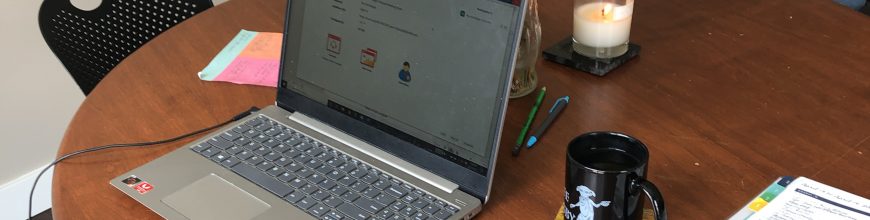
I watched the series on my laptop, which has a line down the middle of the screen (which sometimes created an amusing split-screen effect), but even with the small screen and display glitch, I feel like I got the full experience.  Because Stranger Things isn’t ultimately about a cosmic battle—it’s about the intimate emotions of the people in the Party fighting that battle.

Maybe it’s because I watched the final episode last night, so it’s fresh in my mind, but for me the moment in this season that encapsulates that emotional core is when Nancy comes over to those clunky, retractable, wooden get-a-splinter-in-your-butt bleachers (one of the countless nostalgic references in the show) and asks Dustin to dance, and we see that Dustin has been crying.  Not like a baby or like a drama queen, but like a seriously let-down 13-year-old boy.  I love that this vulnerable moment is shown but not belabored for all its sentimental worth.  That’s what this show does: It pierces your heart, but it doesn’t let you wallow—because there is, after all, a cosmic battle to be fought.  And like my favorite fictional cosmic battle (to save the Wizarding world, obviously), this one is fought using very non-fictional weapons: honesty (friends don’t lie), loyalty, courage, and love.

Let’s talk about courage for a minute.  I haven’t read anything on the internet yet about Stranger Things 2, but I’m guessing I’m not the only one who fell into unexpected love with Bob Newby, superhero.  I mean, I expected to enjoy Sean Astin’s performance, but for the first few episodes, the show seemed to be sending Bob down a “mom’s dorky boyfriend who doesn’t get it” story trajectory.  But of course, when Bob is invited into the Party (the larger Party that encompasses everyone–kid and adult alike–who gets pulled into the orbit of this conflict) and given room to use his dorky yet awesome skills, he becomes a hero.  And yet he doesn’t suddenly turn into a fearless guy who always knows what to do.  I appreciate the shots of Bob hiding in the closet from the…demodogs, I guess we’re calling them? (thanks, Dustin) because we see that he’s sweating, he’s almost hyperventilating—he’s terrified.  But he does what is necessary.  In a conversation, I said that Bob is not a brave person, but he does brave things.  Those are the kinds of characters that I love.

One more character who really wrung out my heart this season: Hopper.  He told Eleven/Jane/Kid that he feels like a black hole, an entity that sucks people in and then destroys them, but I think the better metaphor (analogy?) is of an emotional punching bag.  I think of that horribly sad shouting match with Eleven about halfway through the season, where she was doing most of the shouting (and telekinesis) and he was mostly just absorbing it, taking in the hurt.  And then I think of Mike screaming at Hopper in the last episode because he didn’t understand, wouldn’t understand that Hopper did what he did because he loved Eleven just as much as Mike did.  No wonder the guy keeps breaking all his health resolutions—a man who takes all those hits has to do something to cope!

I’ll probably write more about Stranger Things 2 next week because I’ve got more to say, including about this season’s most delightful surprise, a brand-new Steve: babysitter, mentor, and unlikely big brother.  Meanwhile, tell me your thoughts.  Or go watch the show, if you need to do that first.

Thor: Ragnarok (another good review)

I’m sure I’ve said before on this blog that the Thor films are my favorite Avenger movies–not just because of their central character (who’s gorgeous, funny, sensitive, and smarter than people give him credit for) but because of the whole mythology-infused world of the stories and the painfully realistic (though sometimes hilarious) family drama that lies at their heart.  Anyone who knows me in real life is aware that I have a special love for Loki, but I’ve never been one of those fans who advocate for him to get a solo film.  Loki needs Thor, and both need Asgard.  And as we learned in Thor: Ragnarok, Asgard is a people, not a place (and certainly not just a throne).  Read on if you’re not worried about spoilers.

When trailers for Ragnarok started appeared several months ago, I was worried that the movie, with its neon colors, comedy, and rock-and-roll soundtrack was basically going to be Guardians of the Galaxy 3.  (Though I was pleased to see “Immigrant Song” finally associated with a Thor movie.  And not that there’s anything wrong with Guardians–I just wanted Thor to be Thor.)  And certainly, there are elements of Ragnarok that would fit comfortably in the Guardians universe, like the trippy trash planet Sakkar (which also reminds me of Mad Max and those weird landfill people from the last season of The Walking Dead) and the new character Korg, a humanoid pile of rocks with a Kiwi accent and a deadpan delivery, who shares certain qualities with Guardians characters Drax and Groot.

Yet, despite the fact that we’ve departed far from the Shakespearean line delivery of Kenneth Branagh’s Thor (and of the old comics) and the high seriousness of much of Thor: The Dark WorldRagnarok still feels like a Thor movie.  Maybe it’s the callbacks to the previous films–lingering interior and exterior shots of Asgard on the verge of destruction and appearances (however brief) of Thor’s old comrades.  (I wanted to cheer when Heimdall finally showed up!)  But I think the main reason Ragnarok feels like a Thor movie is that even though I spent most of the film laughing, I still felt the gravity of what was at stake.  And I felt that Old Norse sense of the dignity of dying alongside one’s companions (even though, happily, most of our favorite characters didn’t die).

One key death in the film, of course, is Odin’s, and I loved this beautiful, understated scene.  It was fitting that Odin, now humble but never humiliated, should spend his last moments not detailing his exploits but calling attention to the wild cliffs of the Norwegian coast.  Most importantly, he tells both of his sons that he loves them, and I think this explains not only the surprising (yet really not surprising, when you think about it) new power Thor attains at the end of the movie (I loved this) but also the subtle difference in Loki throughout the rest of the film.  Not that he suddenly converts to a thorough-going good guy, but he seems to have softened just slightly.  I really believed he was going to cry when Thor was talking about how it would be good for Loki to stay on Sakkar.  (Darn you, Tom Hiddleston, and your beautiful eyes.)

And that scene takes place just before the first occurrence of the recurring “Get Help” bit, which has been making me giggle out loud every time I recall it.  There’s a lot about the Thor movies, as a series, that’s really good, but I maintain that the best thing about them is the chemistry between Thor and Loki.  Whether they’re physically fighting or verbally bantering (or Thor is throwing Loki at unassuming guards), they act like real brothers, and I’ll never get tired of watching.  Here’s hoping their Sakaarian spacecraft leads them to more adventures that we’ll get to see.

what I would say if I were on Talking Dead

Sometimes I think about what I would say if for some reason I became famous enough to sit on the celebrity couch in Chris Hardwick’s fake studio apartment.  Lately, the guests (and Chris) have been doing fairly well at focusing on The Walking Dead instead of promoting their own work and making dirty jokes.  But there are some topics nobody has broached that I think need to be addressed.

  1. Negan is not a good role model or even a cool guy.  I made this quite clear in my post from a year ago entitled why I hate Negan, so I won’t belabor the point now.  At the time, I said he was an engaging character, but now I find his swagger contrived (which it is, of course–it’s a post-apocalyptic persona) and his relentless unkindness, even to his own terrified followers, almost unbearable to watch.  Yet convention attendees are still dressing their little kids up in Negan costumes.  It’s troubling, to say the least.  I wish Rick (or anyone, really) would kill him ASAP–next Sunday, preferably–but I’m sure he won’t die until the end of this season, if even then, because he seems to have surpassed Darryl as the darling of ratings.
  2. The most interesting characters are the people who seem to have nothing to offer–the ones considered dead weight or even liabilities according to the masculine contribution-value paradigm I wrote about in another post.  Sure, we need people like Rick who have gun skills and leadership abilities, and people like Carol whose past traumas have made them tough, but we also need people like Father Gabriel, who had to go through a serious worldview shift in order to even comprehend what was happening, and people like Eugene, who concocted the (end of the) world’s biggest lie because he was so afraid of being cast out or killed by people he knew were more capable and prepared.  People like these latter two, perhaps my favorite characters right now, provide a necessary non-majority perspective and are able to empathize with others who aren’t brave or bad-ass and yet have worth just by being human.  (Well, Father Gabriel is able to empathize.  Eugene’s not great at people skills, but he’s improving.)  I often think back to Dale in Seasons 1 and 2 and that bewildered look he would get, which I affectionately refer to as The Dale Face.  Dale clearly was having trouble reconciling his understanding of the world with the horror he was seeing around him.  I would have the same trouble, and I’m glad to think I would.  The people who aren’t troubled by the zombie apocalypse are the people who scare me.  And even some of our most confident and capable characters have had to go through periods of retreat and reflection–Morgan, most notably, but also Rick when he went through his gardening phase.  (By the way, I was annoyed with all the fans who mocked “Farmer Rick.”  Besides processing his own grief, he was also creating a sustainable food source for his community.  Since when is that a bad thing?)
  3. King Ezekiel, his tiger, and his kingdom have turned this show into a bizarre mashup of a gritty, hyper-realistic road story set in the near future and a faux-medieval high fantasy, Lord of the Rings style, and I love it.  He’s the best thing that’s happened to this show in a while.
  4. Please, someone, wash and cut Carl’s and Darryl’s hair.  I can hardly stand to look at them.

half-bloodedness in Harry Potter

This Wednesday, I am giving an informal talk about the concept of half-bloodedness in the Harry Potter series (not to be confused with the Percy Jackson series, in which being a half-blood means one of your parents is special.  In Harry Potter, it means one of your parents is NOT special–a perspectival difference only, but a crucial one).  My talk will be based on a paper I contributed to a collection a number of years ago, but since it’s been a while since I really engaged with that paper, I thought I’d use this post as a vehicle for updating my thoughts.

First things first: When I wrote that paper, I committed a major oversight.  I said that there are three characters in the series who we know to be true half-bloods (i.e. having one wizard/witch and one fully Muggle parent): Seamus Finnegan, Severus Snape, and Tom Riddle.  The character I forgot is, ironically, Penelope Clearwater.  One could argue that Penelope is not a major character–after all, she didn’t even make it into the movies–and that she never discusses her parents or her blood status, but it’s assumed that she was a deliberate object of a basilisk attack in Chamber of Secrets because of that very blood status, so I could have used her character to reinforce my point that wizarding world racism extends not only to the completely Other but also to those whose origins are less obvious.  I will probably put in a Penelope plug on Wednesday night.

I was just talking with a student today about how the fact that Harry Potter is a fantasy makes it a safe space to discuss “mature themes”–child abuse and neglect, slavery, political corruption, you name it–in the classroom.  The issues are no less real because they are present in a fantasy, but the fictional context provides a layer of detachment, allowing the difficult conversations to be less charged.  The concept of half-bloodedness creates a forum for discussing issues such as racism, racial performativity, and biracial identity, but it does so with a situation that’s not exactly like any situation in the real world.

In the paper, I use Seamus Finnegan to introduce the concept in a relatively light-hearted way (just like the books do), but my main argument contrasts Tom Riddle, whose attempt to erase his diverse racial history backfires, leading to a fragmented personality and a literally shattered soul, with Severus Snape, who, though he keeps his half-blood status largely private (like so much about himself), never denies that he is a half-blood, and therefore achieves an integrated identity and a character of integrity.  A lot of big words, but I’m basically arguing that Snape remains true to himself (even when his mission requires him to present a false front), whereas Riddle/Voldemort destroys himself through his own self-directed racism and denial.

If I were to rewrite the paper today, I would probably say more about my current Harry Potter interest, which has to do with the effect of the home and family of origin on how characters turn out.  Both Snape and Riddle grew up in loveless homes, but they were different kinds of loveless homes, and I think the differences in their situations contributed to the differences in how they handled their half-blood status.  I will think about this idea, try it out on Wednesday night, and perhaps blog about it next week.

Silobration: more than just a lot of shiplap

This past weekend, I traveled with my mother and sister to Waco, Texas for Silobration 2017, a festival marking the third anniversary of Magnolia Market at the Silos, the anchor location of the home decor and lifestyle empire of HGTV it couple Chip and Joanna Gaines.  Waco is a small city that seems to be in the middle of economic revitalization, surely due in large part to the jobs created and tourism attracted by the Silos and other businesses that would not exist if not for Fixer Upper–such as Harp Design Co., a boutique in a residential part of town that probably has never been fashionable.  Waco is in what used to be (and maybe still is, though I didn’t see much evidence of it other than a ton of hamburger joints) cattle country, in the middle of the rural space between Dallas and Austin.  The city is home to Baylor University, museums about Texas Rangers, prehistoric mammoths, and Dr. Pepper (which was invented in Waco), and what used to be, a long time ago, the tallest building west of the Mississippi (the Alico building familiar to those who watch Fixer Upper).  Yet none of those attractions–even at the now-past height of the Baylor football program–could bring in a crowd the size of what we saw this past weekend.

Why did all these people stand in the blazing heat to wait in line for cupcakes at the bakery, push through crowds in the Magnolia Market itself to buy #shiplap t-shirts, and stand on tiptoe during Friday and Saturday nights’ concerts to see Chip and Joanna on stage?  Something about this couple–their laid-back yet charming aesthetic, their work ethic, their countercultural emphasis on family and hospitality–has struck a chord with Americans of a surprisingly wide range of ages, ethnicities, and styles.  (And there were a lot of men there too.)  I’m not going to wear a t-shirt that says, “Love me like Chip loves Jo” (I saw several of those on people, though it wasn’t sold in the store), but I am on the Magnolia bandwagon.  And if nothing else, I’d like to go back to get another grilled cheese sandwich from the Cheddarbox food truck permanently stationed behind the Market.  I think grilled cheese is a bandwagon we can all get on.

a creative writing experiment

I have posted fiction on my blog before, but it’s always been previously-composed pieces that I’ve had the chance to revise.  Today, I’m going to try something different: Right here, in the next half-hour, I’m going to write a section of my in-progress zombie apocalypse story.  It could be horrible.  Let’s see what happens.


Around midnight, they were driving through a string of townships north of Pittsburgh.  Butler and Cranberry passed by quietly, with only an occasional glimpse of a roaming figure in the dim space just outside the light of the high beams.  In Evans City, Adrian felt compelled to say out loud that this was where they had filmed Night of the Living Dead, even though he knew that Sam knew.  He laughed hysterically–like a person literally in hysterics–at the irony.

They had gotten out of Sam’s apartment without encountering anyone, living or dead.  Everyone had been at the riot at Sheetz.  “Want to go get an MTO?” Sam had joked.

“We have a cooler full of food; I’m not risking my life for a hot dog,” Adrian had scowled, too intent on his task to get the joke, as he brushed past Sam and started to run down the emergency exit stairs.  “I guess it’s a good thing you just went grocery shopping,” he hollered from two flights down.

They had taken Adrian’s car because it was less junky than Sam’s and because Adrian liked to feel like he was doing something productive.  They had decided to go north because the first exit they had come to was a road going north.

After a while, they came to a Family Dollar, one of those Family Dollars that seems like it has been dropped from the sky onto an otherwise godforsaken stretch of roadside.  It was glowing eerily in the darkness.  “There might be supplies in there,” said Adrian as he pulled off the road.

“There will definitely be zombies in there,” said Sam.  “We should take weapons.”

They looked at each other.  Neither Sam nor Adrian had ever fired a gun outside of a video game.  Then Sam thought of something.  “I have a little knife that I use to sharpen charcoals and pastels.”


All right, that’s it for now.  Not a whole lot happened, but I think there were a couple of good moments in there.  Stay tuned for more.


the fandom panel! (updated with more cool links!)

In May, I told you about a panel discussion on fandom that I had just begun, along with a committee, to plan.  This morning, all the planning came to fruition, and we had a wonderful event that was collegial, fun, scholarly, and well-attended by enthusiastic fans (not of us, but of a wide range of fandoms), many of whom were wearing t-shirts representing their chosen texts.

In the spirit of “remix culture” (which we could have discussed this morning if we’d had more time), I’m not going to give you a traditional, single-authored recap of the event; instead, I’m going to give you some cool links that will inspire you to join the conversation!

  • One of our panelists captured an iPhone audio recording of the discussion that turned out surprisingly well.  Here it is on YouTube.  The image you’ll see is the fantastic event poster created by Ms. Mariannette Oyola–also mentioned in the next point.
  • We had two fabulous vendors selling their fannish wares.  One has an Etsy shop, GeekOutsidetheBox; the other posts her work on her Instagram site, @misssoyola_art.  I bought something from both, and there was a lot more I had to restrain myself from buying.  Check them out.
  • During the discussion, I mentioned Confessions of an Aca-Fan, the blog of Henry Jenkins, who was one of the first media scholars to study fandom in a positive light when he published his book Textual Poachers in 1992, and who is still going strong today.  If Jenkins and/or his blog sounds familiar to you, it’s probably because I’ve mentioned him several times on my blog.
  • I’m going to pull a Gilderoy Lockhart and tell you to see my published works for further details.  My doctoral dissertation is about, among other things, fans.  In it, I mention the intriguing (if I do say so myself) idea that some authors, like J. K. Rowling and Charles Dickens, are fans of their own work.  I don’t mean that they’re arrogant; I mean something more positive and productive.  Read more here.  (I am not sure if this link requires a log-in.  If it does and you can’t get in, let me know–I’d be happy to send you a PDF.)
  • Panelist Marybeth Davis Baggett referred to her Christ and Pop Culture article on Kurt Vonnegut, of whom she is a devoted fan.  Read the piece here.
  • All of our panelists are active (and saying really smart things) on some blog or social media platform, but I didn’t ask which is each person’s preferred platform.  I’ll check with them and post their handles here so you can follow them.  (And if you’re a panelist and you happen to be reading this, go ahead and comment with all your info.)

Let’s keep the conversation going.  Share some cool links that you think would be relevant!

It’s tough to be a kid.

First, I’d like to apologize for not posting last week.  It’s a busy time of the year.  But I’m back!

Over the past week, a number of situations and stories have brought to my attention, with unusual force, the difficulties that face many children.  Some of these difficulties are brought about or compounded by social ills like poverty and abuse; others are just part of childhood.  Yet we adults tend to romanticize childhood retrospectively, talking about it as a carefree time when all we had to worry about was winning at baseball or video games.  Millennials talk about “adulting” as if life just recently became hard, forgetting or denying that being a kid can be just as tough.

That was all very abstract, so let me quickly run through the situations and stories that I mentioned.

  • I went to see It, which shows children being empowered by genuine friendship but also portrays harsh bullying and parental abuse that are just as frightening as the elemental force of evil that comes out of the sewer embodied as a creepy clown.
  • I am about to start training to become a volunteer CASA (Court Appointed Special Advocate).  This means I’ll be assigned to observe and report on behalf of children involved in court cases due to their guardians’ abuse or neglect.  Just from filling out the paperwork and reading the manual, I know this work is going to break my heart sometimes.
  • But this is the example that stopped me in my tracks.  I recently reread Roald Dahl’s Charlie and the Chocolate Factory in preparation to discuss it with my children’s lit class.  Like all of Dahl’s novels, this one is zany, exuberant, and the utter opposite of realism—except for one passage in chapter 10, “The Family Begins to Starve.”  This bears quoting: “And now, very calmly, with that curious wisdom that seems to come so often to small children in times of hardship, [Charlie Bucket] began to make little changes here and there in some of the things that he did, so as to save his strength.  In the mornings, he left the house ten minutes earlier so that he could walk slowly to school, without ever having to run.  He sat quietly in the classroom during recess, resting himself, while the others rushed outdoors and threw snowballs and wrestled in the snow.  Everything he did now, he did slowly and carefully, to prevent exhaustion.”  Here, in the middle of this wacky, colorful story about Oompa-Loompas and marvelous candy, is a textbook description of a child who can barely function because of hunger.  I told my students, mostly future teachers, to pay attention—they might see a boy just like this in their classes one day.

And even for children who aren’t abused, bullied, or starving, everything feels more intense in childhood: fear, jealousy, shame.  The good feelings are more intense too, sure.  But be careful when you make rosy generalizations about childhood.  Don’t let yourself forget that it isn’t easy.