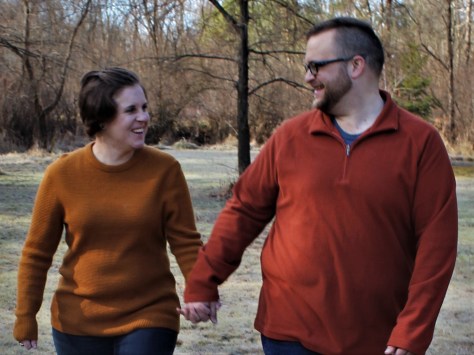
Jordan Martinus: the interview

Last week, I asked you to send me some hard-hitting questions for my fiance Jordan Martinus, and you responded in a big way. I don’t even know the answers to all these questions. Without further ado, the answers to your burning queries.

We received several questions about Jordan’s favorite games, from Charity Lane, Carol Saylor, and Sam Harris. Jordan, quick–give us your top ten.

Jordan: Top ten, quick? That’s just not fair. When you have over 100 board games, it’s hard to choose so few! But here are ten that stand out as of late.

Telestrations, Saloon Tycoon, Sheriff of Nottingham, Splendor, Dominion, Kingsburg, Codenames, Wingspan, Tower of Madness, and Star Wars d6 (this last one is a tabletop roleplaying game).

Carol and Sam also wanted to know about your favorite movies. Let’s make it hard–how about just your top five on this one?

Jordan:

  1. The Princess Bride is definitely my favorite.
  2. the Lord of the Rings trilogy. It would be a crime to leave this epic off the list.
  3. Star Wars: Episode IV–A New Hope (Tess said I could choose only one of the franchise.)
  4. Stardust (Fun fact: We watched this the night before we got engaged.)
  5. Serenity (I’m including this because I really wanted to say Firefly, but Tess wouldn’t let me put a TV series on the list)

Lydia Christoph asked you for your favorite novel.

Jordan: I’m going to cheat and tell you my favorite novel series: Brandon Sanderson’s Stormlight Archive. Since I read Oathbringer most recently, I could say that’s my favorite novel, but I’m really looking forward to book four in the series: Rhythm of War, coming out later this year. I really love Sanderson’s worldbuilding and uniquely crafted magic systems present throughout his many series.

And now that we’ve covered your faves in some crucial categories, Carol wants to know what a magnetics engineer does. Put it in layman’s terms for us, Jordan.

Jordan: The short of it is that it’s a very attractive field.

But in all seriousness, I design, develop, and test custom solenoids to provide solutions for the unique needs of my customers. So now I need to briefly explain what a solenoid does to try to put this all in layman’s terms. A solenoid is a magnetic coil that uses electricity to close and open things. Some practical examples would include controlling the flow of a beverage (pop or soda depending on where you’re from) dispenser, creating the alternating suction in a cow milker, and acting as an emergency breaker in high-voltage power lines. In all of these, the movement is generated by the magnetic force. Much of my work takes place using magnetic simulation programs and modeling software. Tess likes the pretty pictures I create with the simulation programs.

I’m going to quote this question directly. It comes from Vickie Stockslager: “How much do you love and admire your future mother-in-law, Jordan?”

Jordan: Well, Vickie, thank you so much for asking that wonderful question. I have very much felt included in the Stockslager family from very early on, and that includes feeling loved by you all. As I am head over heels in love with your daughter, and I owe much to how you helped to raise her and continue to be there for her, I can say with extreme confidence that I love my future mother-in-law very much! I look forward to continuing to admire and love you even more as I go through the adventure of life with your daughter.

Finally, Sam wants to know if COVID-19 will affect our wedding plans. Yes, Sam, we are having to push back our celebration to September (details to come), but instead of waiting until then to get officially married, we’re having a small ceremony with our families in early May. We’ll post pictures!

375

special guest next week: send me your questions!

Hi everyone! Next week, I’m going to have a special guest on my blog: my fiance, Jordan Martinus, a magnetics design engineer who enjoys playing role-playing and board games, teaching kids at Bible Study Fellowship, and staying active with CrossFit and basketball. He also loves hanging out with me and participating in such pastimes as walking, cooking, and watching movies. What would you like to know about Jordan? Post your questions here, and we’ll tackle them in next week’s post!

in praise of my students

I am currently teaching six classes, three in online programs and three that started out as on-campus classes and have moved to the weird jerry-rigged sort-of online hybrid-ish format that many colleges and universities have implemented in recent weeks. I just want to write a quick post in praise of my students. I am so proud of the resilience they are all showing, from the online student I talked with on the phone yesterday who’s behind in her work because she’s been working ten days straight in a healthcare facility, to the on-campus students who had to quickly move out of their dorms this past weekend. They are all still writing thoughtful, thorough, intellectually curious discussion board posts. They are taking the time to encourage each other and me. I should probably be telling them this instead of writing it in a blog post–perhaps I’ll send this to them tomorrow. But for now, I would like to encourage you to join me in telling someone that you’ve noticed how wonderful they are. If you want, shout those people out in the comments below!

what I’m doing this week: making risotto, being student-centered, and still planning a wedding

This post should not be read as me tooting my own horn (“you should be just like me”) but rather as me sharing some things that I’m doing that may or may not work for you–after all, you may have even better ideas. Also, it’s an aspirational post for me, too; I mean, this is only Monday, and even in a normal week, my best-laid plans can turn into a mess of arrows bumping tasks down to later in the week on my planner page (some of which tasks will fall off the page entirely). So, with all that in mind, here are three things that (you are free to do as you like) am planning to do this week.

  1. Making risotto. This morning, I bought ingredients to make one of my favorite dishes, risotto. I know that not everyone loves cooking, but for me, it’s relaxing and a way for me to use totally different skills than the ones I use in my work. Also, there’s sometimes a temptation, when we are housebound or just generally in stressful situations, to throw basic nutrition guidelines out the window, but I think it’s important for us to continue to be at least mindful of what we’re eating and feeding those we love. I’m not saying risotto is the pinnacle of healthy eating, but it certainly is filling and nourishing, and I’m adding peas and shrimp to mine (thanks for the idea, Betty Crocker) for some green and protein. So, again, I’m not telling you what to do, but perhaps you’d like to use some of your time at home to prepare something special in the kitchen–even if it’s just toast with your favorite nut butter.
  2. Being student-centered. My university, like most, has moved on-campus classes online for the next three weeks. There’s been a lot of talk in higher ed circles about the best way to ensure students are still getting both the rigor and the support of a traditional classroom setting. I’ve chosen to make things relatively easy for myself by using the same format–loosely based on a typical asynchronous* online course–for all three of my on-campus classes. But the really important thing, I think, is that I’m trying to be present for and supportive of my students–answering their emails promptly and encouragingly, commenting on their discussion boards here and there, etc. For me, one of the most crucial (and enjoyable) parts of teaching has always been letting my students know I’m a real person (hence the many times I “accidentally” display my desktop, which features a cute picture of me and my fiance, on the screen in the front of the classroom) and letting them know that I care about them as real people. This can be harder in an online environment, but it’s worth the effort, especially in times when students are facing even more anxiety than usual. So, if you’re looking for takeaways (again, it’s okay if you’re not), here are two: a. Keep doing your best work, even if it looks different than it did last week, and b. Make sure the people you care about know that you care.
  3. Still planning a wedding. So, speaking of my cute fiance…we are planning to get married on May 24. As of now, that’s far enough in the future that we may as well keep planning as if everything’s going forward as normal. When we get closer to the date, we may have to make some difficult decisions, just like couples with March wedding dates are having to make right now. (My heart goes out to them.) But today, I’m working on booking a salon so my bridesmaids and I can get our hair done, because right now, I’m still fully intending to have a wedding on May 24. The takeaway here is that we can’t know what the future is going to look like. We never can; this virus has simply highlighted that truth for us in a particularly poignant way. Not knowing the future is frightening, but acting like we know it usually only leads to despair. As Gandalf once said, “Even the very wise cannot see all ends…and that is an encouraging thought.”

*a fancy word that means “not conducted in real time”

Emma (2020)–not “badly done”

Last week, I went to see the new adaptation of Jane Austen’s Emma, directed by Autumn de Wilde. For a few years now, I have regarded Emma as my favorite Jane Austen novel. Arguably, it’s the funniest and has the most dynamic protagonist, and I like the coziness of it, the fact that it all takes place in one small community and is essentially about neighbors taking care of each other. (While most of Austen’s novels are set in similarly close-knit worlds, usually someone travels somewhere–to Bath, the beach, or London, say–and nothing like that happens in Emma except outside the narrative.) Also, despite the fact that he can be read as bossy and condescending (as in the line I quoted in my post title), I really like Mr. Knightley because he says what he means (unlike certain other secretive and brooding male leads in Austen’s novels) and seems to genuinely respect and care about his neighbors who are less fortunate than he is–which is, basically, everyone.

Until now, my favorite Emma adaptation has been Clueless, but I may have to update my ranking after seeing the new movie. In some respects, such as its lush, Oscar-hopeful costumes, it was a typical period piece; in many others, though, it was a surprise. For example, I really enjoyed all the traditional vocal music incorporated into the film, both diegetic* (like when Mr. Knightley and Jane Fairfax sing and play “Drink to Me Only with Thine Eyes”) and extra-diegetic, like the rousing rendition of the hymn “How Firm a Foundation” that played whenever someone visited Robert Martin’s farm–an odd choice, but in keeping with Martin’s steady nature.

The amount and silliness of the humor in the film also buck the staid tradition of BBC Austen adaptations and, actually, align this Emma a lot more with Clueless than with its Regency-era predecessors. But I never thought the humor was unkind or mocking, except insofar as certain self-important characters, like Mr. Elton, totally deserve to be mocked. (It would be ironic if the humor in the film were mean, since one of the main lessons Emma learns is not to be mean in her humor.) And possibly my favorite thing about the movie was how sincere and unabashed everyone’s emotions seemed. In the climactic proposal scene, both Emma and Mr. Knightley were visibly crying.

Some things about this Emma (e.g. the Wes Anderson-looking sets, as well as a couple of naked butts) are going to anger some of those people who act like the Masterpiece Theater versions of Austen are the Bible, but I don’t think there’s much, if anything, about this adaptation that Austen herself would quibble with. It made me laugh and warmed my soul, and I recommend it with a full heart.

*a fancy word I learned in a film class that refers to music that is part of the story–i.e. the characters can hear it.


Sam’s Town revisited

This past weekend, I received another royalty payment (which I know is a crass and demeaning topic that true artists are supposed to avoid [kidding!]) for my novel, Sam’s Town, so I want to take a moment to thank everyone who has purchased, read, reviewed, or recommended it. As Mac Barnett and Adam Rex’s recent picture book How This Book Was Made reminds us, a book really isn’t finished until it has readers. So thank you for making my book a real book!

In case you missed basically all of my posts last fall, in October I self-published (via Kindle Direct Publishing) my zombie apocalypse novel Sam’s Town, which has a title borrowed from a Killers album and fantastic cover art by Mike Nair. It’s more about relationships than about zombies, but fans of George Romero and The Walking Dead should find it satisfying. You can read more about it here and in most of my September and October posts. It’s available in paperback and e-book formats; the shopping link is in the post above. If you have questions, let me know in the comments!

one of my periodic existential crises

This afternoon, a colleague who edits a theological journal came to my office and invited me to contribute an article to an upcoming issue on theology and literature. He assured me that I wouldn’t need to write an entirely new piece but could update something I wrote, say, during my doctoral studies. Knowing my love for Harry Potter, he said that a piece on the series would be enthusiastically welcomed. I said I’d be happy to contribute, and the conversation left me feeling honored and excited.

Now, a few hours later, I’m feeling more worried than anything else, for two main reasons. One has to do with the fact that I produced the bulk of my academic writing before cloud storage existed, or at least before I was using it regularly. I have a few PhD. papers in my Dropbox, as well as my dissertation (which–shameless plug–you can read on ProQuest), but the only academic work I still have from my master’s and bachelor’s programs are my respective theses, which are also accessible through library databases. One might correctly argue that most of what I wrote during those first two degree programs is not worth resurrecting, but I can think of a few papers from those years that, with some revision, would fit well with the theme of the journal issue–such as the first paper I ever presented at a conference (in 2008, during my master’s program), which connected Dorothy Sayers’ analogy of the Trinity with the author-character relationship in the film Stranger Than Fiction. This paper, which actually made a lot of sense, exists now only as a line on my CV.

My other, bigger concern has to do with the imposter syndrome I regularly experience, which leads me to believe that I’ve lost the ability to write. I realize the irony of expressing this fear in a blog post, but I worry specifically that I’ve lost the ability to write academically. A few weeks ago, while organizing the files in my Dropbox, I made a folder called “things I’ve written,” and I was pleasantly surprised by the number of written and oral contributions I’ve been able to make in the almost five years since I finished my doctorate–a short reflective essay published in Collegial Exchange (a publication of the professional organization for women educators, Delta Kappa Gamma), two lectures given at meetings of the local creative writing group I belonged to in Virginia, a short story written for my current employer’s annual magazine. I’m proud of these, but not one of them was scholarly in nature. I did present at an academic conference last year, but even that paper was a humor-laced analysis of the character of Loki in the Marvel movies, skimpy on sources and not rigorous enough for publication in a journal.

So I’m nervous. I haven’t written anything truly scholarly since my dissertation. Perhaps I can comb through said dissertation for segments that I might be able to expand into a journal article, but the problem is that there’s no obvious connection to theology or faith in my dissertation. There’s kind of a sideways connection, which I mention in the introduction, but I’m not sure if it would make sense as an article outside the context of the full study.

Underneath this nervousness, though, I still have to admit I’m a little bit excited. This will give me an excuse to go back and read at least parts of my dissertation and see if I still think they’re good. I have a feeling that there’s something there that might work for this assignment. The ideas are vague and formless, but watching an idea take shape was always my favorite part of writing for school. I’m ready to get started.

long stories

I’ve been listening lately to Ann Bogel’s podcast What Should I Read Next?. I have to admit that this show is not at the top of my to-listen list, and that’s because it stresses me out a little, for the simple reason that the question that Bogel says “plagues every reader”–what should I read next?–does not plague me. Setting aside my purely aspirational Want to Read list on Goodreads, I have a list of books that I already own and haven’t read yet, and it’s still quite long despite the fact that I’ve been systematically attacking it since fall 2018 (when I realized it was a problem). So the podcast just gives me a bunch of titles of books that I’ll probably never read. Nevertheless, I get some pleasure out of hearing people chat about books, even ones that I’ll never read, so I keep this podcast in my rotation. If you’ve listened to the show, you know that Bogel asks each guest to name three books they love, one book that didn’t work for them, and a book they’ve been reading recently. So naturally, I’ve been thinking about which books I would name if I were a guest. The first two of the three books I love are easy: Charles Dickens’ David Copperfield and J.K. Rowling’s Harry Potter series (if she forced me to choose one, I’d go with Prisoner of Azkaban, the one that really made me fall in love with the series). I’m still mulling over what I’d choose for my third book (it feels like a high-stakes decision), but in the meantime, I’ve been thinking about what makes me love a book.

I thought about this last night after I got out of the bathtub, where I had spent a relaxing half-hour reading one of my Christmas gifts from my sweet book-loving fiance: The Well of Ascension, the second book in Brandon Sanderson’s Mistborn trilogy. I am now about halfway through the book, which means I’m about halfway through the series, and it just struck me last night how much I am enjoying these books (though I don’t know if I’d use the word “love” yet. For the books, I mean. I love my fiance.). I realized that I am looking forward to long periods of time when I can sit down and read The Well of Ascension, that I can picture the setting vividly even when I’m not reading, and that I really care what happens to the characters. I know part of the reason why I’m just now getting into the story is that there were too many blow-by-blow (literally) action sequences in the first book–and I understand why this might be necessary for the first book of a fantasy series that involves a specific, unique type of magic. But I really don’t care who punched whom and when. This second book is much more about relationships, political intrigue, and human psychology. But I think another reason why I’m so into this book is that it’s long.

Well, not just long. Quantity does not supersede quality for me. But I’ve realized that I love books (and movies and TV series) that have extensive world-building, deep character development, and layered plots–and on top of all this, a sense that the story-world has been lived in, not just made up on the fly. And in order for all that to work, a writer needs space–hence, length. Most of my favorite stories–stories you’ve seen me write about on this blog–have these qualities: Downton Abbey (with its hour-long, commercial-free episodes), the Godfather films (a major time commitment I embark on only about once every other year), the novels of Charles Dickens (it’s no accident that one of Dickens’ shortest novels, Hard Times, is probably my least favorite). [I have written on this blog about Dickens’ “teeming world,” crowded with memorable people.] One of the greatest compliments I can give a story is that I’ve spent so much time inside it that I feel like the characters are my family. That’s why I cried so much when Sibyl died in season three of Downton Abbey, why the birthday party scene at the end of The Godfather Part 2 blows my mind every time I watch it, and why I’ve written fan fiction about the Weasleys going about their mundane lives after the defeat of Voldemort. However flawed they are, I want to be part of those families. I don’t know if Sanderson’s ad hoc family of thieves and kings will make it into my top tier of favorites, but their admission to that circle currently looks promising.

emerging from a tunnel

I’m in one of those seasons (and I mean that in the currently trendy in “inspirational” women’s writing sense, though I’m going to talk about the revolution of the earth around the sun sense later in this post)…Let me start over. I’m in one of those seasons in which I’m having a hard time coming up with wise or even coherent things to say on my blog. (You may have noticed that I didn’t post last week.) I promise I’m having smart ideas right now; I’m just wasting them all on my students. (Just kidding about the “wasting” part, students!) I’m having a ball teaching three literature classes this semester: children’s, dystopian, and my usual intro to lit with a little bit of composition thrown in. The fun part about teaching multiple back-to-back classes in a day is that a topic from an earlier class might lead to an apt illustration coming to my mind in a later class. Yesterday, the sinking of the Titanic came up in both of my classes, both times as an oddball illustration that nevertheless seemed to resonate with my students. And I’m pretty sure I’ve talked about World War One in all three of my classes. And I haven’t even seen 1917 yet!

Oh, that reminds me–I was going to say something about the Oscars. I’m mad at 1917, actually, because I picked it to win Best Picture, and it let me down. I’m not ignorant of the historical significance of Parasite‘s win, and I’m mostly pleased that it did, except that it busted my bracket, to borrow a March Madness metaphor. I believe I would have won my family’s prediction competition had I gotten this category correct; as it was, I came in third out of seven (not bad, I guess. *eye-roll*).

Unlike last year, when I very deliberately watched all of the Best Picture nominees before the Oscars, I had only seen one of them this year, Little Women (which I greatly enjoyed, except that I was a bit troubled by the implication that the whole Jo/Bhaer romance was a fabrication added to please the publisher. Did anyone else notice that?). So I’m going to confine myself to making two comments.

  1. I have to say something about my fave category, Best Original Score. Although I would have liked to see my guy Thomas Newman win, I was happy to see the award go to another young composer (and a woman at that), Hildur Gudnadottir, who composed the haunting (yes, I looked it up on Spotify and listened to it in full, along with all the other nominees) score to Joker. I say “another” because last year’s Oscar went to Ludwig Goransson, another member of what I see as the upcoming generation of composers, for his epic and experimental Black Panther score. By the way, if you haven’t seen The Mandalorian yet, Goransson’s very cool score is one reason to check it out.
  2. I have a crush on Adam Driver. I mention this because he was sitting in the front row and they kept showing him. But you know what? I have an even bigger crush on my fiance, Jordan Martinus. And do you know what Adam and Jordan have in common? They have both lived in Mishawaka, Indiana. True story!

Okay, now that I’ve exhausted most of your patience on preliminary stuff, here is what I actually sat down to write. I went for a walk in the park this morning, and although there was snow everywhere and I didn’t see or hear a single bird, I started to have that feeling I get this time of year when spring is juuuuuuust visible on the horizon. It’s like emerging from a tunnel. Some of my usual reliable signs of winter’s approaching end have occurred: the Super Bowl and the Oscars are over (though the Oscars were early this year–did anyone else notice that?); The Walking Dead is coming back soon; it’s still light outside when I sit down at my computer to work for an hour at 5:00 pm. In a month, my students and I will already be back from spring break, and I’ll probably start making more sense in class because I find my brain is generally clearer in the spring. Oh, and there are just over 100 days left until I marry a guy from Mishawaka. (Jordan, in case you were wondering.) Next time I write to you, we’ll be a little closer to the tunnel’s edge.


what marriage is all about

You might have looked at my title, knowing that I’m not even married yet, and written me off as a person with a (very small) platform who’s presuming to lecture on things she knows nothing about. Before you tense up, let me put you at ease. All I’m offering today is a quote. I think it’s about all I have the creativity for today, after grocery shopping, emailing distraught students, and calling hotels to hold blocks of rooms for our wedding, a task that had me disproportionately stressed out for some reason. (And I didn’t even teach today, at least not in the formal classroom sense.) Plus, coming up with a blog topic every week is hard work, you guys. Normally, around this time of year, I have something to say about the Oscar nominations, but I haven’t even looked at those closely enough to say anything intelligent about them. Maybe next week.

So, for today, a quote. This is actually a secondary citation, which I typically discourage my college students from using. You’re supposed to go to the original source; it’s a (relatively minor) infraction of academic etiquette to cite the book where you found the quote instead of the book where it originally appears. But this isn’t a dissertation; it’s a blog, so there. Anyway, in my premarital counseling homework reading, I came across this lovely and fairly lengthy quote. I found it in Greg and Erin Smalley’s introductory chapter of Ready to Wed, but they’re quoting Tim and Kathy Keller’s book The Meaning of Marriage. (Note to put that one on our to-be-read list.)

When looking for a marriage partner, each much be able to look inside the other and see what God is doing, and be excited about being part of the process of liberating the emerging “new you.” … This is by no means a naive, romanticized approach–rather it is brutally realistic. In this view of marriage, each person says to the other, “I see all your flaws, imperfections, weaknesses, dependencies. But underneath them all I see growing the person God wants you to be.” … The goal is to see something absolutely ravishing that God is making of the beloved. You see even now flashes of glory. You want to help your spouse become the person God wants him or her to be. … What keeps the marriage going is your commitment to your spouse’s holiness.

This is true. I don’t know much about marriage yet. (I wish I could trade my nearly-useless knowledge of citation etiquette for something useful like marriage wisdom.) But I already know the Kellers’ description to be true. This is why, already, Jordan can point out (he always does it gently and rarely does it at all) an area for improvement in my life without me getting angry or hurt like I would if a stranger, or even perhaps a friend, said the same thing. And why I can do the same for him. This is why we can feel, and act, confident in one another’s presence–because we know that we have already accepted one another.

It is a faint glimpse of the acceptance we find in Christ. Over the past year, I’ve been thinking a lot about the story of the woman at the well in John 4. When she went back to her town to tell people she had met Jesus, she said, “Come, see a man who told me everything I had ever done.” She said this excitedly, like it was a selling point. Because for her, that may have been the best part of her conversation with Jesus: the fact that he knew everything about her–her sin, her social isolation, her confusion about spiritual matters–and still accepted her. He sat and talked with her, took her questions seriously, and after the initial mention, never brought up her sin again. Full knowledge, full acceptance.

Well, that is not the direction I thought this post might take when I started it. I’m actually sitting here crying right now. I hope this will encourage someone else, but if not, it did me. Thank you for reading this quote and my thoughts on it today.